How to Cook in an RV Without Heating Up the Whole Space
A compact galley kitchen offers freedom on the open road; a small metal stovetop, however, can quickly turn a camper into a hot box. Warm wood walls and a cozy sleeping nook feel great until the midday sun bakes the RV interior, making a steamy meal less appealing. Many RV travelers face this exact choice: a delicious, hot meal versus a cool, comfortable living area. The portable kitchen presents opportunities for tasty dishes, yet managing heat becomes a daily challenge. The RV cooking tips provide practical ideas for making meals without overheating the compact home. The suggestions offer different ways to balance culinary desires with maintaining a pleasant temperature inside the mobile abode. Each suggestion helps you find your own sweet spot.
1. Outdoor Grill Prep Station
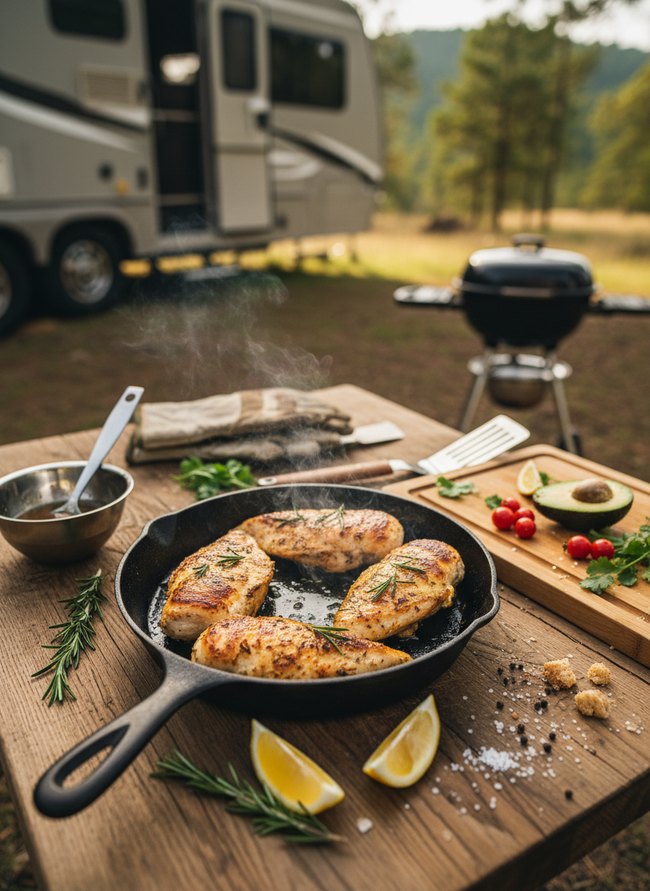
A heavy black cast-iron pan, filled with four golden-brown chicken breasts, steams gently on a light wooden table. The outdoor cooking setup allows you to keep cooking smells outside your silver RV, trading indoor comfort for fresh air and open-flame flavors. Raw sprigs of green rosemary and bright yellow lemon wedges sit on the dark wood surface, ready for garnish.
2. Portable Induction Cooking
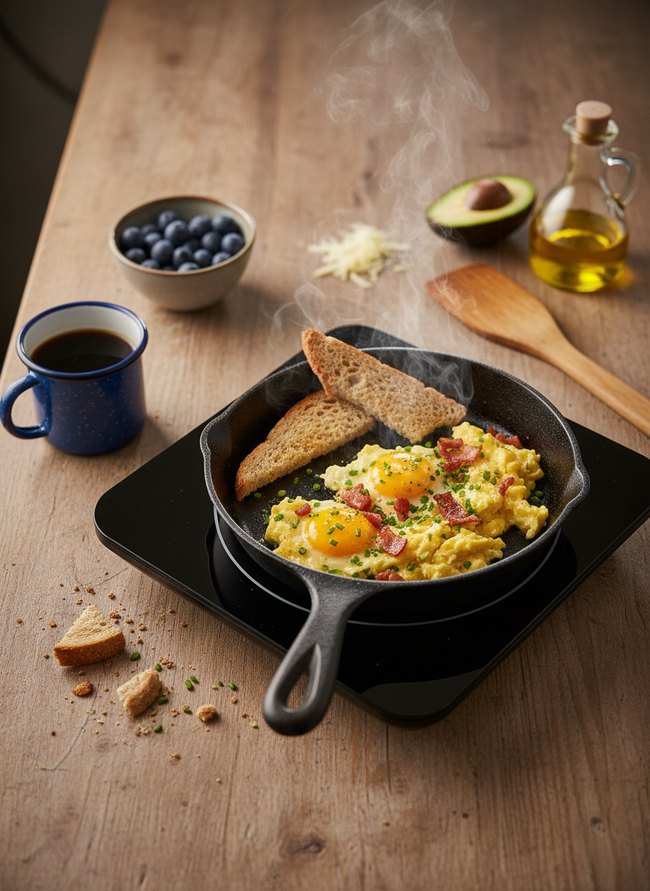
A black induction burner heats a dark cast-iron skillet, holding sunny yellow eggs and crispy bacon bits. The cooktop means faster cooking times but requires specific magnetic cookware. A small blue enamel mug with dark coffee sits to the left, offering a warm morning beverage.
3. Slow Cooker Meal Prep
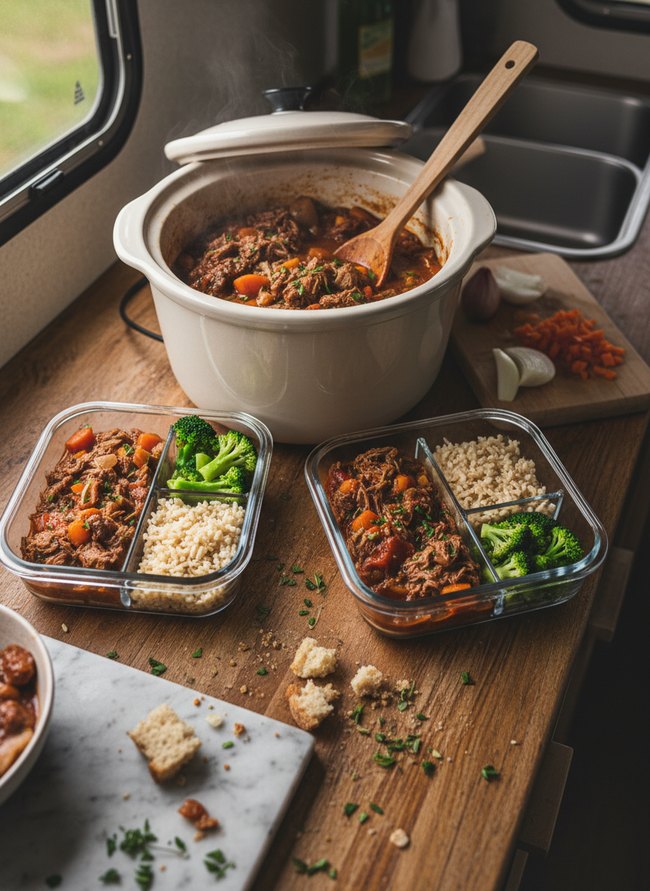
A cream-colored slow cooker sits on a warm wooden countertop, bubbling with a dark, hearty stew. The appliance trades quick preparation for a slow cooking time and minimal hands-on effort, which helps with cooking in an RV. Two glass meal prep containers hold portions of the stew, brown rice, and green broccoli florets, ready for later enjoyment.
4. Instant Pot RV Cooking
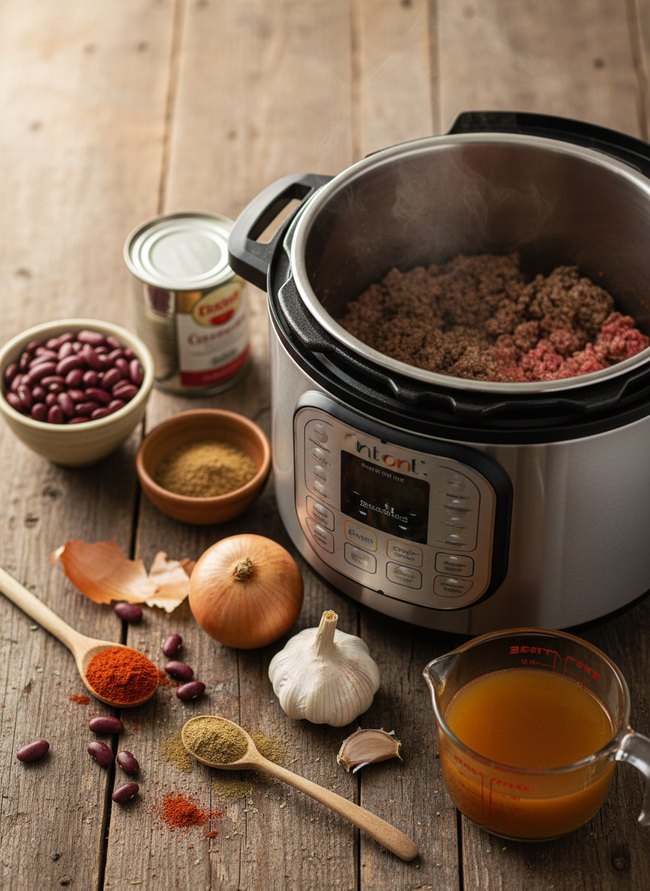
A stainless steel Instant Pot sits on a rough wooden countertop. The electric appliance provides a contained cooking zone, trading away the open heat of a stovetop for cooler kitchen air. Dark red kidney beans fill a small ceramic bowl, waiting to join the simmering ground beef inside.
5. Solar Oven Baking
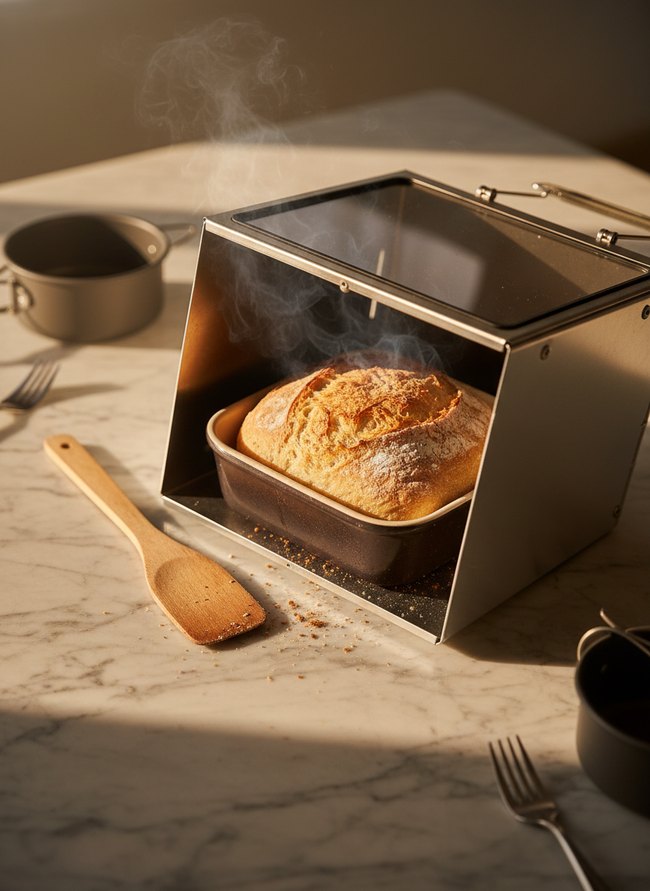
A stainless steel solar oven bakes a golden brown loaf of bread on a white marble countertop. Wisps of steam rise from the warm bread, suggesting recent removal from the sun. The solar cooking method offers a cool interior for the trade-off of slower cooking times.
6. Air Fryer Pantry
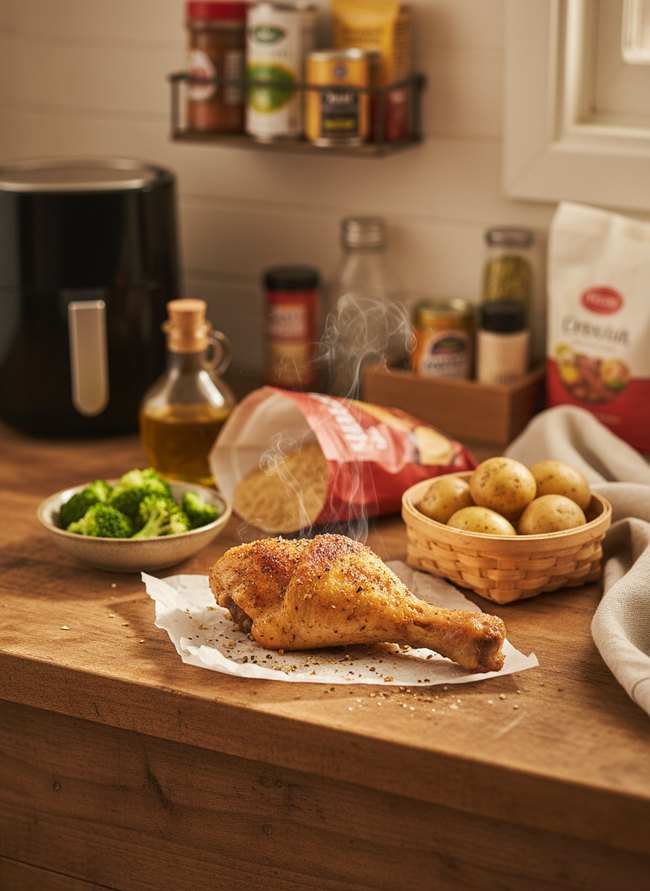
A black air fryer stands ready on a warm brown wooden counter. The compact appliance offers efficient cooking in an RV, trading oven space for quick, crispy meals. Fluffy white steam rises from a golden brown chicken leg, seasoned with dark flecks of pepper.
7. Cold Plate Dining
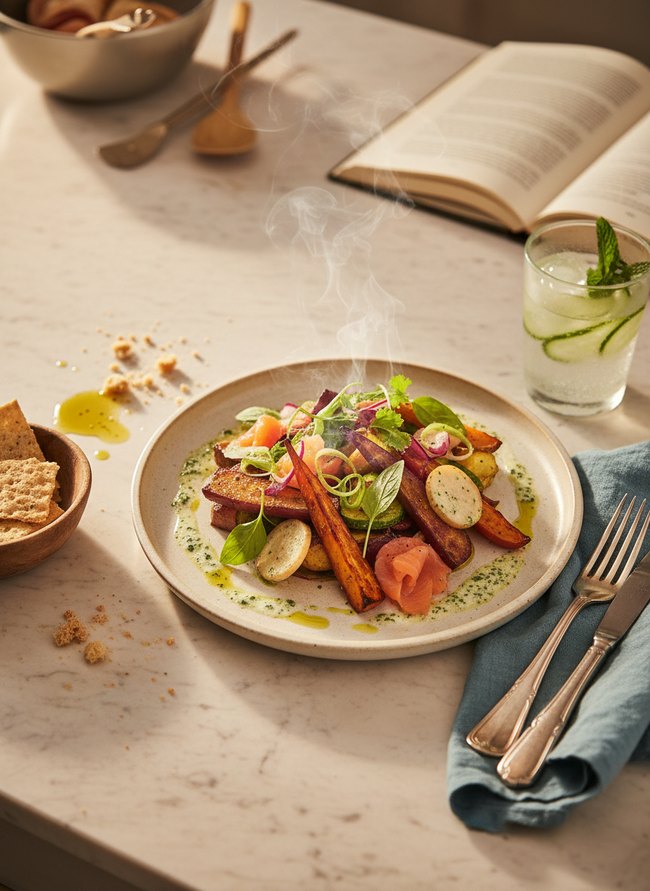
A ceramic plate holds a colorful mixed salad with roasted root vegetables and green herbs. RV chefs can cook using mostly cold ingredients, trading a hot meal for a cooler kitchen space. A tall clear glass of cucumber water sits nearby, offering a refreshing drink.
8. One-Pan RV Meals
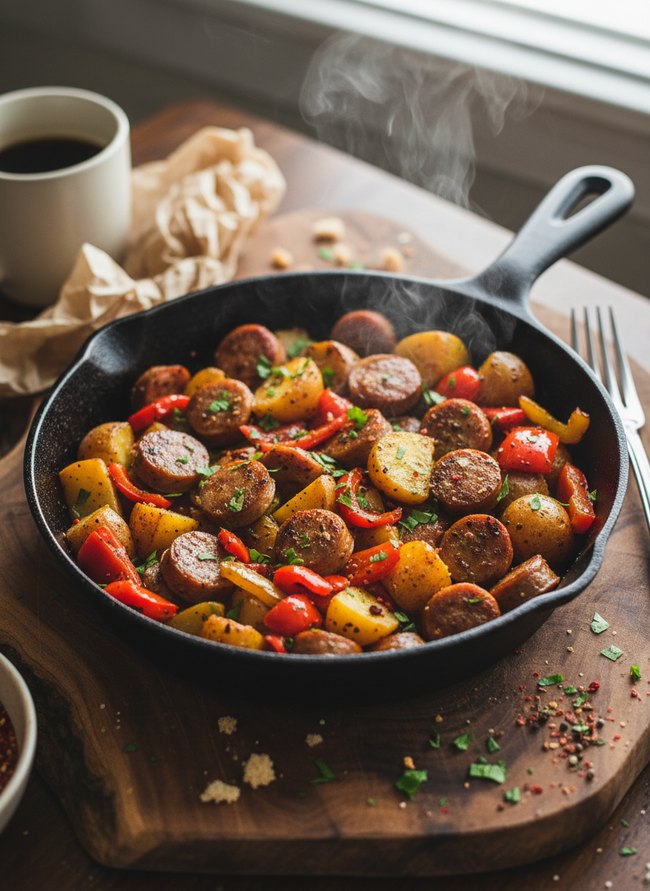
A black cast iron pan holds a steaming mix of golden potatoes, red bell peppers, and browned sausage slices. A light brown cutting board with a natural edge supports the hot pan, catching stray green herb flakes and red pepper bits. Cooking in an RV using one pan saves space but means fewer separate dishes for varied tastes.
9. Electric Skillet Strategy
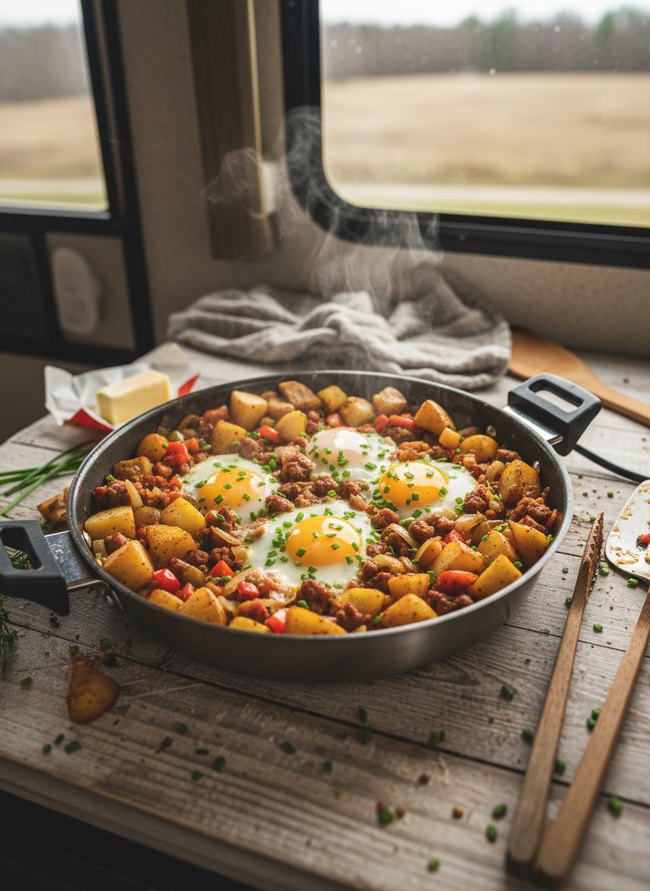
A steaming gray skillet filled with golden potatoes and four sunny-side-up eggs sits on a weathered wooden table. An electric appliance offers precise temperature control for cooking in an RV, though the unit occupies counter space. Creamy butter rests in a red foil wrapper near the skillet, ready for spreading.
10. Ventilation Fan Usage
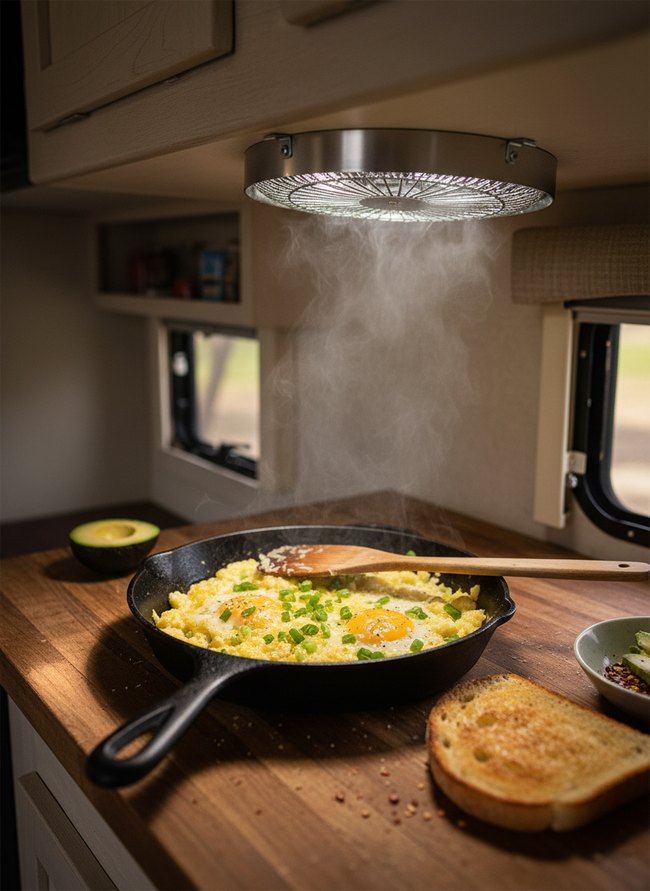
A round silver ventilation fan pulls steam upward from a black cast iron pan. The fan removes cooking smells, adding a soft whirring sound to the small space. A wooden spoon rests inside the pan of yellow eggs, ready for your next bite.
11. Minimalist Ingredient Planning
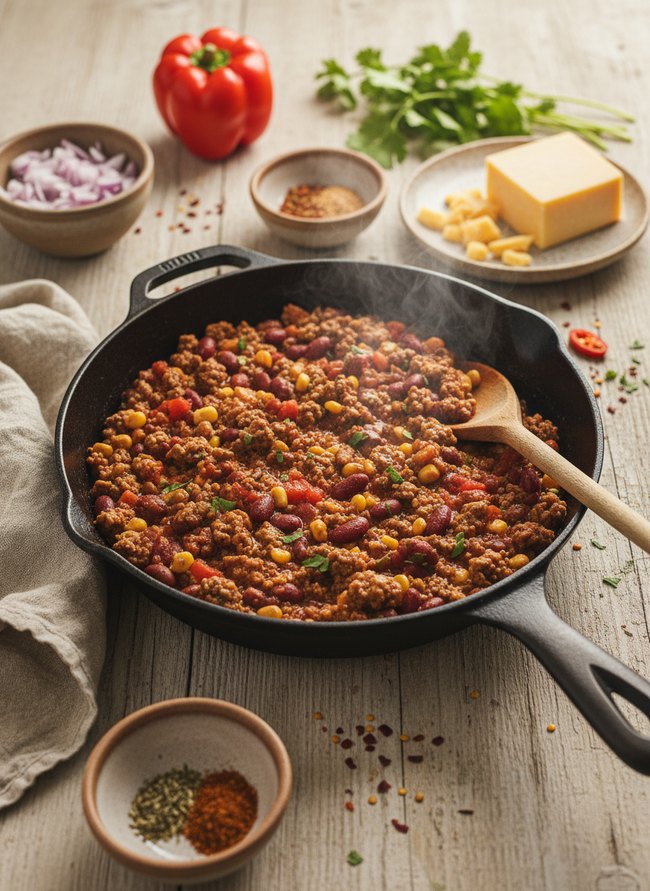
A dark cast iron skillet holds a vibrant chili mixture, steam rising gently. RV cooking prioritizes quick preparation, trading complex flavors for a time-saving meal. Small ceramic bowls with red onion and yellow cheddar cheese cubes sit nearby, ready for topping.
12. Pre-Cooked Ingredient Storage
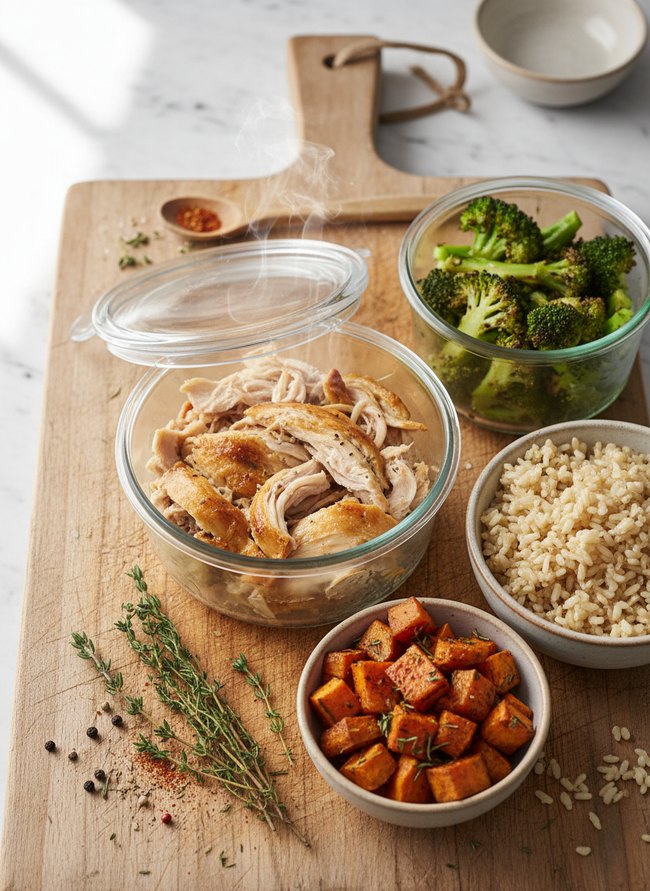
Glass containers hold pre-cooked shredded chicken, brown rice, roasted sweet potatoes, and green broccoli florets on a worn wooden cutting board. Meal prepping allows you to trade cooking time later for effort now. Small thyme sprigs and loose peppercorns decorate the light wooden surface, adding a rustic touch.
Should I Bother with an Instant Pot or Just Stick to the Stovetop?
A shiny stainless steel Instant Pot sits on your small RV counter. Stovetop burners glow with blue heat. Many RV cooks wonder about a new electric pressure cooker.
Your RV kitchen offers two distinct cooking paths. One path uses the familiar gas stovetop; the other path brings a versatile electric appliance into your compact space. A built-in stovetop often cooks food fast. A stovetop uses your RV’s propane supply. Propane tanks hold limited fuel. The flame also makes your tiny interior warmer.
An Instant Pot, a countertop appliance, cooks food with sealed pressure. The appliance requires a 120-volt outlet. Power use from shore electricity is constant. This electric cooking method makes much less heat inside the RV. Cook time on an Instant Pot can be longer than a stovetop for some dishes. However, you can leave an Instant Pot to cook unattended.
Choose the built-in stovetop if you cook quick meals. A stovetop lets you stir-fry vegetables with rapid heat. Opt for an Instant Pot if you want to make slow-cooked meals. An Instant Pot helps create hearty stews without warming your small living area.
Electric Skillet or Microwave: Which is the Lesser of Two Evils for Quick Meals?
A stainless steel electric skillet or a compact white microwave oven presents a common choice for quick RV meals. The rectangular skillet uses more counter space, demanding a flat, wide surface for its hot cooking area. A small microwave takes up less horizontal room but requires a tall cabinet or a sturdy wall shelf for its boxy frame. Electric skillets cook food like eggs or grilled cheese with moist heat. Microwave ovens warm up leftovers fast, using invisible waves to heat food quickly.
Electric skillets need more active cooking time; you stand over the warm surface, flipping a pancake with a wooden spatula. Microwaves offer hands-off convenience; you push a button, then walk away from the humming box. An electric skillet uses less power than a microwave oven, making the skillet better for RVs with smaller battery banks. A microwave draws high power for a short burst, which can strain a weak RV electrical system.
Choose a shallow electric skillet if your RV has limited power and you enjoy stovetop cooking. Pick a small microwave oven if you need speed and your RV has robust electrical capacity.
Which Idea Will You Try First?
That’s 12 different takes on cooking in an rv tips. The best ideas above are usually the smallest moves — one material, one layout shift, one piece of furniture in the right place. Pick whichever room feels closest to your space and start there before tackling the rest.
Found an idea worth keeping? Save this post to your Pinterest board so it’s waiting for you when you’re ready to start your own project.