12 RV Solar Setup Ideas for Off-Grid Power
Your coffee maker sits silent, a cold metal box on the laminate counter, as the sun climbs over distant mountain peaks. A small, round battery monitor glows red, signaling another night of drained power in the mobile home. Many road warriors understand that little pang of disappointment when the fridge hums quietly but the lights stay dim. The collection of twelve RV solar setup ideas provides practical ways to keep your onboard electrical system humming smoothly. Different panel arrangements and battery banks offer solutions for varied travel styles. Your next off-grid adventure can include bright cabin lights and hot morning coffee, a simple comfort under a wide, blue sky.
1. Roof-Mounted Flexible Array
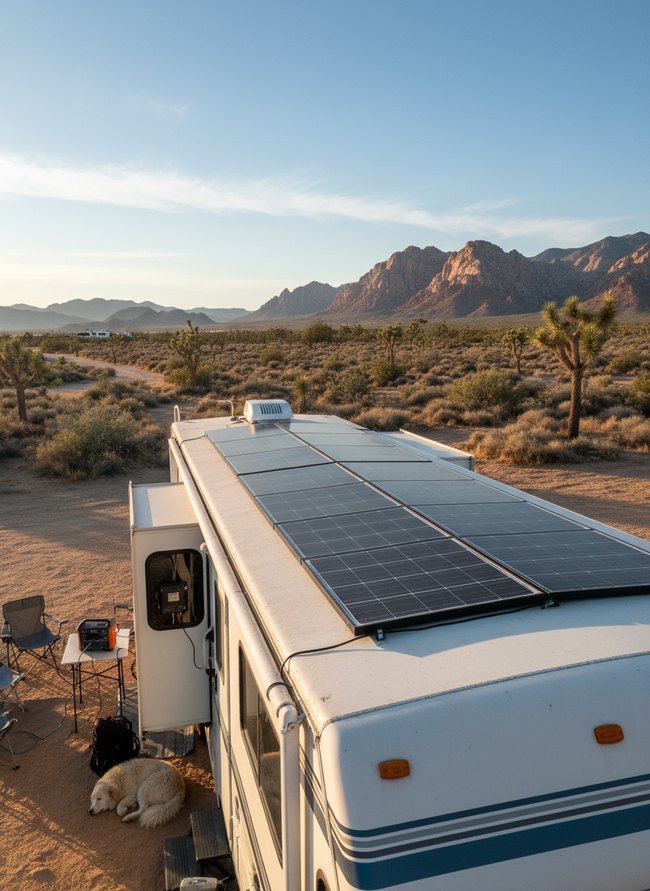
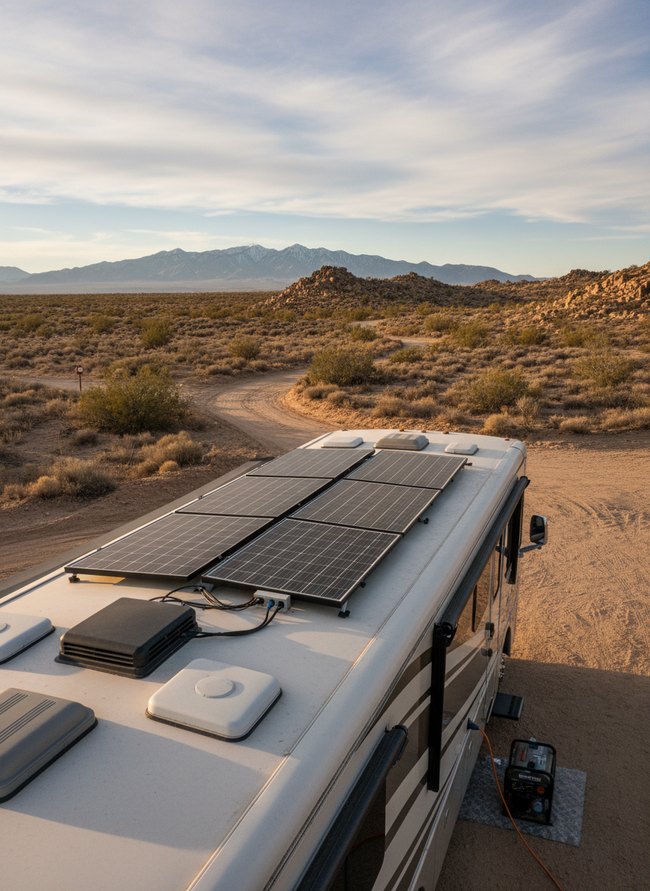
Eight black solar panels cover much of the white RV roof, soaking up desert sunlight for power needs. A thin electrical cable runs along the roof’s edge, connecting the panels to the interior system. The solar setup offers reliable, quiet energy for off-grid adventures.
2. Portable Ground-Based System
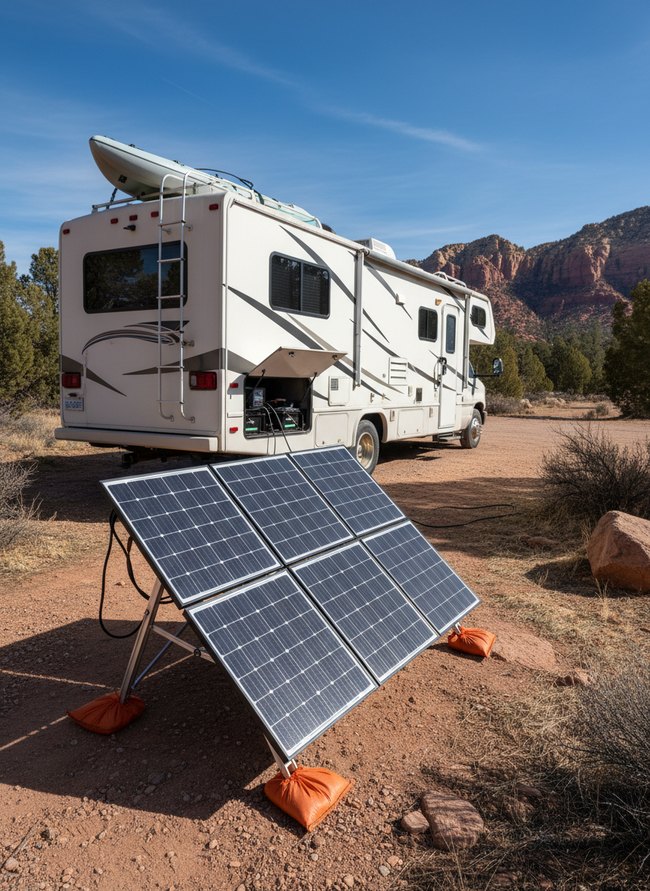
Six dark solar panels sit on a metal frame, ready to capture sunlight for off-grid power needs. Orange sandbags hold the portable stand steady on the red dirt, keeping the setup secure. The system offers flexible positioning, letting owners chase the sun for maximum energy collection.
3. Integrated Awning Panel Setup
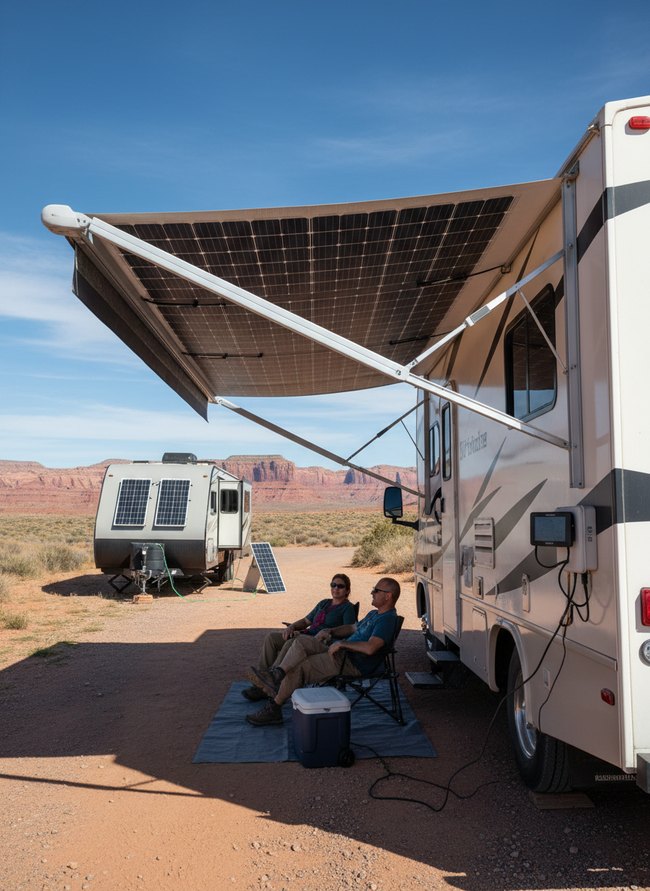
A large white RV features a solar panel array mounted directly underneath its extended fabric awning, collecting sunlight to power your adventures. Two sturdy white arms hold the dark solar awning in place, creating shade while harnessing energy. The clever solar setup provides both comfortable outdoor living space and sustainable power generation.
4. Slide-Out Tray Solar Bank
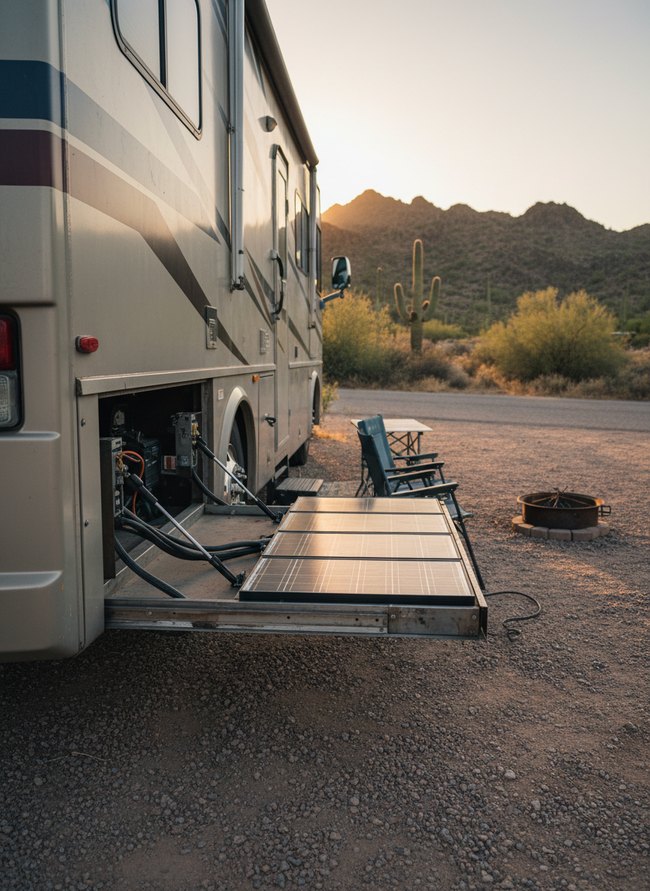
A beige recreational vehicle features a clever energy solution at its rear. Three shiny solar panels slide out on a sturdy metal tray from a storage compartment, ready to gather sunlight. Thick black cables connect the panels to the RV’s power system, creating an effective solar setup for off-grid living. The tray offers easy access for panel deployment and storage.
5. Tilting Fixed Panel Mount
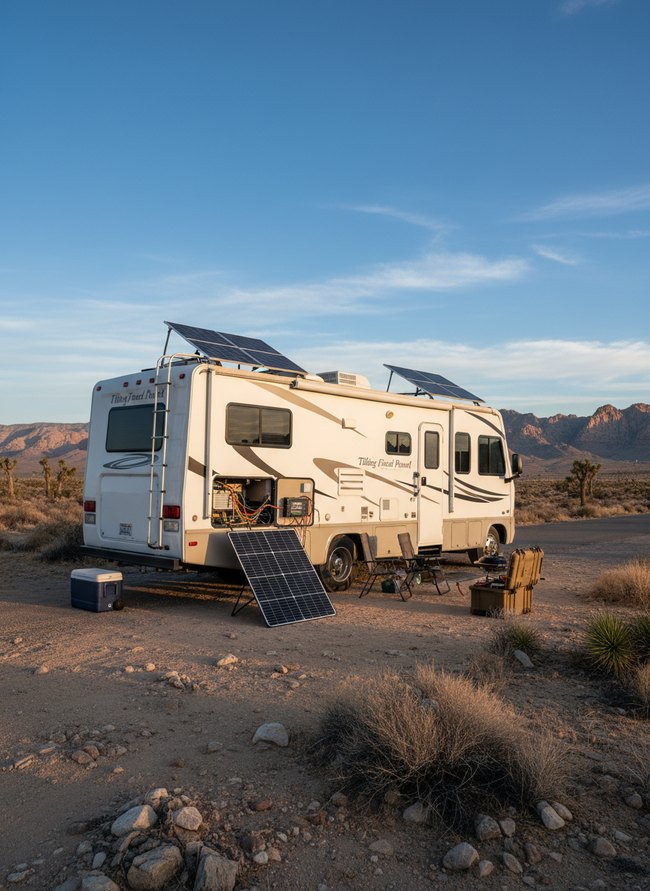
Several dark solar panels sit on the light roof of a tan RV, angled towards the clear blue sky for maximum sun exposure. A large ground-mounted solar panel rests near the RV’s open side compartment, connected to visible wiring and power equipment inside. The setup helps you gather power from multiple angles.
6. Foldable Suitcase Solar Kit
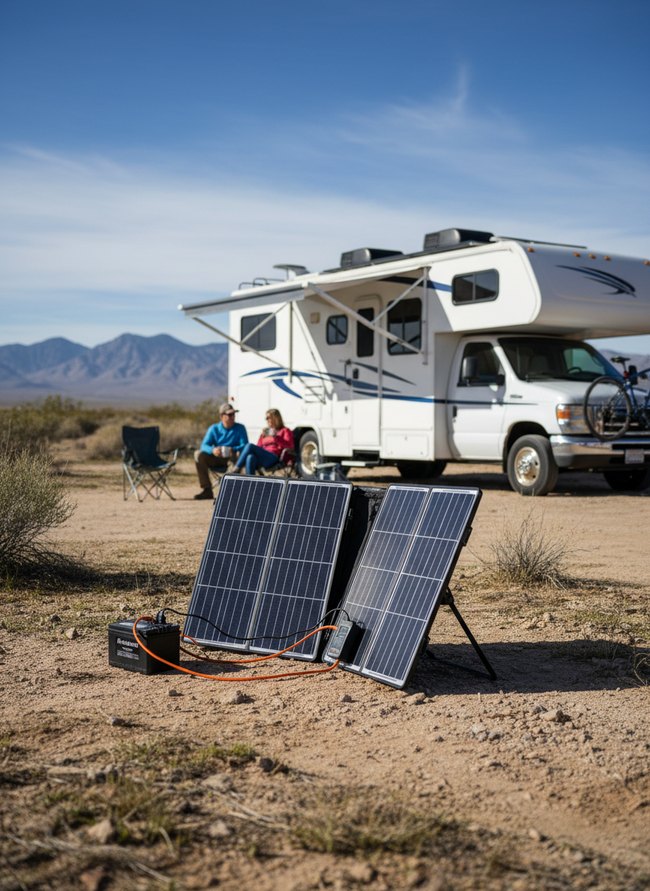
Two rectangular solar panels, each with dark blue cells, stand upright on the dry brown ground. An orange electrical cable connects the panels to a black battery box, supplying power for your rv solar setup ideas. The portable system allows you to easily move the energy source to follow the bright sunshine.
7. Hybrid Roof Rack Integration
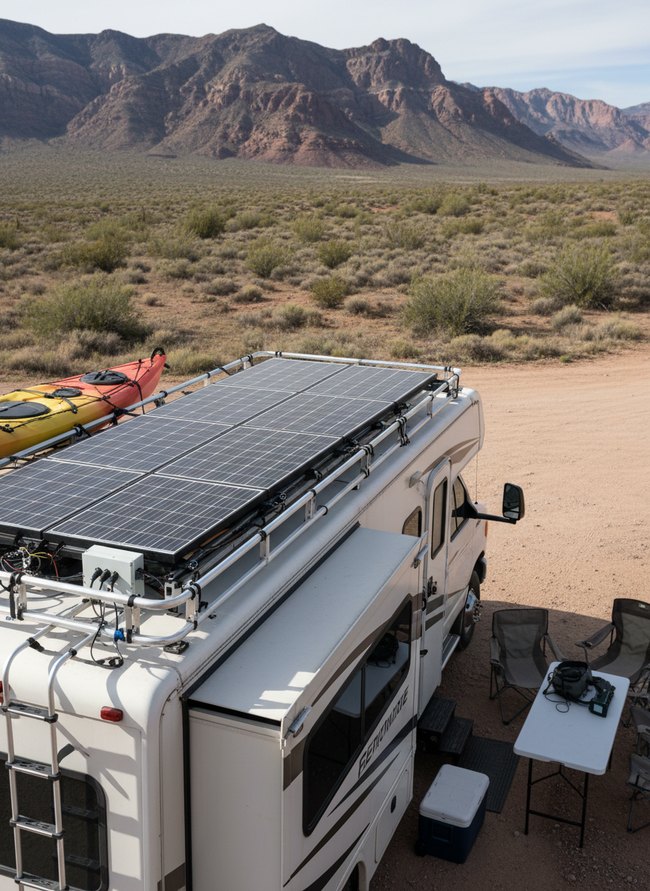
Multiple dark solar panels sit flat on a white RV roof, generating power for your travels. A silver metal rack system secures the panels and provides extra storage for yellow and orange kayaks. The setup offers a flexible way to bring both energy and adventure on your road trips.
8. Custom Bumper Pull System
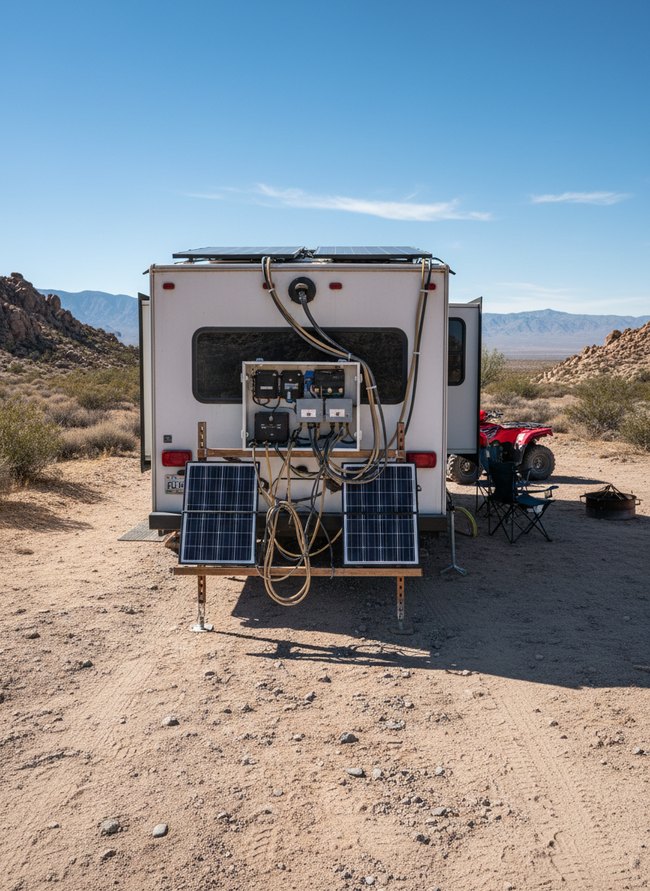
A white travel trailer shows a complex custom bumper pull system for off-grid power in a desert landscape. Several dark solar panels on the white roof capture sunlight, providing a steady stream of power for your adventures. Two additional ground-mounted black solar panels connect to a large white control box, giving you flexible power options. The solar system provides excellent versatility for charging your RV batteries.
9. Trailer Tongue Mounted Panels
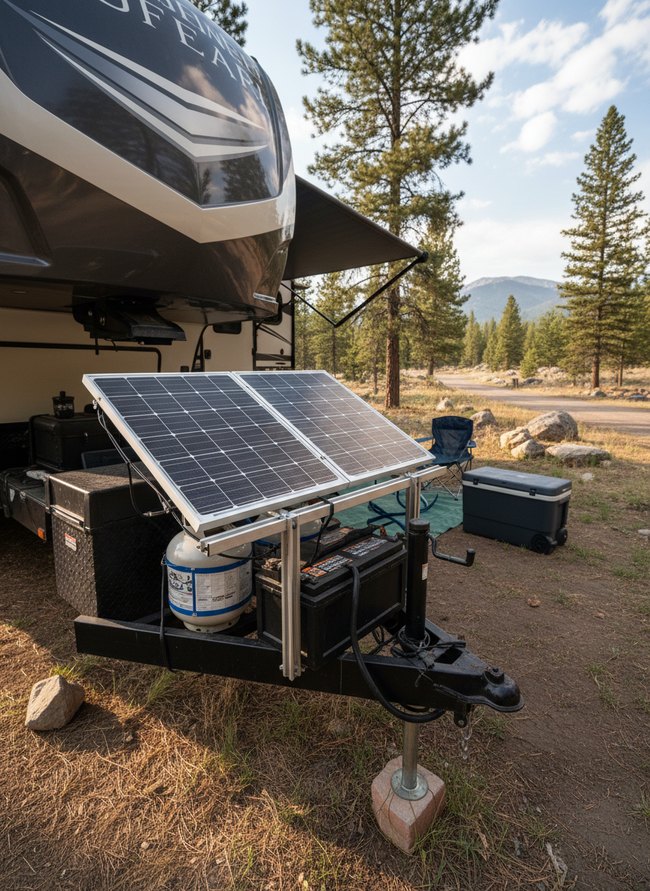
Two flat solar panels sit on a silver metal frame, angled up from the front of a dark travel trailer. The sturdy panels mount above a white propane tank and two black batteries, creating a compact RV solar setup. The arrangement efficiently uses the trailer’s front space for power generation.
10. Compact Rooftop Charging Station
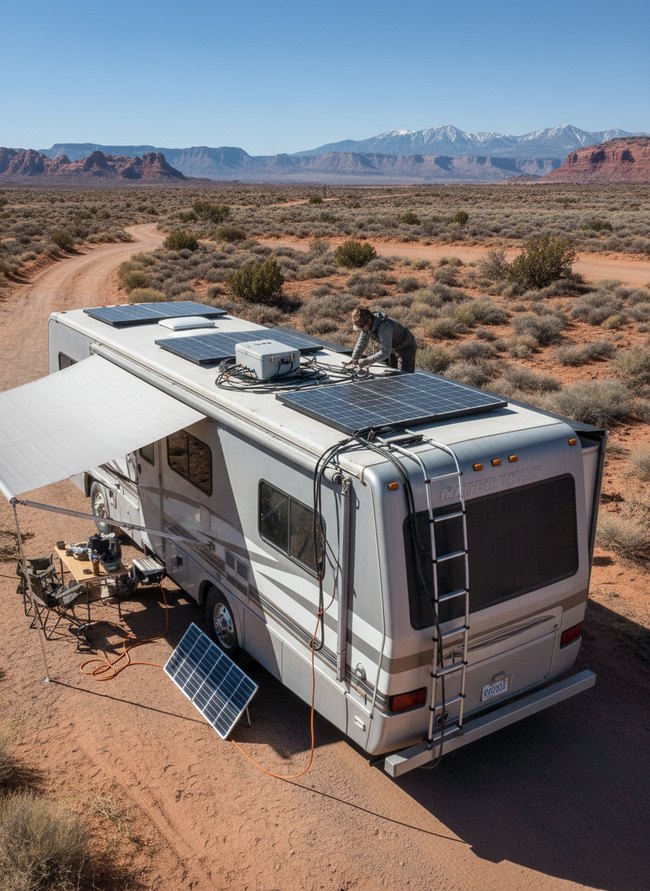
Flat solar panels line the silver RV’s rooftop, capturing sunlight to power your travels. A portable ground solar panel with an orange power cord connects to the vehicle, adding extra charging capability for off-grid adventures. The flexible setup provides reliable electricity, letting you comfortably explore remote landscapes.
11. Adjustable Ground Stand Array
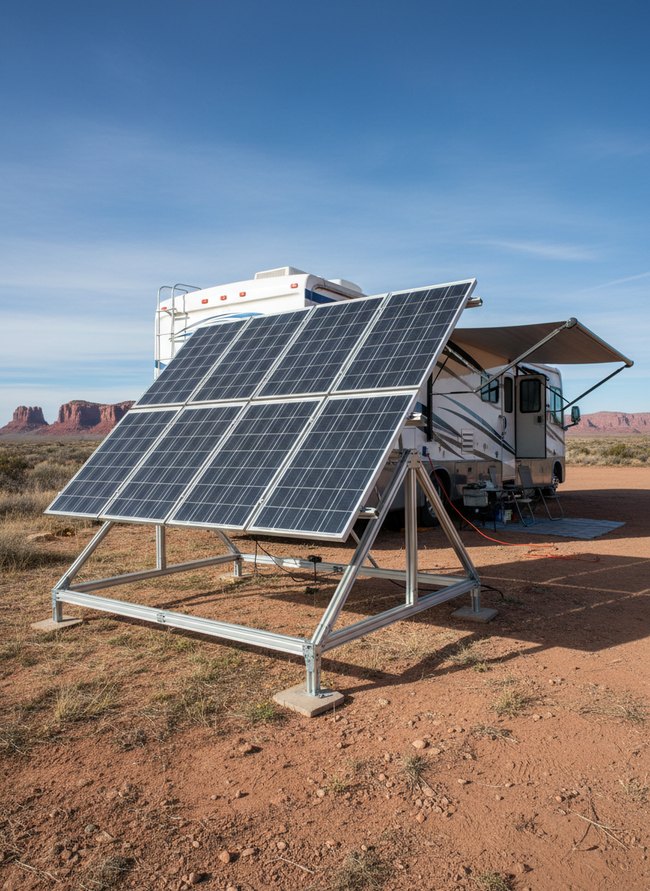
Six dark solar panels sit on a shiny aluminum frame, creating an adjustable ground stand array that angles toward the sun for maximum power. A long orange power cord stretches from the panels to a white recreational vehicle, providing clean energy for off-grid adventures. The array offers flexible positioning, allowing daylight chasing across the campsite.
12. Deployable Side Panel Mount
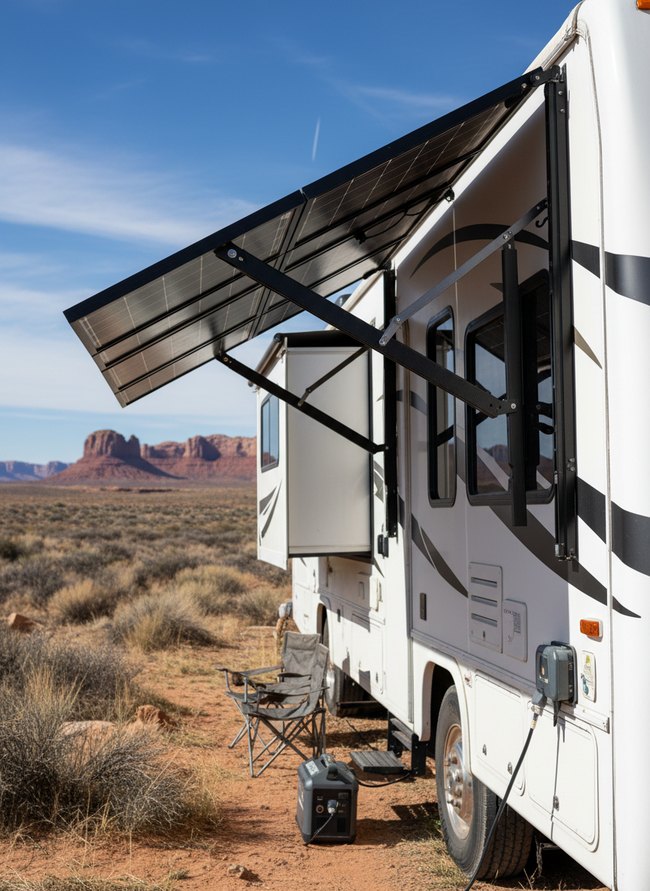
A dark solar panel array extends from the white RV side, offering an adjustable angle to catch maximum sunlight. Black metal arms securely hold the panels, allowing precise positioning for optimal power generation. The solar setup provides flexible power in any sunny location.
Beyond the Watts: Understanding Your RV’s True Energy Appetite (and Why It Matters for Solar Sizing)
…then those little power draws add up faster than you think. Phantom loads, for instance, silently drain your RV battery, even when appliances seem off. A tiny red light on your microwave, for example, constantly pulls a few watts, slowly eating away at your precious power supply. You must measure the actual power draw of your everyday items over 24 hours. This gives you a true picture of your RV’s daily energy appetite.
Many people only look at the wattage listed on an appliance sticker. This common advice falls short because those numbers show peak power use, not average consumption. Your coffee maker might list 1000 watts, but it only runs at that full power for a few minutes. A large surge of power happens when your air conditioner first kicks on. That initial surge requires a bigger solar inverter than its running wattage suggests. You need to account for these short, high-power demands. Understanding these brief power spikes helps you choose an inverter that won’t trip when your fridge compressor starts.
Cold weather also reduces battery performance. A lithium battery stores less usable power in frigid temperatures. You need to factor in colder climates if you plan winter trips. Your solar panels also produce less power on cloudy days. More panel area gives you a buffer against low light conditions. You gain freedom with a system that matches your real-world usage.
The ‘Hidden’ Costs and Considerations: From Wire Gauge to Roof Penetrations
…and you definitely want to pick the right wire thickness for your RV solar setup, because undersized copper wire wastes precious power as heat. Thick aluminum cables carry more current with less loss, giving your deep cycle batteries a fuller charge. Many folks forget about the charge controller’s home inside the rig. You position the small rectangular box where cool air flows freely around the metal fins, since a hot controller works less efficiently and can shorten its working life. For example, mounting the dark gray unit in a closed cabinet without ventilation traps heat. Roof holes for electrical wires need careful sealing. You use a strong, UV-resistant caulk, like white silicone, to prevent water from dripping into your cozy living space. A small drip becomes a big problem. Another consideration involves your solar panel placement on the curved metal roof. You might angle the large black panels slightly toward the sun to catch more rays, even if it means drilling a few extra holes. This small adjustment boosts energy capture significantly. Thin gauge wire causes voltage drop. Your shiny new solar system performs its best when every component works together without hidden energy drains.
Which Idea Will You Try First?
That’s 12 different takes on rv solar setup ideas. The best ideas above are usually the smallest moves — one material, one layout shift, one piece of furniture in the right place. Pick whichever room feels closest to your space and start there before tackling the rest.
Found an idea worth keeping? Save this post to your Pinterest board so it’s waiting for you when you’re ready to start your own project.