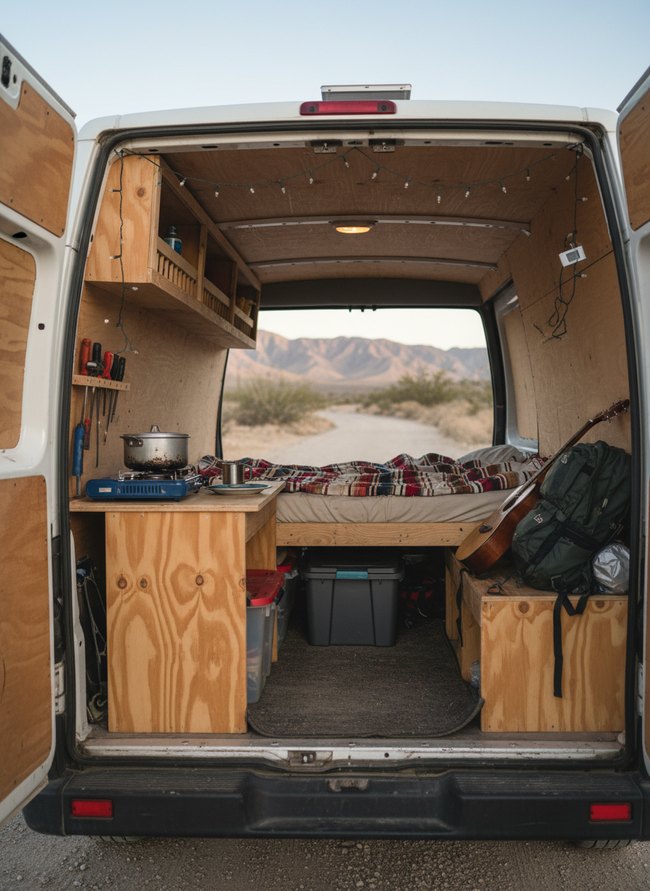
Van Build Layout for Beginners: Where to Start
An empty cargo van presents a wide-open box, ready for transformation. A spacious open layout offers freedom of movement, sacrificing dedicated zones for cooking or sleeping. Conversely, a compartmentalized interior provides distinct areas for daily living, requiring careful traffic flow around fixed walls and solid doors. Each choice molds daily life on the road. A tall ceiling allows overhead storage for bulky camping gear, while a lower roofline offers a stealthier city parking profile. Short wheelbase vans navigate tight turns with ease, yet a long wheelbase model provides ample floor space for a built-in shower stall. Personal preferences drive the design. The following designs showcase diverse approaches to a functional van build layout for beginners.
1. Modular Starter Van Layout
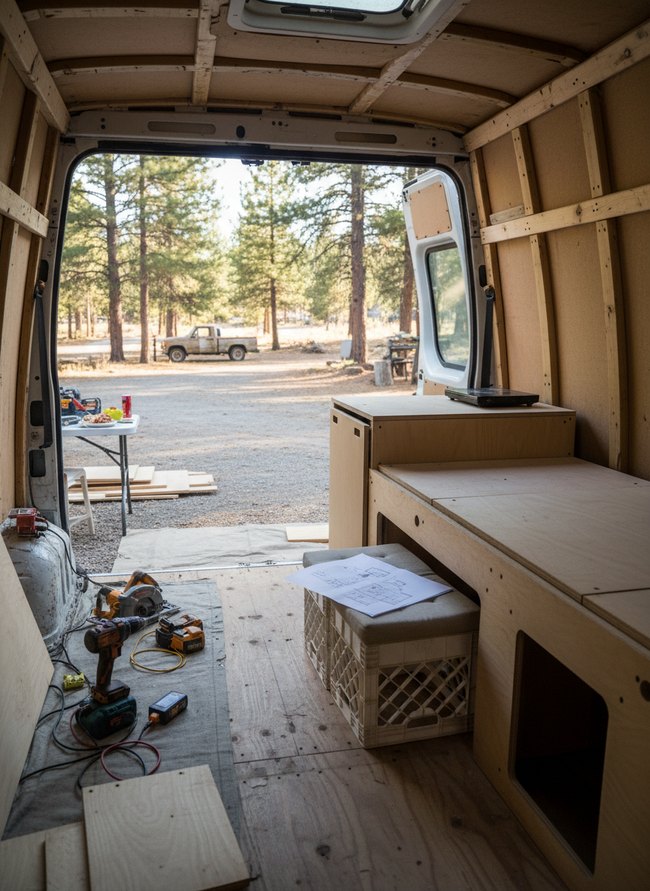
Plywood cabinet frames rise from the unfinished wooden floor, showing early stages of a van build layout for beginners. The simple storage offers customizable organization, trading away complex, built-in features. A paper blueprint rests on a white plastic crate, guiding the construction of the mobile living space.
2. Essential First Van Build
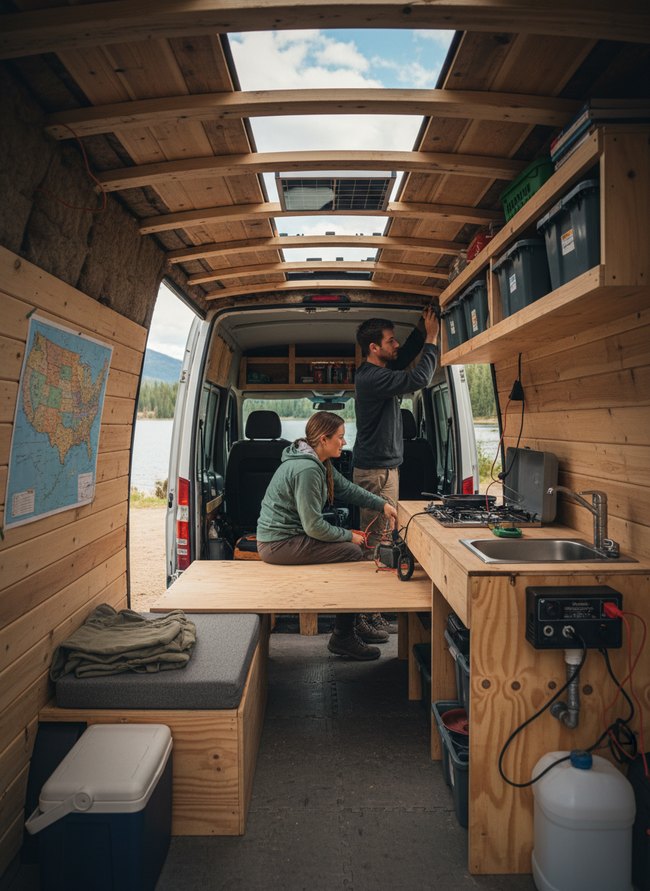
Warm pine planks offer a cozy, natural shell for your mobile home. A simple van build layout gives you open space but trades away dedicated sleeping quarters. A compact plywood kitchen counter with an inset stainless steel sink provides cooking functionality without filling the entire passenger side.
3. Compact Beginner Conversion
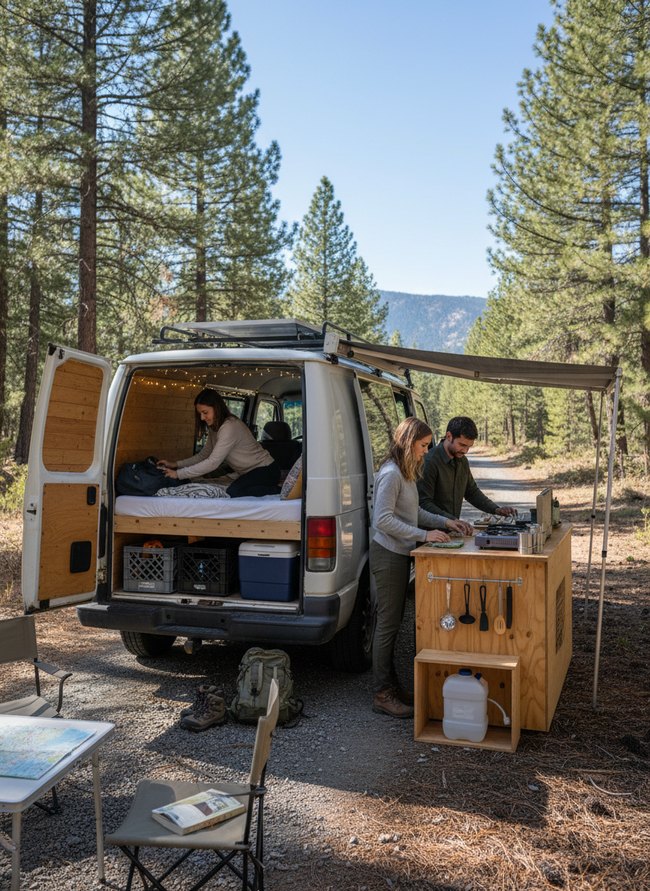
A light wooden bed frame fills the back of the white van, offering a raised sleeping area. The van features an open-concept living space over enclosed cabinets, trading some privacy for easy access to stored items. The simple layout for beginners provides a functional bed and a convenient pull-out kitchen unit, giving you essential comforts in a compact design.
4. Simple DIY Van Blueprint
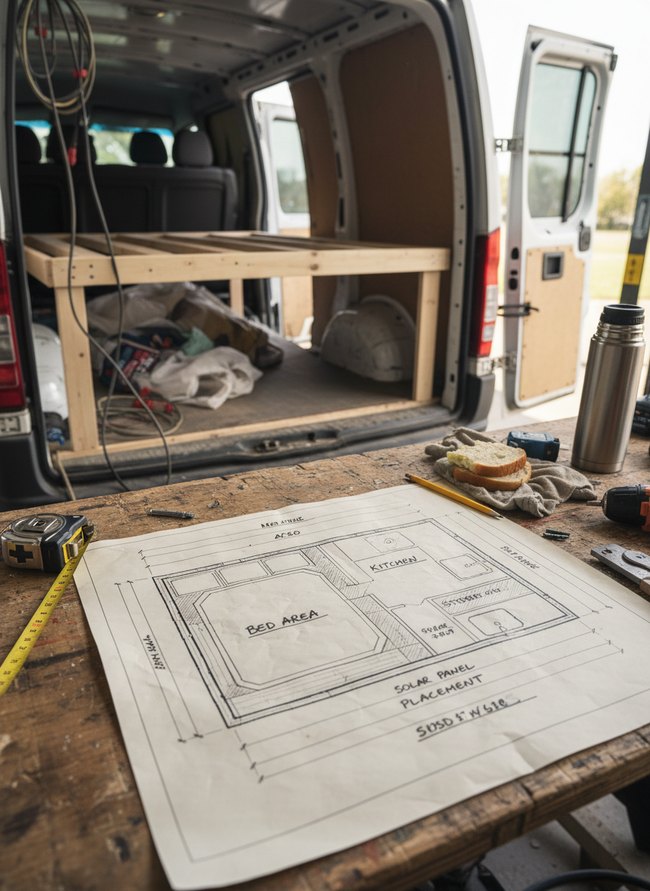
A hand-drawn blueprint on a wooden workbench offers a straightforward van build layout for beginners. Builders choose this simple design for clear guidance over complex custom details. The open cargo area of the white van, visible through the wide-open rear doors, shows a basic wooden bed frame, ready for a mattress.
5. Basic Adventure Van Setup
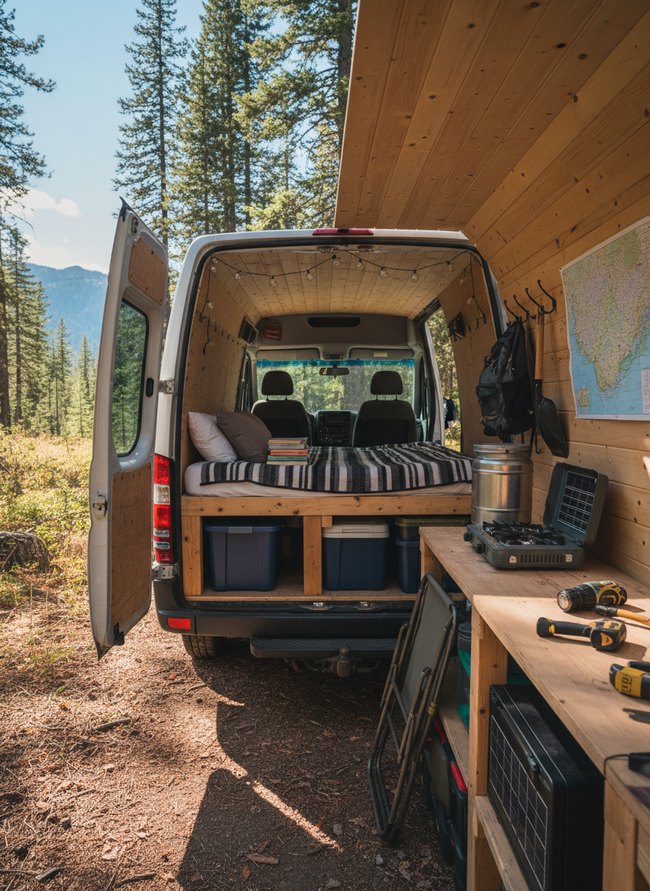
A wooden slat bed frame rises high, giving generous space underneath for dark blue storage bins. A lighter pine ceiling and walls enclose the van’s interior. The basic layout for beginners trades some standing room for ample under-bed storage, a smart choice for long outdoor trips.
6. Novice Friendly Camper Plan
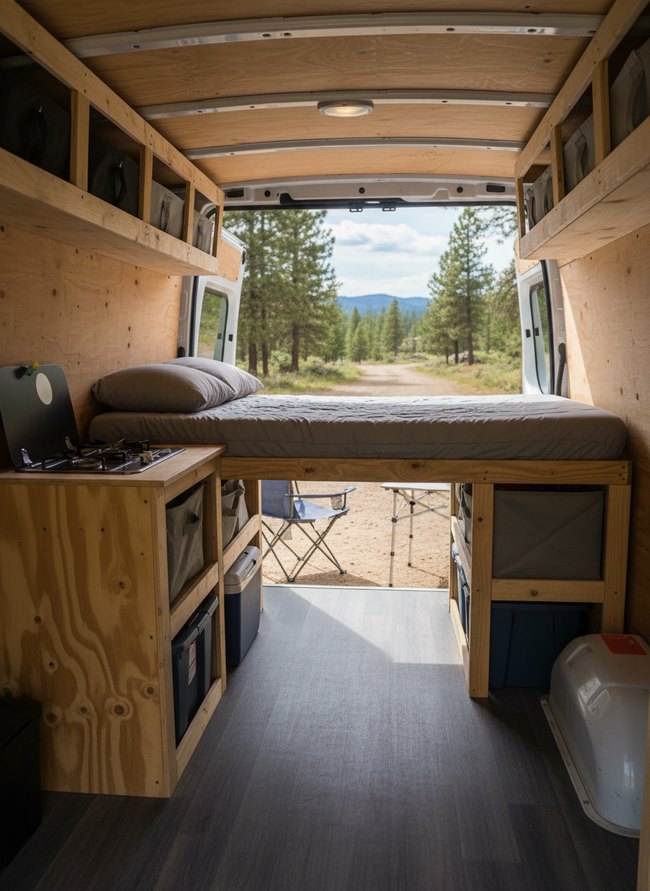
The gray quilted mattress rests on a high wooden platform, letting you choose between a big bed or abundant storage underneath. Light-toned plywood walls and ceiling panels give a bright, open feeling inside the narrow space. The van build layout prioritizes sleeping comfort and hidden storage over a large open living area.
7. Minimalist First Van Design
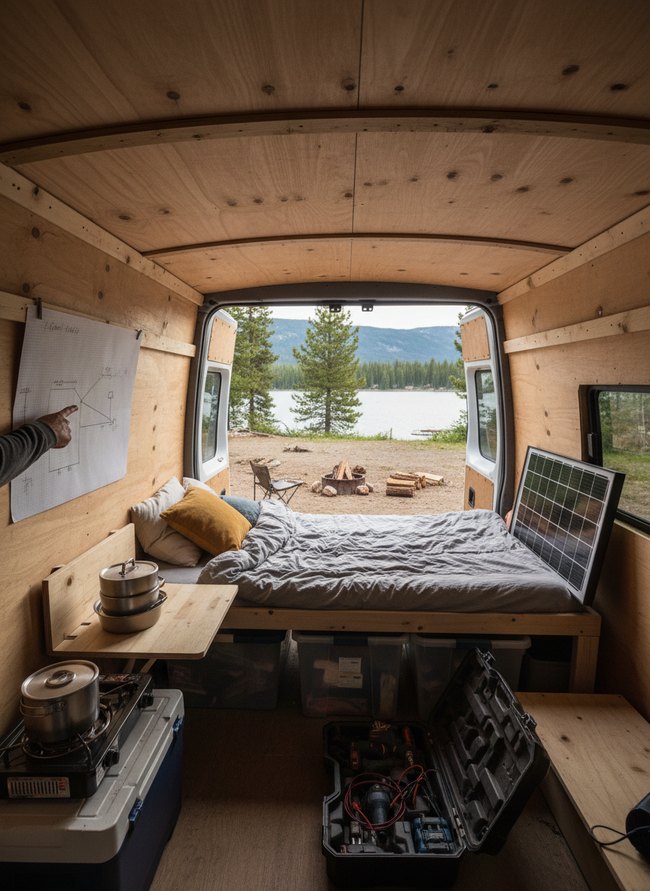
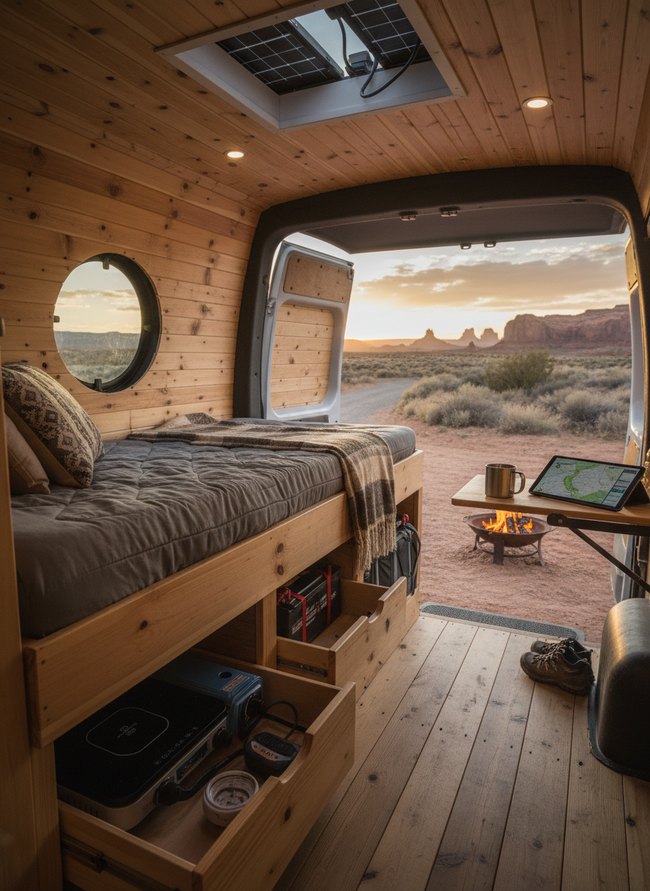
Honey-toned plywood walls show a straight path to the open rear doors. Direct views of the lake and trees are gained, but some weather protection is lost. A simple gray bed with plump pillows sits on a wooden frame, creating under-bed storage for clear plastic bins.
8. Easy Transit Van Concept
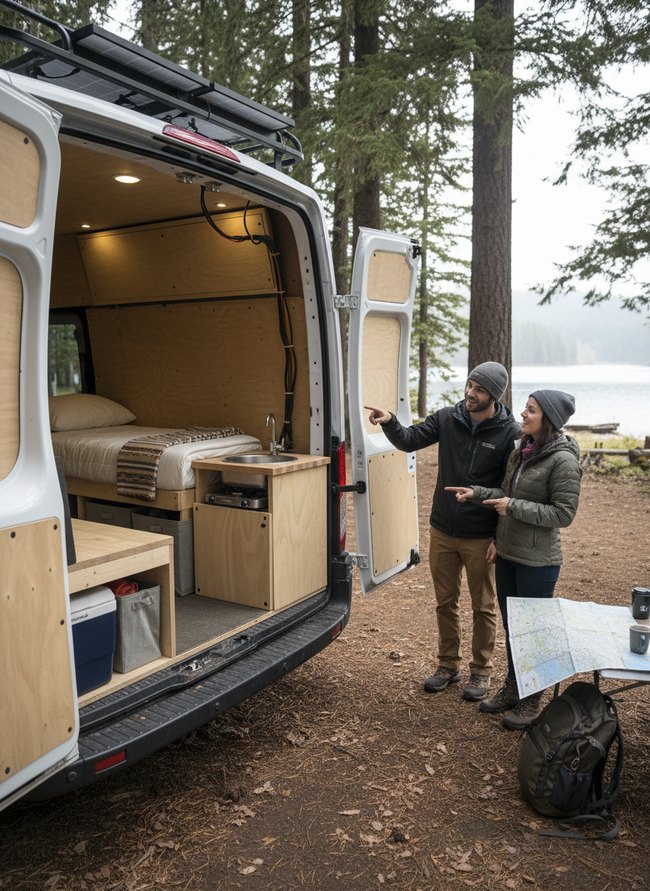
A compact wooden bed frame sits against the driver’s side wall, offering a fixed sleeping space. The permanent bed means always having a comfy spot, but the frame uses up floor room. A small wooden counter with a round stainless steel sink provides a handy kitchen area for preparing simple meals.
9. Foundational Van Life Guide
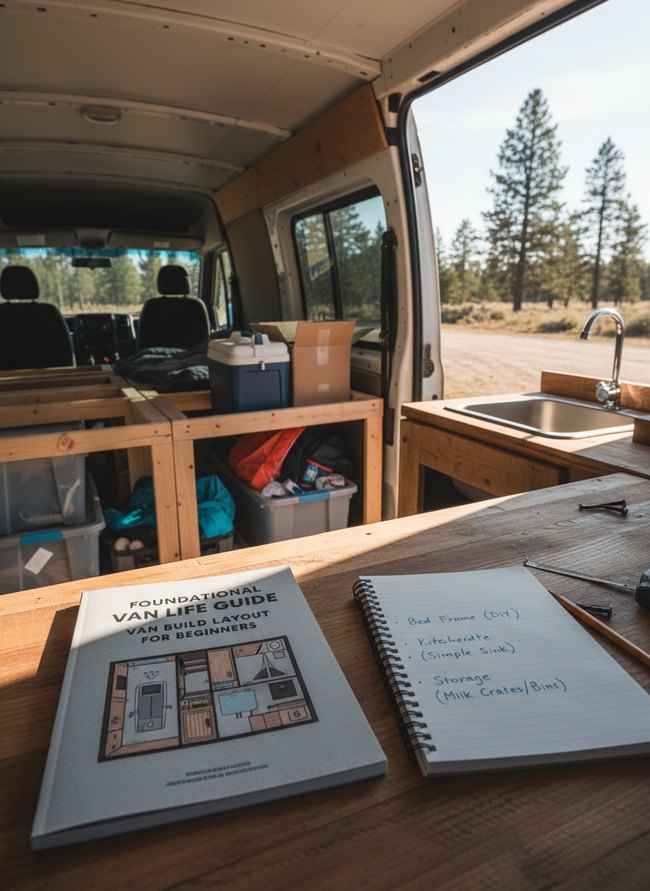
A light gray book, “Foundational Van Life Guide,” rests on a golden brown wooden surface. You choose a simple, functional van build layout for beginners over a complex, custom design. The wood frame bed base and stainless steel sink show a focus on core needs, not elaborate finishes.
10. Practical Initial Campervan
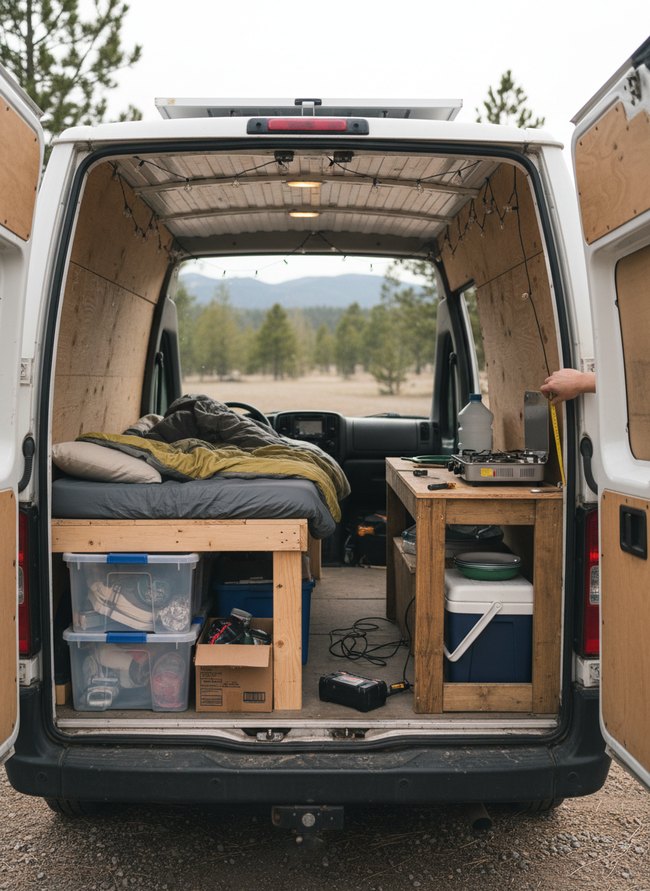
A wooden platform bed with a gray mattress fills the left side of the cargo area. Van builds like this prioritize easy setup and open space over built-in features. A wooden table on the right holds a silver camp stove, providing a functional cooking area.
11. Smart Entry Level Layout
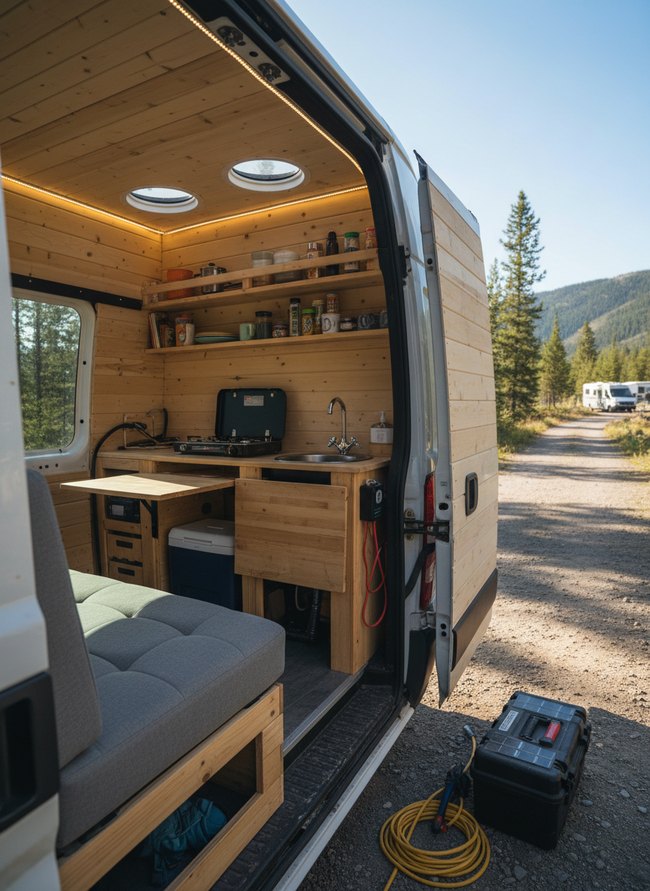
Light pine paneling climbs the van walls and ceiling, creating a warm, inviting space. A compact kitchen could feature a small stainless steel sink and a portable two-burner stove. The simple van build layout trades large appliances for greater open floor space.
12. Quick Start Van Interior
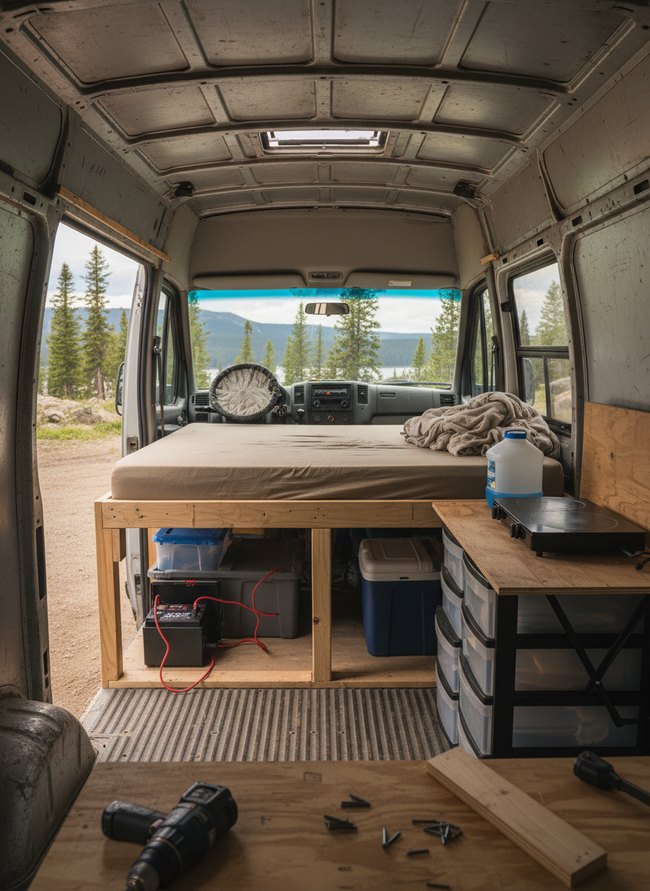
The simple wooden bed frame dominates the van’s interior. The basic layout for beginners provides sleeping space but offers little built-in storage or comforts. A small plywood counter holds a black cooktop, hinting at minimal kitchen functions.
Should I Prioritize a Fixed Bed vs. Convertible Seating?
Your primary decision centers on a fixed bed frame versus convertible bench seating. A permanent bed offers undeniable ease. You leave a soft mattress made, ready for rest. However, a fixed sleeping platform consumes significant square footage inside your custom van. This large structure limits open floor space and walking room.
Conversely, a clever convertible couch provides flexibility. During daylight hours, the cushions form a comfortable daybed. You gain valuable living area for cooking or working. At night, the wooden slats pull out, creating a full sleeping surface. This daily transformation takes effort, adding a small chore to each evening.
Consider your travel plans carefully. Weekend warriors will appreciate a fixed platform. People who live full-time inside their adventure van need the extra floor space of a convertible design. A small galley kitchen or a compact work desk becomes possible with the latter.
Built-in Cabinetry or Modular Storage: Which Saves More Space?
Custom wooden cabinetry offers a fixed, integrated look inside your van. Built-in storage maximizes every millimeter of your small space. However, such a permanent installation limits layout changes later. Skilled hands often craft these sturdy frames.
Modular plastic boxes provide extreme flexibility. You can rearrange these portable units daily. Furthermore, modular storage allows easy access to the van’s original metal walls for maintenance. Nevertheless, these stackable containers can shift during travel. They also seldom fit perfectly into every nook, wasting small pockets of space.
Homeowners planning a single, unchanging long-term layout should build custom wooden cabinetry. This choice creates a cohesive, high-end finish. Travelers who enjoy frequent layout changes or value maintenance access should select modular storage bins. Such a system offers unmatched adaptability.
Which Idea Will You Try First?
That’s 12 different takes on van build layout for beginners. The best ideas above are usually the smallest moves — one material, one layout shift, one piece of furniture in the right place. Pick whichever room feels closest to your space and start there before tackling the rest.
Found an idea worth keeping? Save this post to your Pinterest board so it’s waiting for you when you’re ready to start your own project.