8 Beginner RV Mistakes and How to Avoid Them
The first golden sunset over a new landscape paints a hopeful picture. A fresh breeze rustles through open windows, bringing the scent of pine and adventure. Suddenly, the grey water tank overflows, dripping a cold stream onto a canvas camping chair. Many new travelers encounter unexpected hiccups on the open road. New RV owners often hit bumps, learning lessons the hard way about their wheeled homes. The guide highlights eight common beginner RV mistakes, offering clear ways to steer clear of them. You can keep your journey smooth, avoiding small issues that might overshadow grand experiences. Understanding these pitfalls helps you enjoy every mile without unnecessary stress.
1. Overpacked Weight Miscalculation
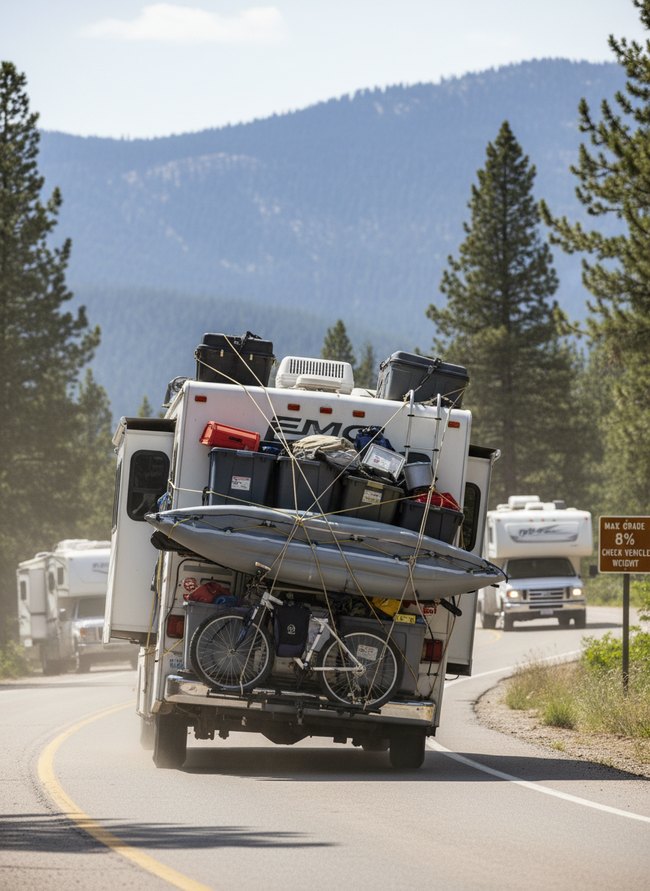
A white RV drives down a paved mountain road, its roof and rear bumper completely covered with black storage bins and outdoor gear. Many thin bungee cords crisscross over the tall pile of equipment, holding a gray kayak, two bicycles, and a red cooler in place. A brown road sign on the right warns about an 8% maximum grade, reminding drivers to check vehicle weight.
2. Underestimated RV Expenses
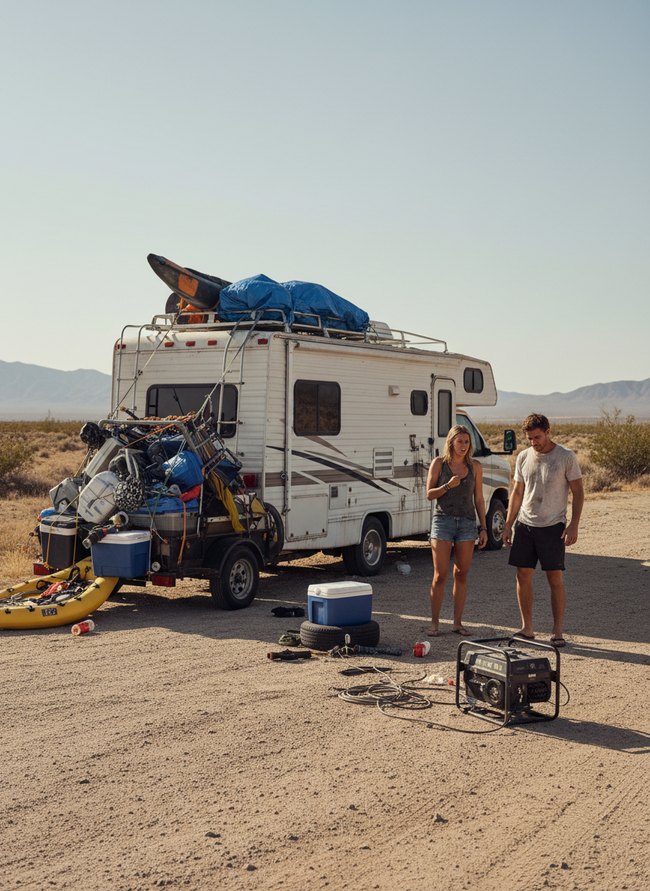
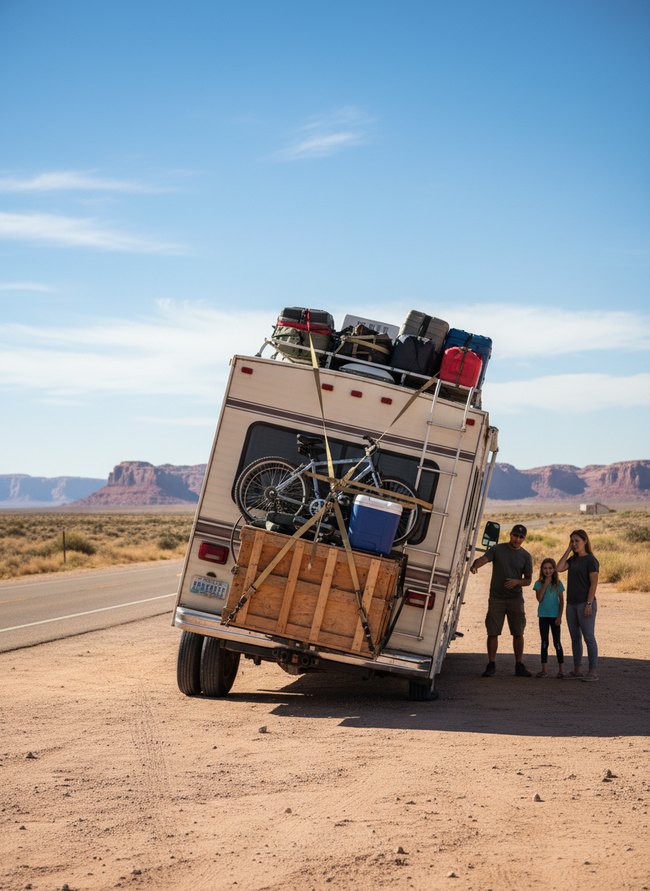
A white recreational vehicle stands parked on a dusty dirt road, overloaded with gear. A small black utility trailer hitches to the back bumper, piled high with camping equipment, blue coolers, and a yellow inflatable boat. Two people stand near a small black generator, looking tired in the desert heat; beginner RV mistakes can leave you stranded and unprepared.
3. Neglected Tire Pressure
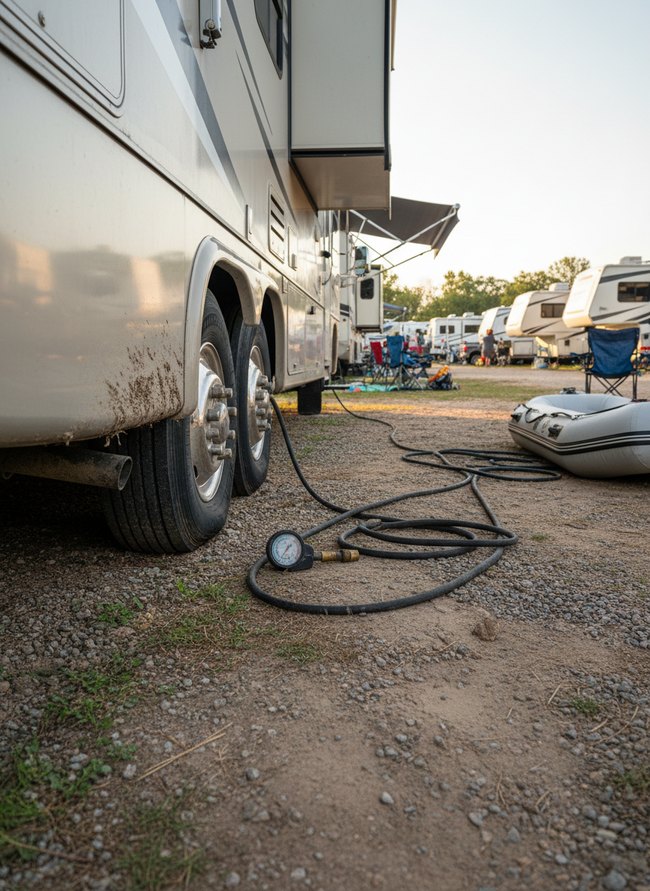
A thick black air hose lies across the gravel ground, connected to the shiny metal wheel of a large beige motorhome. A small circular tire pressure gauge with a white face rests on the hose, showing the air level. Checking the RV’s tire pressure before every trip helps avoid dangerous blowouts and expensive repairs.
4. Improper Leveling Setup
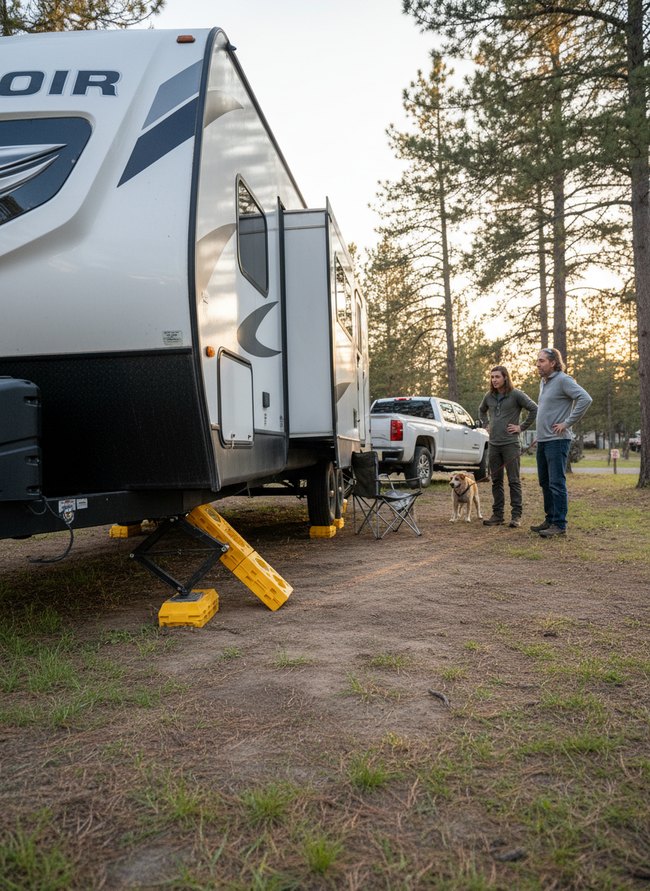
Bright yellow leveling blocks sit under the white RV, keeping the large vehicle steady on uneven ground. A metal scissor jack extends from the RV frame to a block, providing a stable base for the heavy trailer. RV owners can avoid common beginner mistakes by always using proper leveling tools, ensuring a comfortable, safe camping experience.
5. Ignored Tank Management
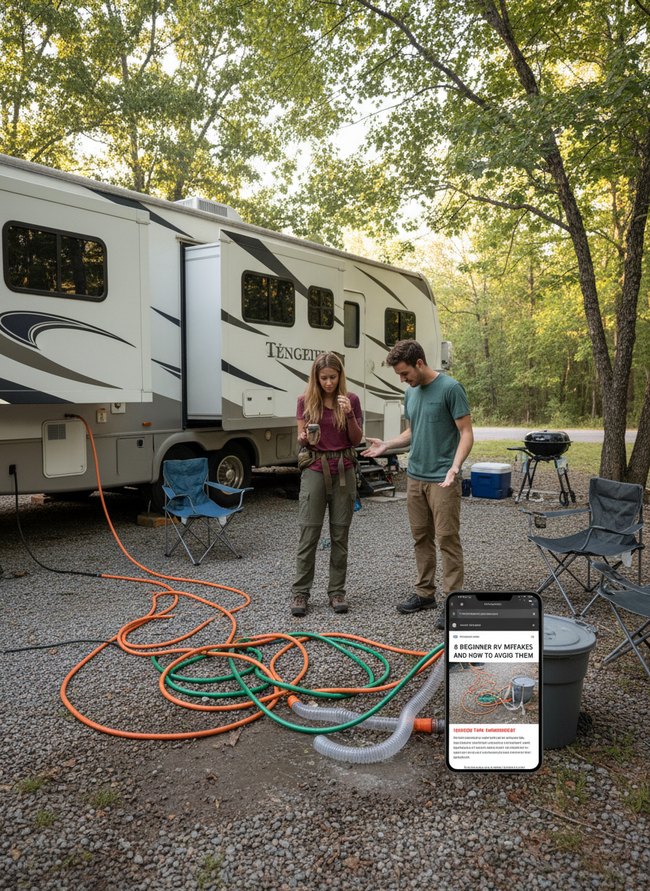
A large white recreational vehicle sits parked on a grey gravel campsite. Orange and green water hoses snake across the ground, leading to a clear corrugated drain hose. The drain hose leaks a small puddle of grey water onto the dirt. A young man gestures with open hands at the messy hose situation, while a woman looks at her phone, seeking solutions for beginner RV mistakes.
6. Wrong Campsite Booking
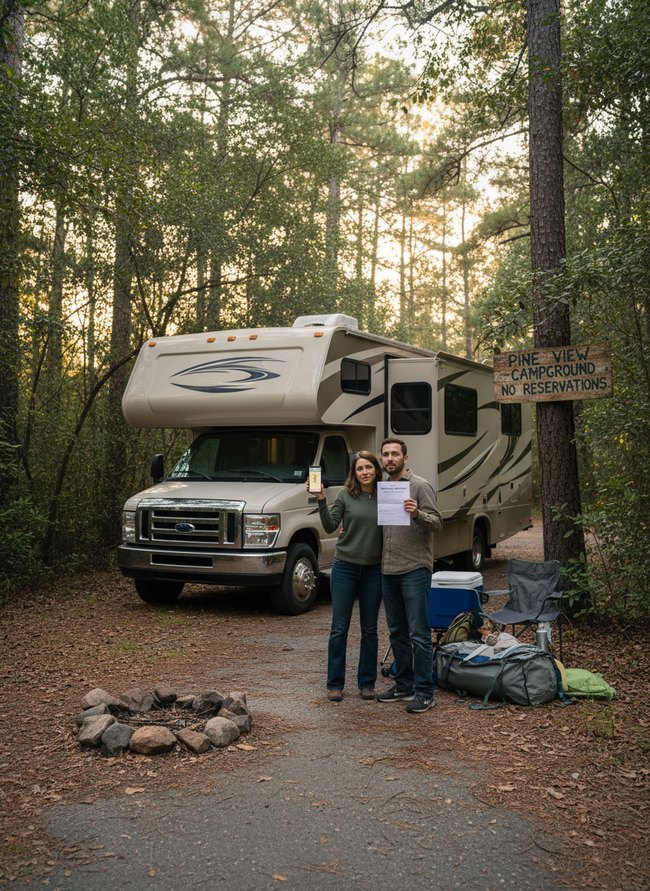
A large cream recreational vehicle sits parked on a dirt road in a wooded area. A man and a woman stand in front of the camper, holding a smartphone and a paper document, showing their booking issues. A handmade wooden sign nailed to a tall, brown tree trunk declares “PINE VIEW CAMPGROUND NO RESERVATIONS,” highlighting a common beginner RV mistake. The scene provides a helpful visual warning for new RV owners to confirm reservation policies before arrival.
7. Forgotten Pre-Trip Checklists
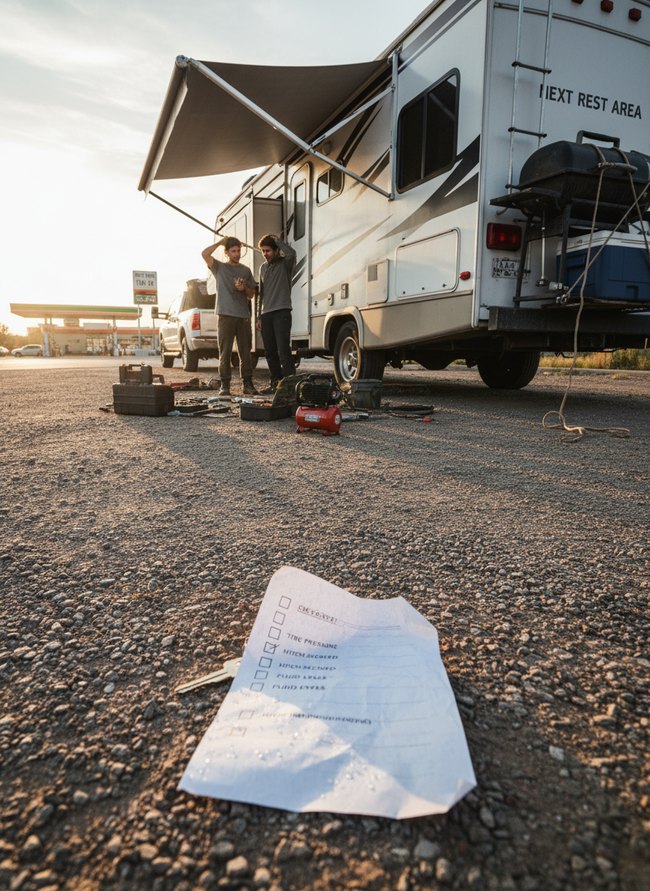
A crumpled white paper checklist lies on a gravel surface, abandoned. Two men stand beside a large white RV with a gray awning, looking puzzled as they face a pile of tools on the ground. Avoiding beginner RV mistakes means keeping the checklist close and accounted for, ensuring a smooth journey.
8. Overlooked RV Insurance
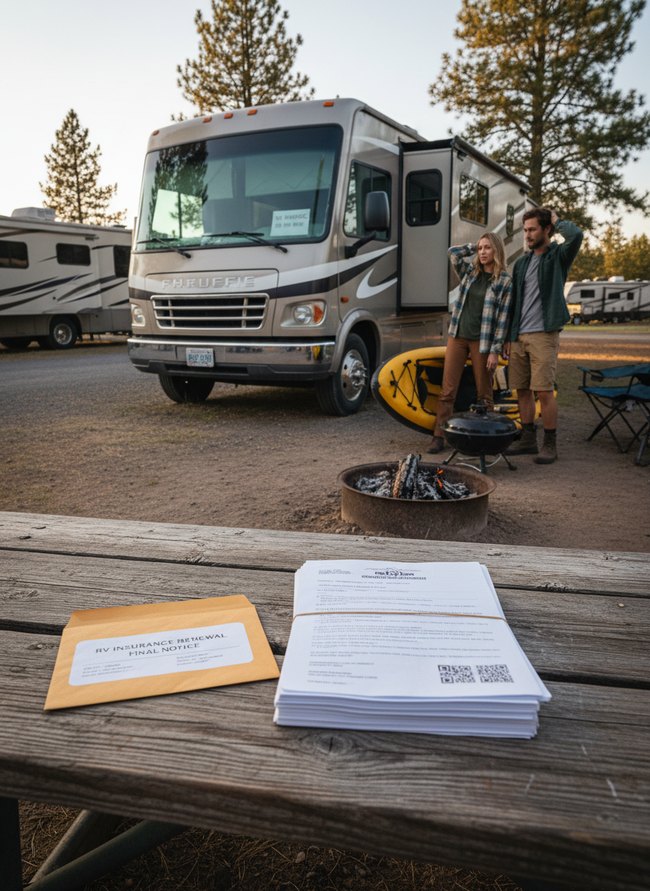
A light brown envelope labeled “RV INSURANCE RENEWAL FINAL NOTICE” rests on a weathered wooden picnic table. Next to the envelope, a thick stack of white papers, tied with a rubber band, holds important documents. A pair of troubled campers stand near a large motorhome, highlighting a common beginner RV mistake.
Beyond the Leveling Blocks: The Hidden Dangers of Uneven Parking (and How to Spot Them)
Many RV owners think a bubble level tells the whole story, but a tiny slant can cause big problems. Your icebox needs to sit truly flat for its chilling system to work right. A crooked freezer loses cold air, then your food spoils quickly. Watch for doors swinging open or closing on their own inside your camper; a door’s movement reveals a hidden tilt. This slight lean can also strain your RV’s frame over time, twisting its metal joints. You need to keep the black tank drain valve lower than the tank bottom for full wastewater removal. A high-set drain leaves dirty water behind, leading to nasty odors inside your tiny living space. Feel the floor with your bare feet. A subtle slope underfoot signals an unlevel position. Walk around the entire RV with a full glass of water. If water sloshes consistently to one side, you are not truly level, even with bubble levels showing green. Trust your senses more than the plastic tools. Your nose will tell you if the gray water backs up from a clogged drain line.
The ‘RV Whisper’: Understanding Your Rig’s Sounds Before They Become Problems
…listening closely unlocks a new level of RV confidence. You must learn your specific rig’s normal sounds; this skill helps you spot real trouble. Many new owners ignore little clicks and hums, waiting for big problems. A tiny water pump whir, for instance, means the system builds pressure. Different RVs make unique noises; your coach has its own song. Ignoring a new, sharp squeal from the tires on a long trip means worn brake pads. That metal-on-metal grind will quickly ruin expensive rotors. You should listen intently to the faint refrigerator thrum when it cycles. A loud, rattling clang from the undercarriage signals a loose exhaust pipe or failing suspension component. New RVers often wait for a dashboard light; experienced road warriors trust their ears. That low, steady generator rumble is normal power production. A sudden, high-pitched whine from the engine compartment, however, suggests a loose belt. You need to pay attention to these audible cues. Learning your RV’s soundscape protects your wallet and your safety on the open road.
Which Idea Will You Try First?
That’s 8 different takes on beginner rv mistakes. The best ideas above are usually the smallest moves — one material, one layout shift, one piece of furniture in the right place. Pick whichever room feels closest to your space and start there before tackling the rest.
Found an idea worth keeping? Save this post to your Pinterest board so it’s waiting for you when you’re ready to start your own project.