DIY Van Build vs Professional Conversion: Which Is Worth It?
Building a custom camper van offers distinct advantages over hiring a shop. Your hands craft each oak cabinet and every electrical wire, saving significant money. A professional van conversion delivers a polished, road-ready vehicle with robust systems and a clean, factory-like finish. People often weigh the personal satisfaction of a do-it-yourself project against the assured quality of expert craftsmanship. Both options create a mobile living space, but they demand different amounts of time, skill, and budget. Each path presents unique benefits and drawbacks for turning a cargo van into a cozy, rolling home. Explore the details of each approach to see which option fits your adventure.
1. DIY Rustic Camper Conversion
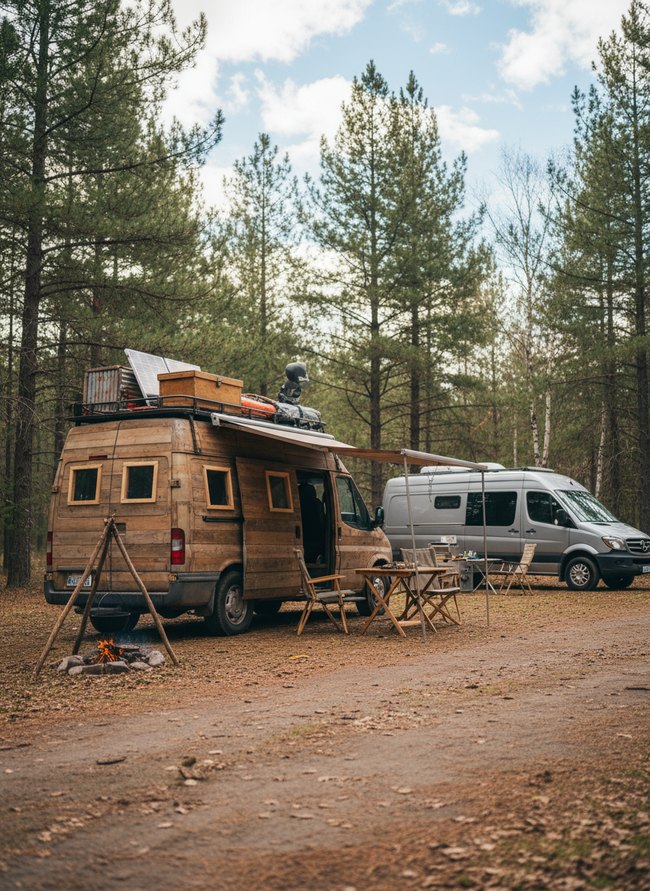
Weathered cedar planks on the rustic van conversion make a strong personal statement. A DIY van build allows for unique custom details, trading factory polish for raw, natural character. A small campfire glows nearby, suggesting a comfortable, self-sufficient outdoor living space under tall green pines.
2. Professional Luxury Sprinter
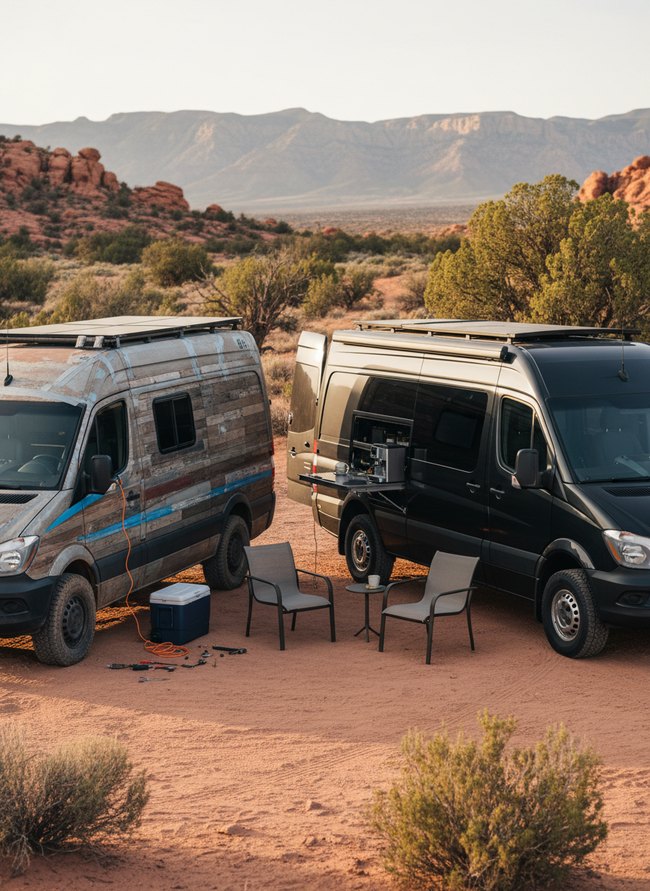
The sleek black Sprinter van showcases a factory-finished exterior, trading a homemade feel for polished reliability. The luxury van offers a tidy pull-out countertop with a shiny coffee machine, providing convenient amenities without personal construction effort. Two gray canvas chairs and a small round table sit on the reddish dirt, suggesting an immediate, comfortable campsite setup.
3. Owner-Built Adventure Van
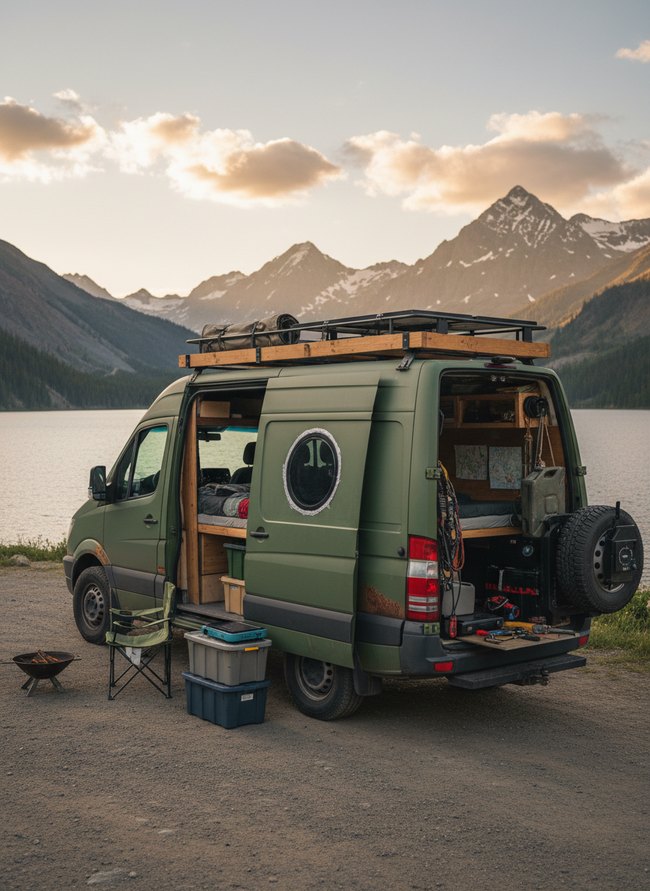
A moss green cargo van, with its side and rear doors open, reveals a rustic wood-paneled interior. Van dwellers can choose a custom-built dwelling, trading away the quicker setup time of a professional conversion for unique, handcrafted details like the circular rear window. The sturdy wooden roof rack holds a rolled grey canvas, ready for outdoor adventures.
4. Factory-Finished Custom Rig
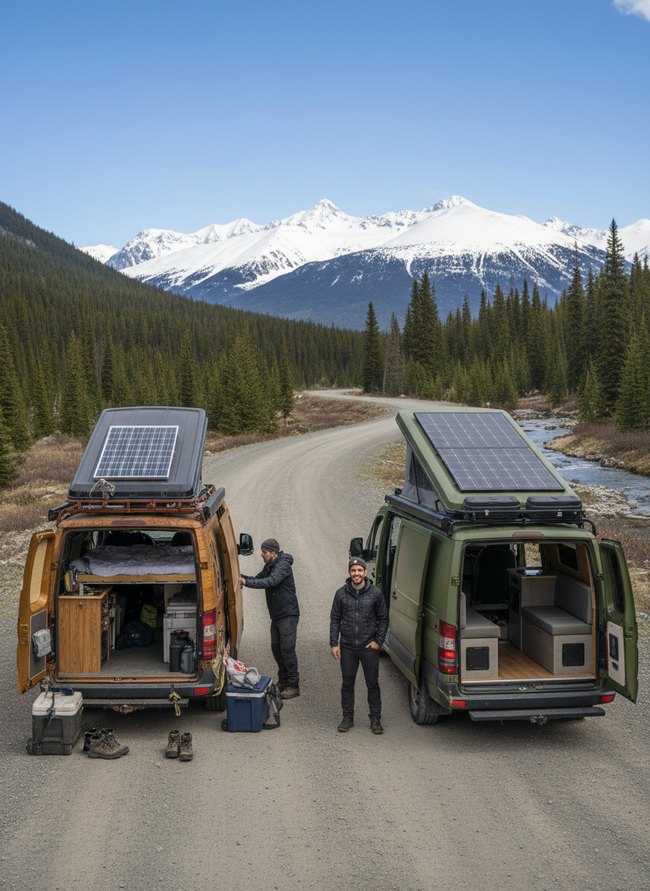
Two olive green and honey-toned cargo vans with open rear doors stand on a winding gravel road. Choosing a professional van conversion means gaining a fully integrated interior with durable grey cushions and smooth birch plywood. A DIY van build allows for a more personal touch with raw wood cabinets and dark grey bedding.
5. Handcrafted Minimalist Build
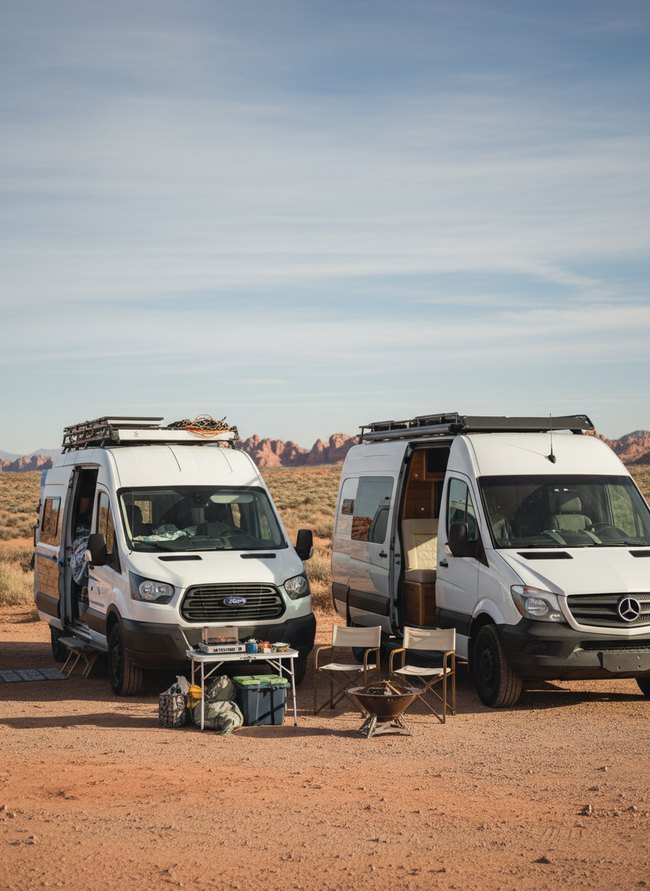
A white Ford Transit van stands with its side door open, revealing a simple wooden interior. Van owners choose between a hands-on DIY or professional van conversion, trading rapid completion for a deep understanding of their mobile home. Two folding camp chairs and a portable fire pit sit on the rust-colored ground, suggesting a relaxed outdoor lifestyle.
6. Artisan Designed Bespoke Van
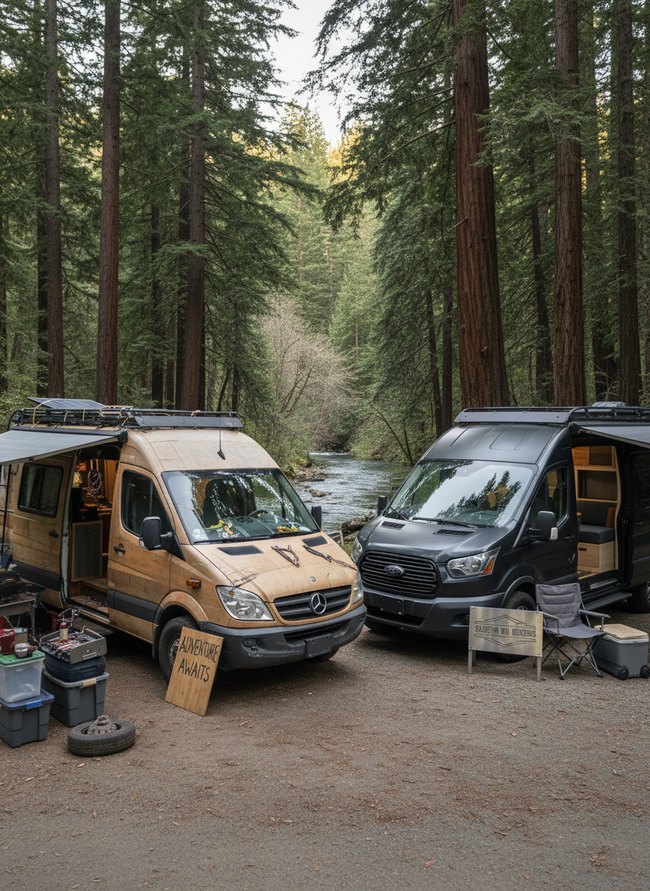
Light blonde wood paneling on the Mercedes van’s exterior offers a distinctive, handcrafted aesthetic. Owners gain a unique, personalized look when choosing a DIY versus professional van conversion, trading away the uniformity of factory finishes. A charcoal gray Ford Transit van parked nearby displays modern, sleek lines, presenting an alternative choice for a mobile home.
7. Budget-Friendly DIY Setup
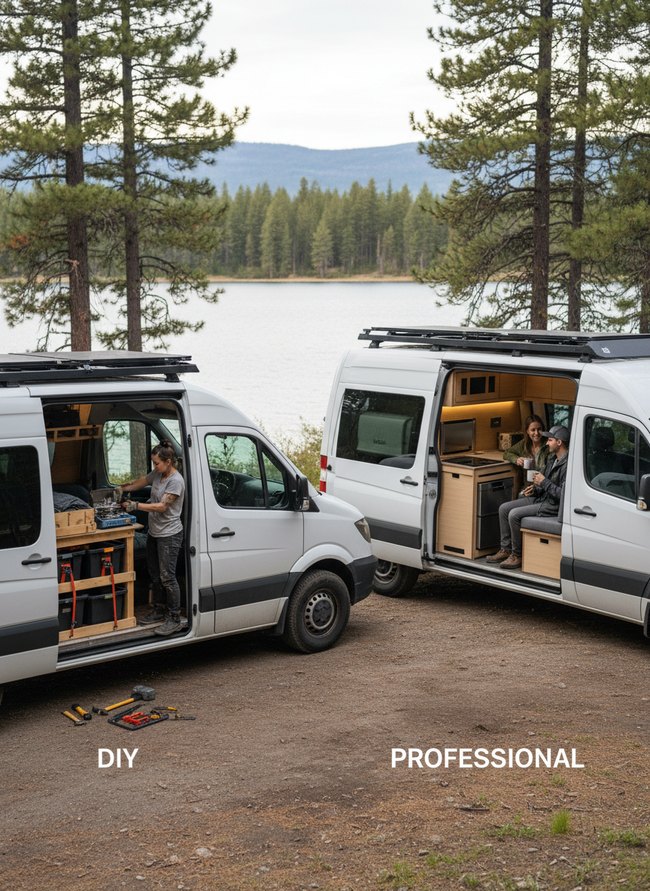
The white cargo van on the left features a simple plywood counter, offering a functional cooking space. Van owners can build this DIY conversion setup themselves, trading a professional finish for lower costs. A blue camp stove sits on the wooden surface, ready for quick meals outdoors.
8. High-End Turnkey Conversion
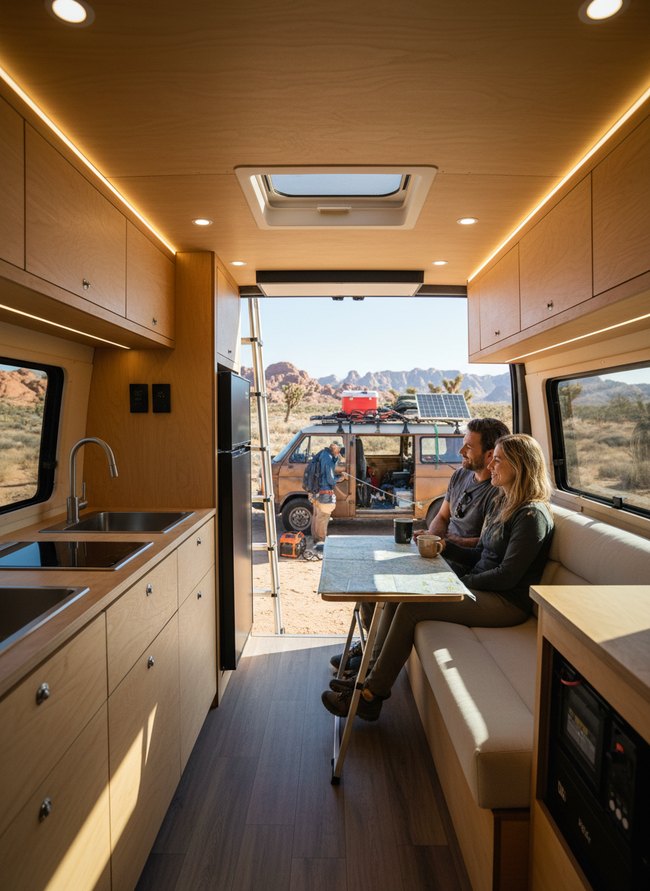
Warm honey-toned plywood cabinets line the entire ceiling and kitchen wall, creating a bright, cohesive interior. The van conversion offers an integrated, seamless feel, trading the personal stamp of a custom build for a polished, ready-to-go experience. A light beige cushioned bench seat offers comfortable dining space for two adults, overlooking a desert landscape with red rock formations.
9. Garage-Built Family Hauler
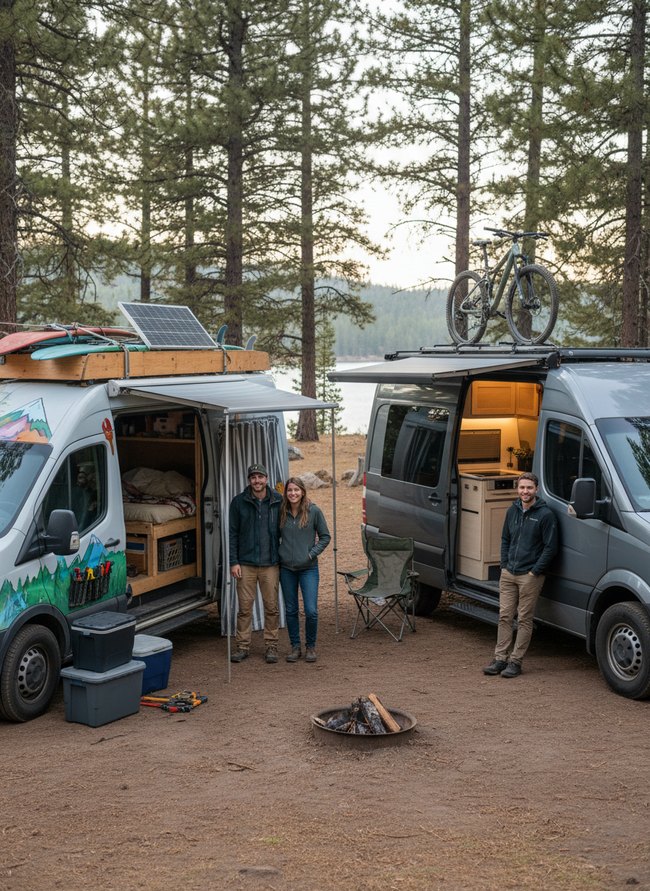
The gray camper van features a dark mountain bike secured on its roof rack, signaling adventure. Van owners could choose a DIY versus professional conversion, trading a custom exterior mural for sleek, factory-painted metal. Pale wooden cabinets gleam inside the open side door, offering a glimpse of a tidy interior kitchenette.
10. Showroom Ready Pro Van
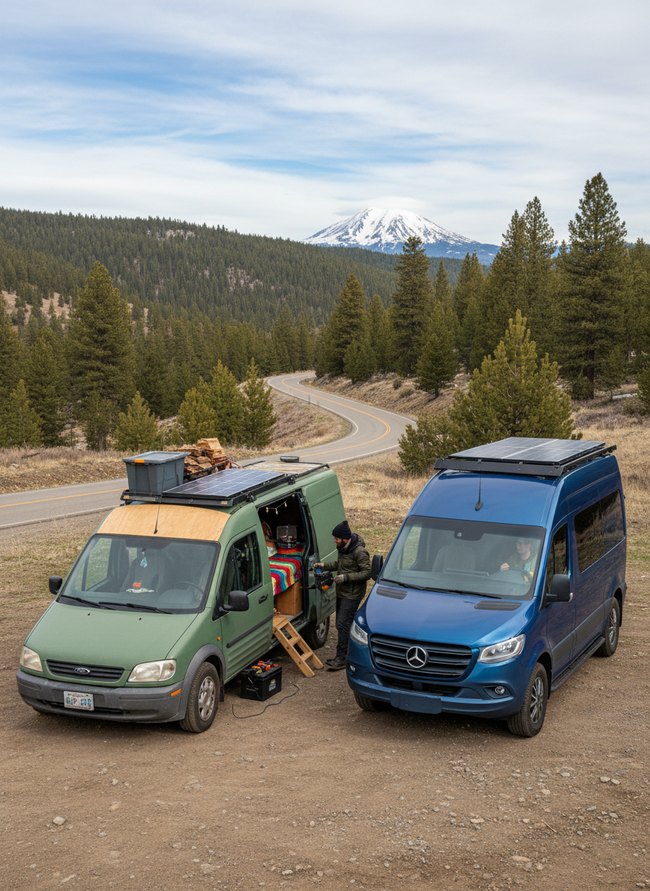
The bright blue Mercedes Sprinter van presents a polished, factory-fresh appearance. Choosing a professional conversion means trading DIY customization for a streamlined, ready-to-go vehicle with engineered components. A single, wide solar panel sits flat on the black roof rack, suggesting robust power generation without visible clutter.
11. Personalized Self-Build Camper
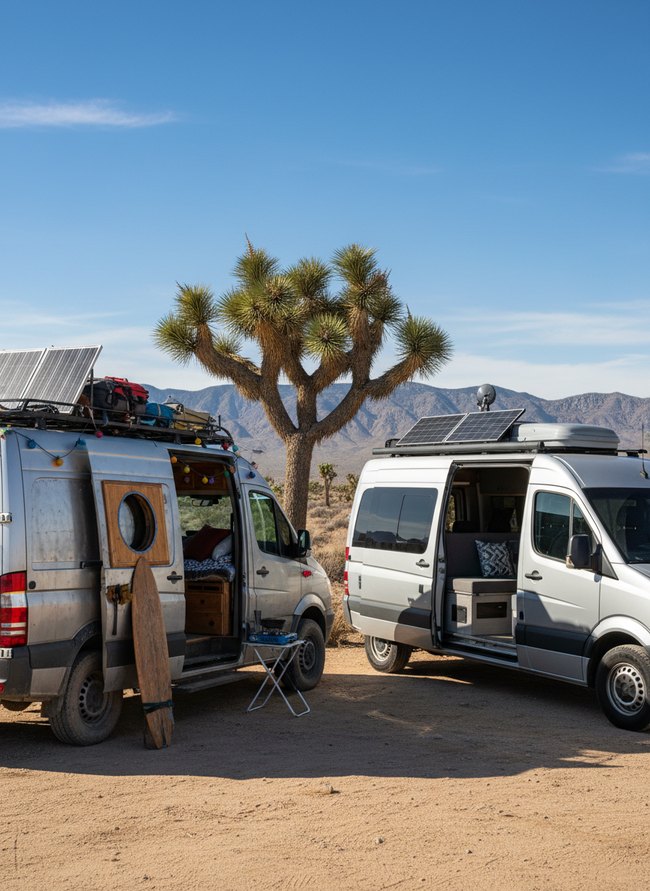
A round wooden window on the silver van door creates a distinctive, custom look for the personalized self-build camper. Solar panels on the roof provide off-grid power, trading immediate convenience for long-term energy independence. A folding blue camp stove sits ready for outdoor cooking beside the open side door, blending utility with desert adventure.
12. Premium Manufacturer Van Life
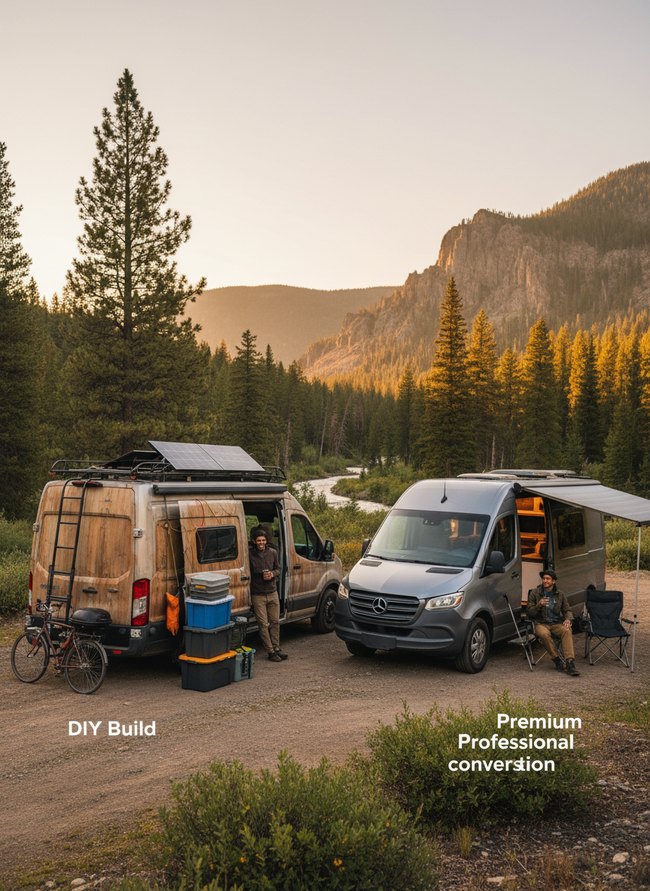
The gray Mercedes Sprinter van presents a clean, factory-finished exterior. Owners could opt for this polished look, trading away the personal, handmade touches of a DIY build. The van’s expansive awning unfolds, offering shaded outdoor living space, a convenience gained over the more rugged, open-air setup of a custom build.
How Much of My Life Am I Willing to Dedicate to This Project?
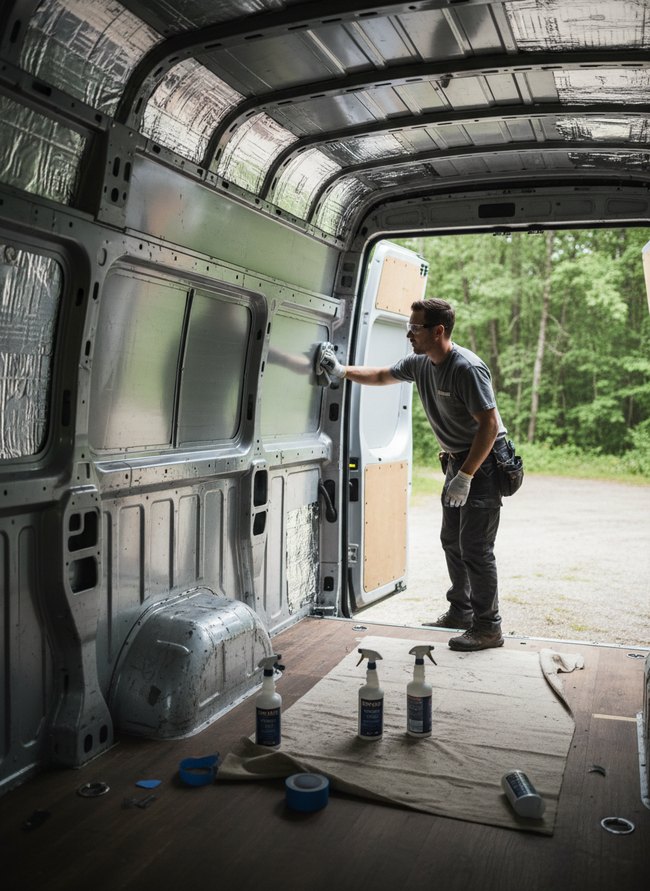
Your hands hover over a bare metal van interior. Building a custom van yourself demands long hours, often stretching over six months or even a full year. Many weekends disappear into dusty wood cutting and precise wire routing. You learn new skills, like plumbing and electrical wiring, gaining a deep understanding of your mobile home’s inner workings. Some folks find immense satisfaction in creating every oak cabinet and installing each frosted glass window with their own two hands.
Hiring a professional van conversion company saves countless hours of your personal time. A team of skilled craftspeople handles the intricate design and construction, delivering a finished product, usually within a few months. That shorter timeline means quicker adventures on open roads. Money leaves your bank account faster with a professional build, but time returns to your calendar.
Choose a DIY van build if you possess abundant free time, a deep interest in learning diverse trades, and a tight budget for materials. You will gain a fully customized vehicle and valuable hands-on experience, even if it takes a solid year of focused effort. Pick a professional conversion if your available time is scarce, your budget allows for higher labor costs, and you prefer a quick, expertly executed turnaround. A professional conversion allows you to enjoy your new travel home much sooner.
What Level of Finish and Reliability Do I Truly Need?
Your van conversion choice hinges on your desired finish quality. A rough-hewn, DIY build delivers a unique, lived-in character. Expect uneven cabinet doors and exposed copper wiring in a self-built camper van. You save significant money on labor with your own hands-on effort. However, your time investment becomes considerable, measuring weeks or months of focused work. A professional conversion guarantees clean lines and durable, factory-installed components. Imagine flush-mounted, double-glazed windows and seamless, laminate countertops. This higher quality comes with a steep price tag, often doubling your overall project cost. A professional conversion offers a quicker turnaround time, getting you on the road faster. Homeowners desiring a showroom-ready interior with minimal personal effort choose professional builders. Adventurers prioritizing low cost and custom, sometimes quirky, details commit to a DIY van build.
Which Idea Will You Try First?
That’s 12 different takes on diy vs professional van conversion. The best ideas above are usually the smallest moves — one material, one layout shift, one piece of furniture in the right place. Pick whichever room feels closest to your space and start there before tackling the rest.
Found an idea worth keeping? Save this post to your Pinterest board so it’s waiting for you when you’re ready to start your own project.