How to Handle Van Maintenance on the Road Solo
The open road calls with a strong pull, but a broken fan belt stops the journey cold. Your trusty custom-built van, a metal box on four rubber tires, carries your whole life. The rolling home needs care; ignoring little sounds leads to big repairs. Nobody else handles these chores when you roll solo. You need to learn some solo van maintenance basics. A flat tire on a dark country road feels different when you are alone. Knowing how to check the oil dipstick or change a dirty air filter brings real peace of mind. Small tasks keep your adventure going without a snag. A well-maintained engine hums a happy tune, pushing the vehicle down the long, winding highway. Taking care of your van means taking care of your freedom. Let’s walk through some key actions.
1. Tire Pressure Check
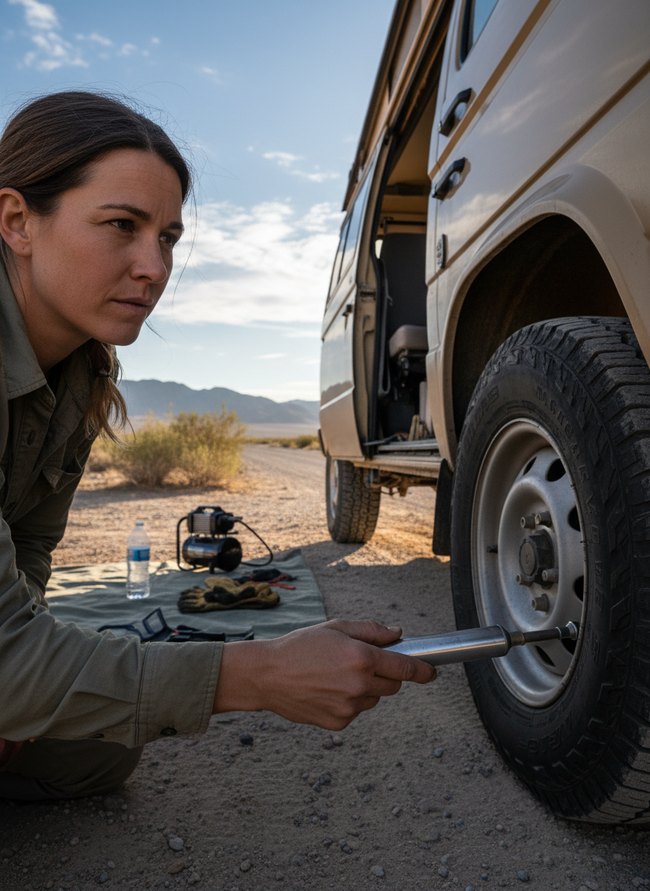
A person crouches on dry dirt, checking a dark rubber tire with a silver pressure gauge. Owners can do this simple solo van maintenance task themselves with basic tools. The van’s manual provides proper tire pressure numbers.
2. Fluid Level Inspection
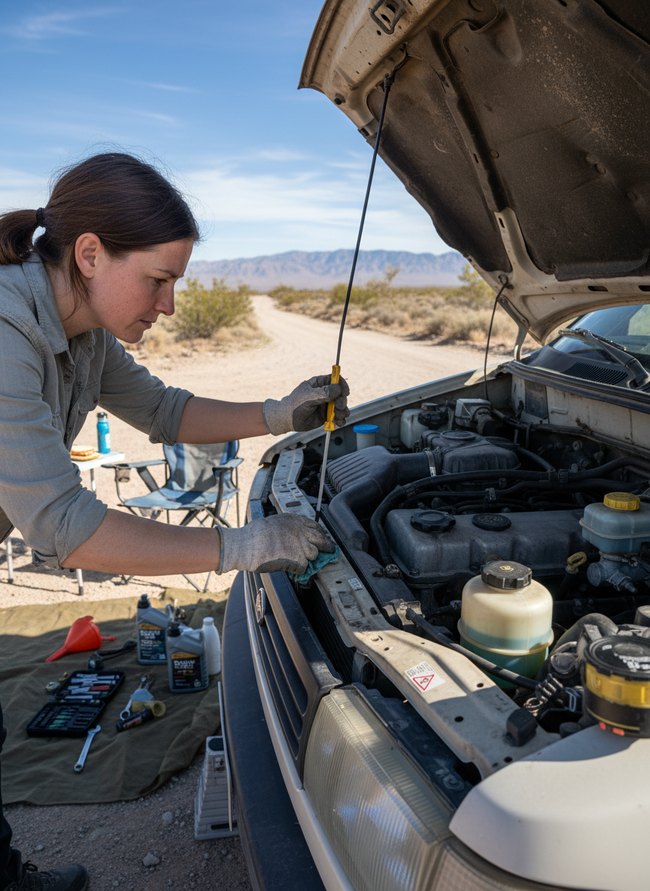
A woman in a gray work shirt and protective gloves checks the yellow dipstick in a dusty white van’s engine. Always pull the dipstick out, wipe the gauge clean with a rag, then push it back in all the way to get an accurate oil level reading. Perform solo van maintenance basics regularly to keep the vehicle running smoothly.
3. Wiper Blade Replacement
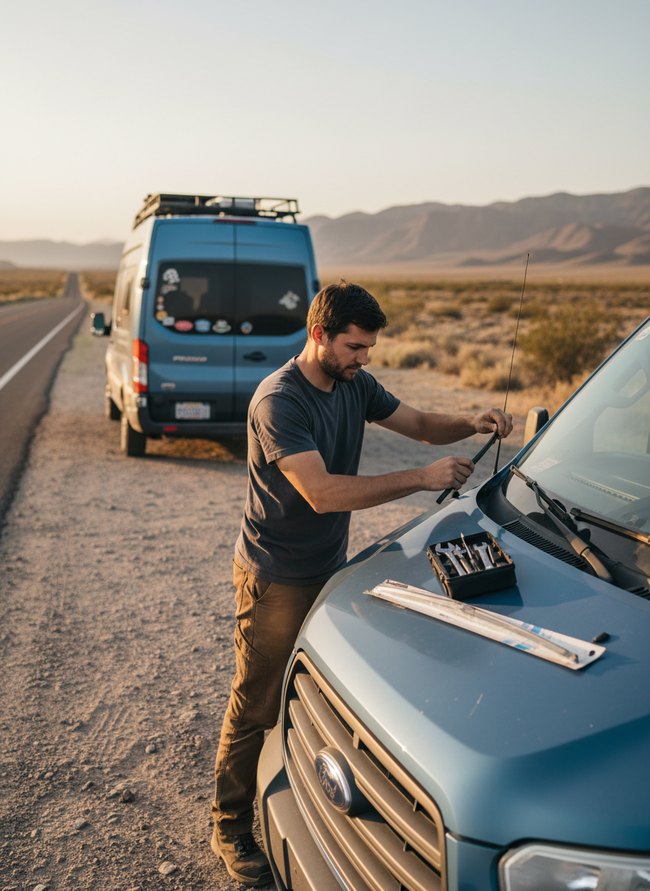
A man in a dark gray shirt and brown pants changes a black wiper blade on a blue van’s windshield. He handles a new wiper blade, and a small black tool kit sits nearby on the van’s hood, ready for solo van maintenance basics. Drivers should check their van’s wiper blades before a long trip.
4. Battery Terminal Cleaning
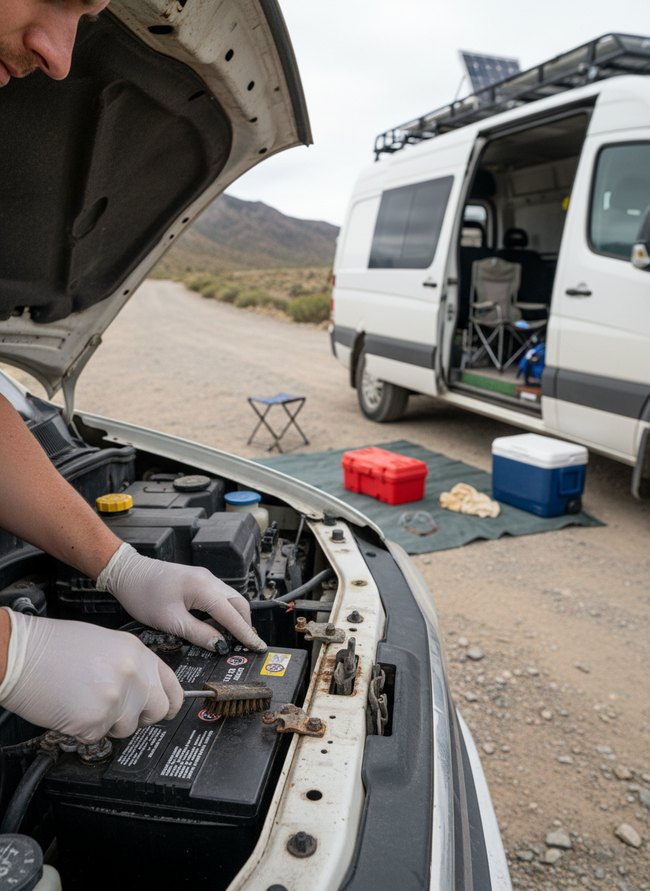
White latex gloves protect hands as a person cleans a black car battery terminal with a wire brush. Always wear gloves and eye protection when cleaning the terminals. The simple solo van maintenance task prevents power issues; make sure your battery is disconnected before starting.
5. Belt Tension Assessment
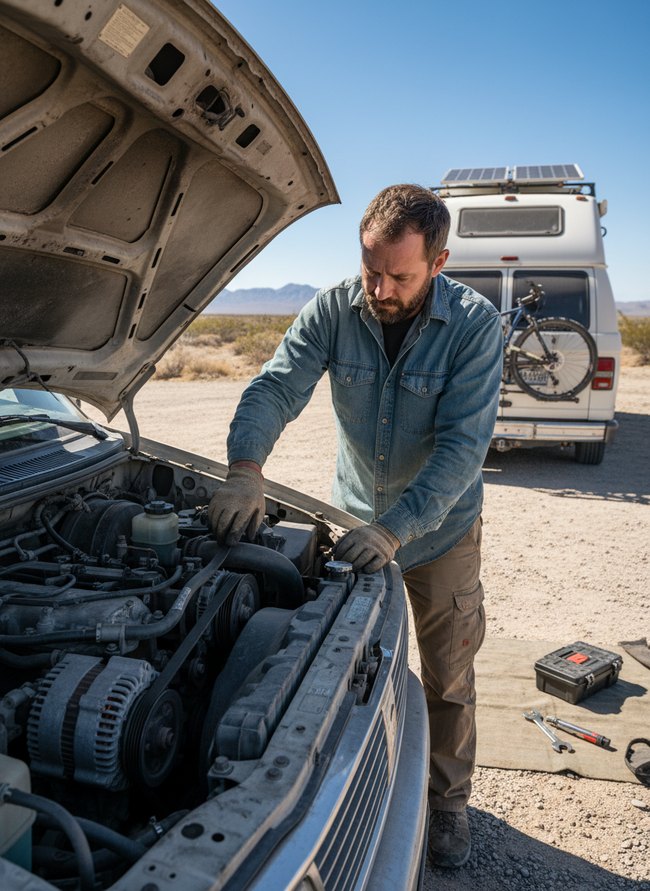
A man in a denim shirt and work gloves checks a wide black belt under the open hood of a gray van. Press down on the belt to feel its tension. Fingers should only push the belt a small amount; if the belt moves too much, tighten the belt to prevent slipping.
6. Brake Pad Visual
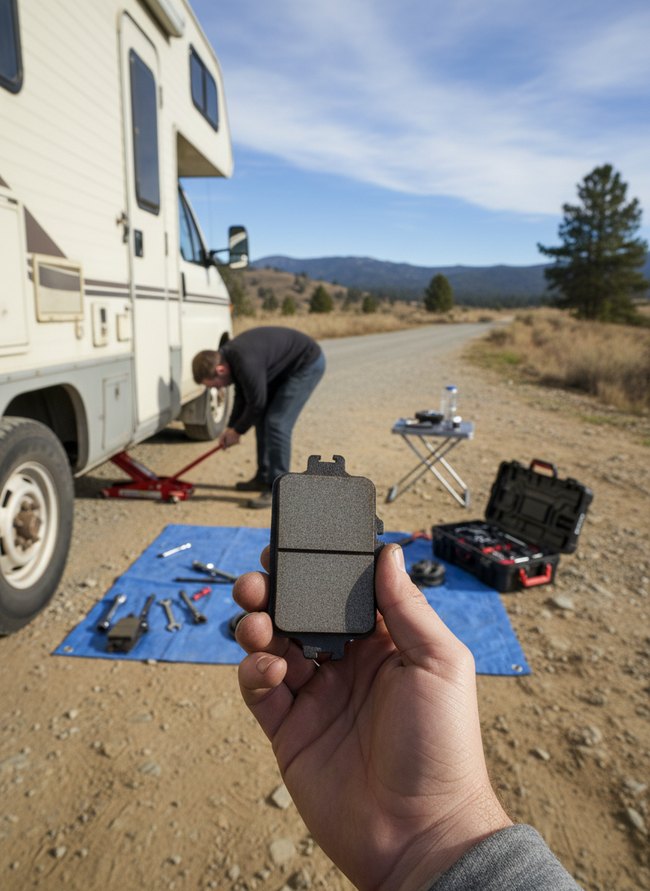
A gray, rectangular brake pad fills the foreground, showing its thick friction material. Van owners should always check brake pads for wear during solo maintenance. Owners should look closely at the pad’s thickness, and replace any pads that appear too thin.
7. Light Function Test
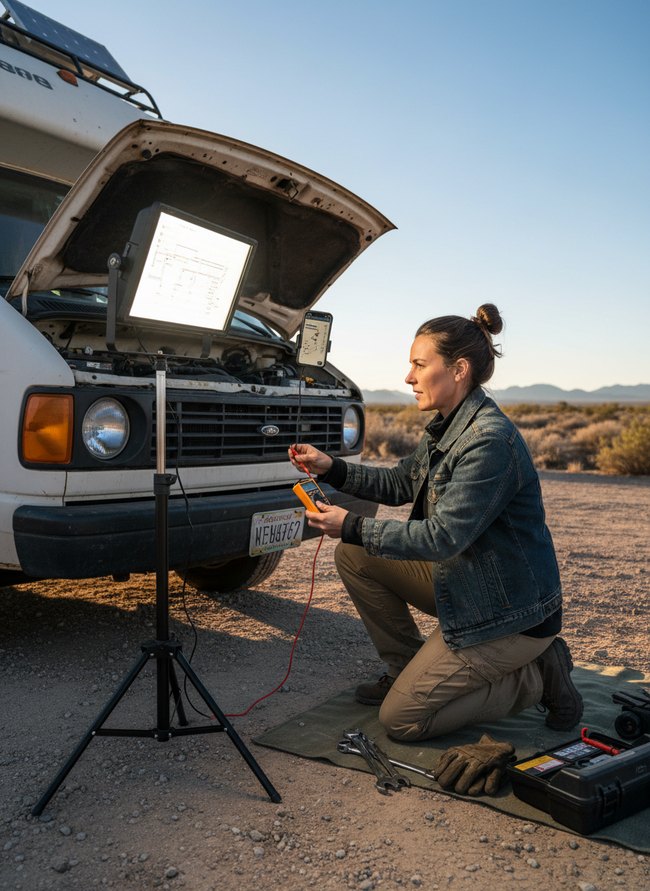
A large work light on a tall black tripod illuminates the van’s open engine bay. A digital multimeter can check electrical connections and ensure the van’s lights function correctly. Drivers should always test running lights and brake lights before driving.
8. Filter Element Swap
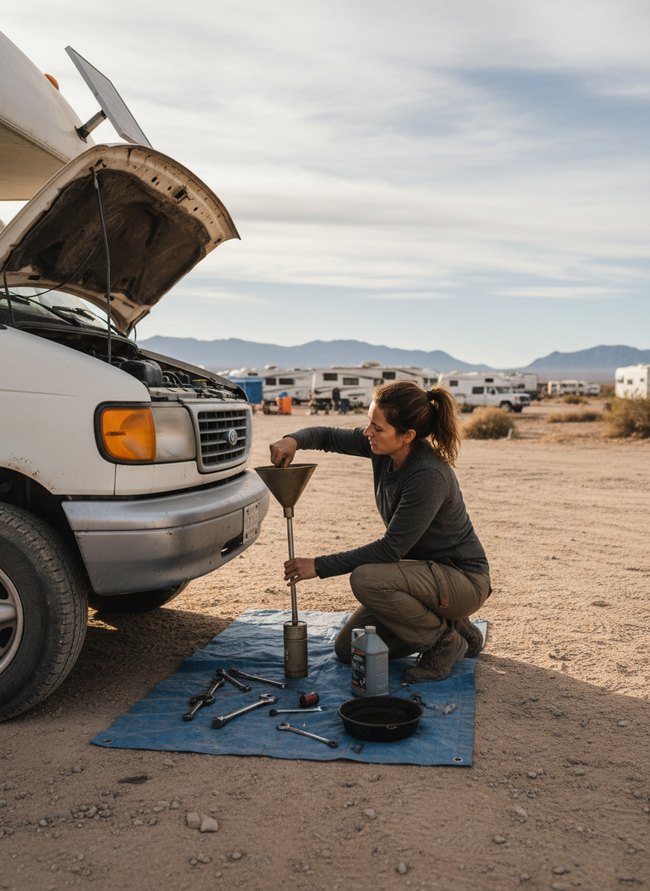
A person kneels on a blue tarp, carefully pouring fluid into a tall, silver funnel near a white van’s open hood. Van owners can change an oil filter and fluids anywhere with the right tools and a little preparation. Always collect old fluids in a sealed container for proper disposal; never leave the fluids on the ground.
9. Coolant Hose Scan
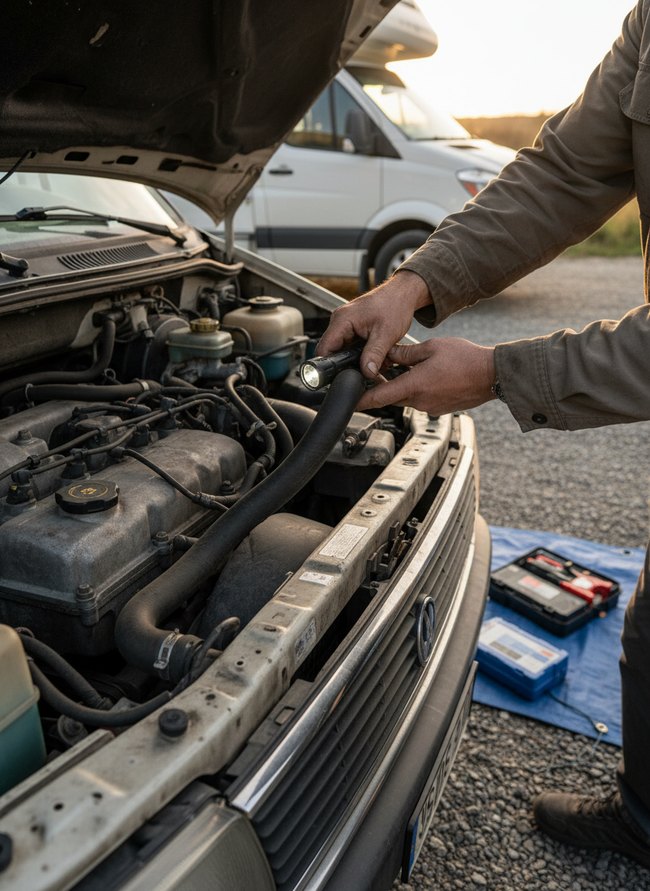
A person’s hands hold a small black flashlight against a dark rubber coolant hose under the opened hood of a gray van. Drivers should carefully inspect the hoses for any cracks or soft spots, as either can lead to leaks and engine trouble. Always check the rubber hoses as part of your solo van maintenance basics.
10. Underbody Rust Prevention
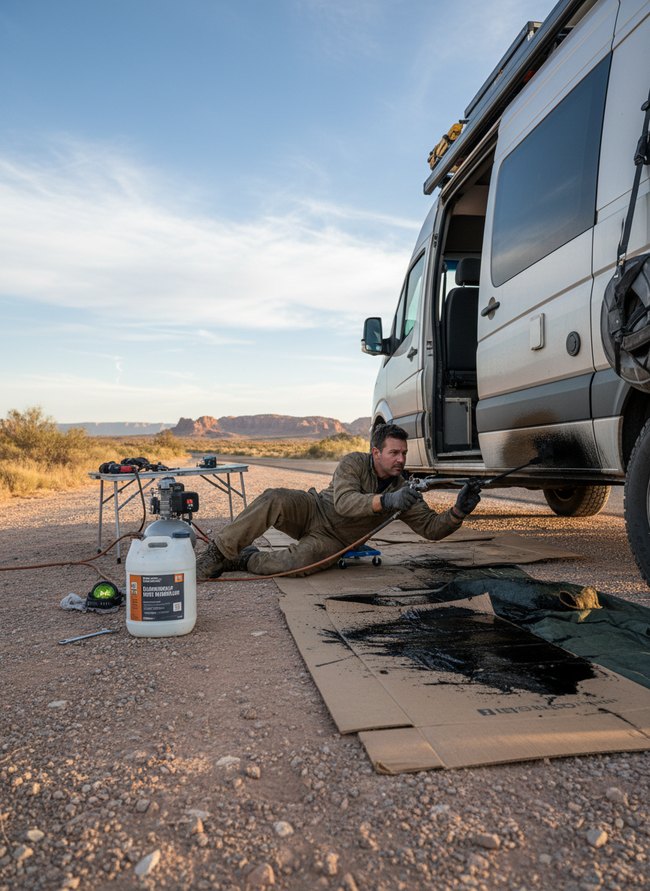
A man in a brown work jumpsuit lies on the dusty ground, carefully spraying black undercoating onto the silver van’s underside. Vehicle owners prevent rust by applying a protective layer to exposed metal parts. Always lay down cardboard or a drop cloth to catch any drips from the solo maintenance project.
11. Emergency Kit Audit
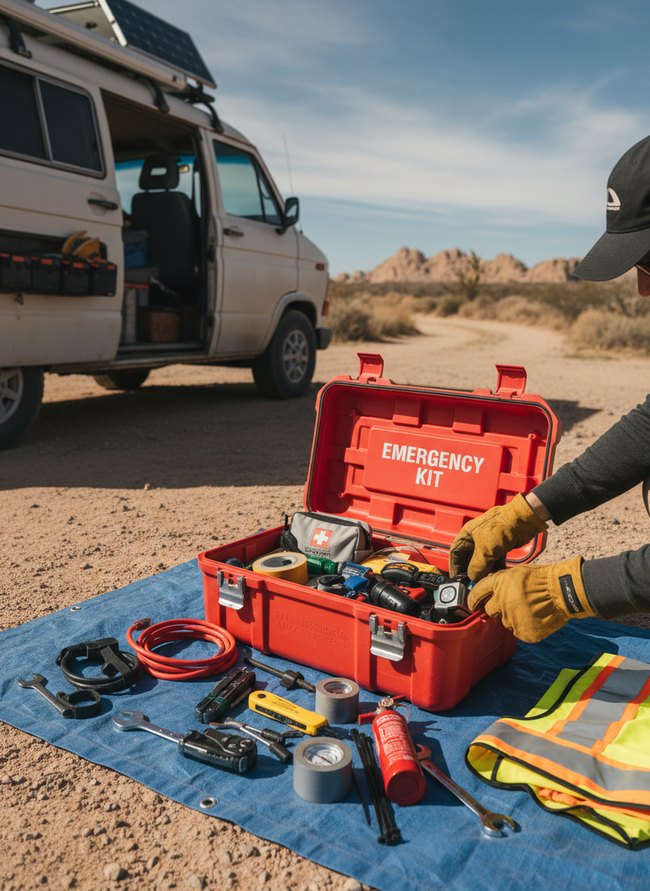
A bright red plastic box labeled “EMERGENCY KIT” holds many different repair tools. Van maintenance basics include a well-stocked kit, ready for any roadside trouble. Routinely check all emergency supplies, replacing anything old or used.
12. Fuse Box Check
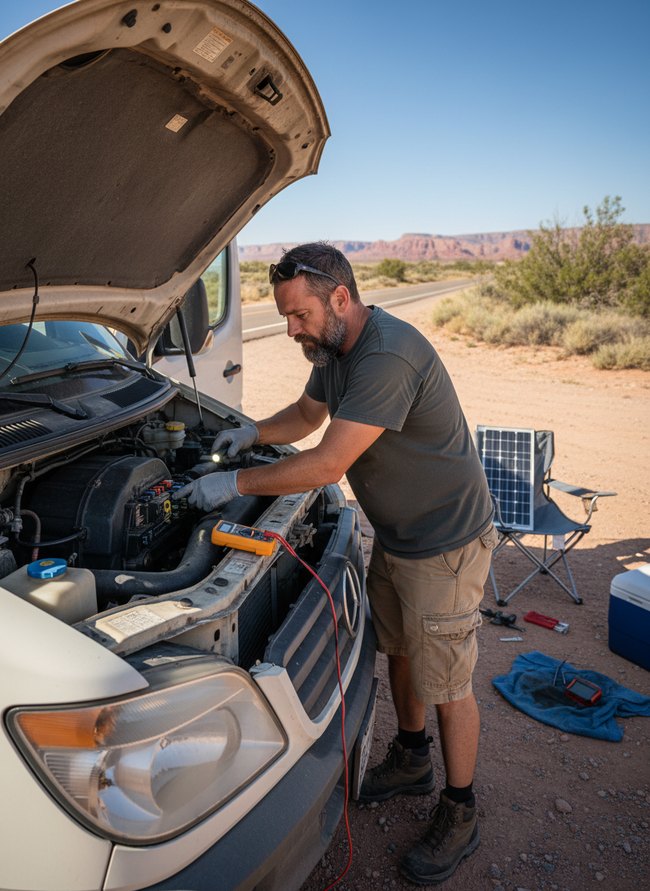
A man in a dark green shirt and khaki cargo shorts checks the van’s fuse box with a yellow multimeter. Light grey work gloves keep his hands clean during solo van maintenance. Always use protective gloves when working on a vehicle’s electrical system.
Van Life, Home Style: How to Maintain Your Ride Without Sacrificing Your Aesthetic
Most van dwellers think keeping a clean rig means hiding every tool. You probably imagine tucking away wrenches and oil cans in a dark, forgotten corner. This common approach makes simple maintenance a frustrating scavenger hunt.
Instead, create designated work zones within your living space. A sturdy, wooden workbench with built-in drawers stores frequently used items like a silver multi-tool or a small bottle of black engine oil. This custom furniture makes maintenance accessible. Your floor mats, often rolled up and stashed, can become a clean ground cover for under-van checks. Many people shove dirty rags into any available crevice. A canvas laundry bag, suspended from a brass hook, collects used cloths neatly. Some owners believe every repair item must disappear entirely from view. Displaying a few well-organized, attractive tools, like a gleaming chrome ratchet set on a narrow wooden shelf, actually normalizes the work. This method keeps your van maintenance organized and your mobile home looking its best.
Tool Kit for the Tiny Home: What to Pack That Won’t Cramp Your Style (or Space)
Most people imagine a giant red toolbox spilling greasy tools everywhere. That image gives a lot of van dwellers anxiety about keeping their small, tidy living area clean. Your mobile home’s compact nature actually demands smart tool choices. A single 12-inch adjustable crescent wrench handles most common bolt sizes. Many folks buy a whole set of open-ended wrenches, wasting precious cargo space.
You might think you need a heavy battery-powered drill. Instead, a lightweight, hand-cranked driver with a magnetic bit set works wonders for small repairs and won’t drain your deep cycle battery. A 10-foot roll of black electrical tape seals up many small leaks and frayed wires. Other drivers carry an entire tackle box of fasteners. A small clear plastic container of assorted nuts, bolts, and screws often fixes common issues without cluttering a narrow countertop.
Many van owners believe a bulky air compressor is necessary for tire care. A compact 12-volt tire inflator plugs directly into a cigarette lighter and fits under a single captain’s chair. This small device easily maintains proper tire pressure on long journeys. You will definitely appreciate keeping your small home organized with these clever choices.
Which Idea Will You Try First?
That’s 12 different takes on solo van maintenance basics. The best ideas above are usually the smallest moves — one material, one layout shift, one piece of furniture in the right place. Pick whichever room feels closest to your space and start there before tackling the rest.
Found an idea worth keeping? Save this post to your Pinterest board so it’s waiting for you when you’re ready to start your own project.