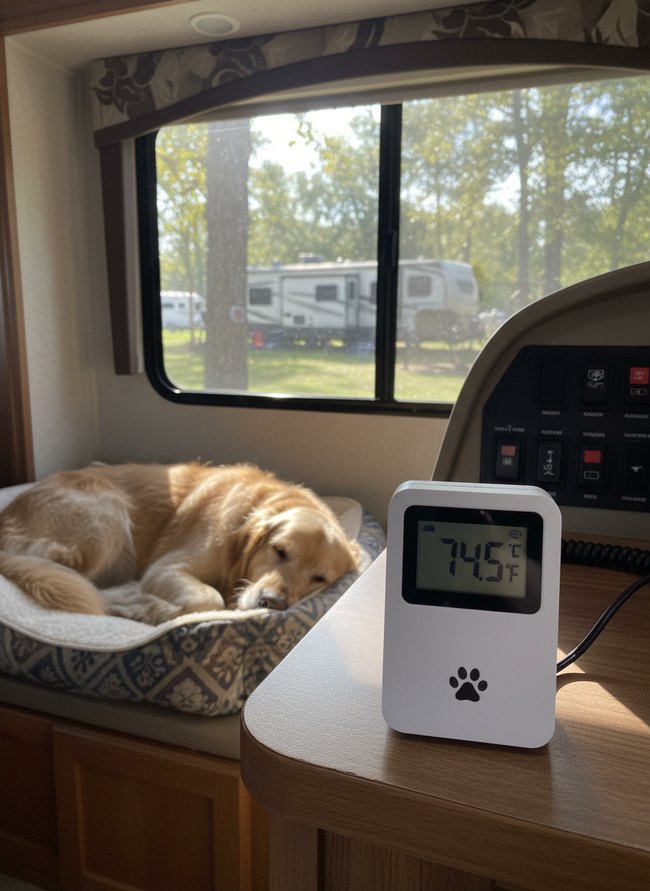
How to Handle Vet Care and Records While Traveling
Road trips with a furry friend mean roadside stops, new smells, and changing landscapes. However, a sudden limp or a strange cough can turn an adventure into a headache. An old cat needs consistent care on the road. Knowing how to handle pet vet care while traveling keeps everybody happy and healthy. A small plastic folder with medical papers makes a huge difference. Pet owners must prepare for unplanned medical visits. The preparation lets owners focus on the journey, not the worry. Building a solid plan saves time and stress. Let’s get that organized.
1. Emergency Roadside Vet Access
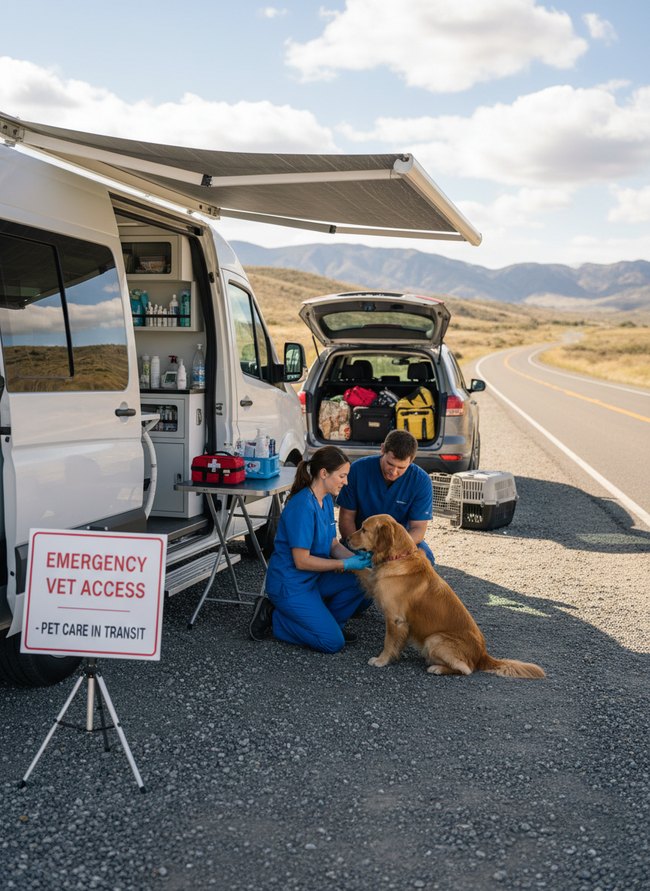
A red and white sign clearly labels the roadside stop as “Emergency Vet Access – Pet Care in Transit.” Two medical professionals in blue scrubs kneel beside a golden retriever, offering gentle care. Pet owners should plan for urgent veterinary care while traveling by knowing local emergency resources before departure.
2. Digital Health Record Management
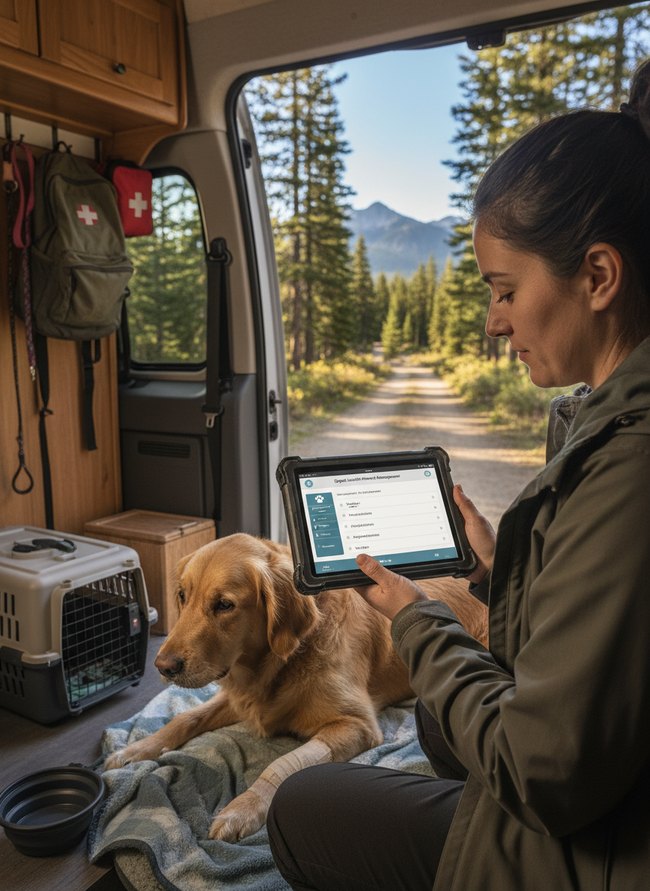
A woman holds a black tablet displaying a digital health record, ready to manage her golden retriever’s medical history. Her dog rests on a light blue patterned blanket, its front leg wrapped in a white bandage, inside the open back of a white van. Pet owners can organize all their pet’s important information in one place, like vaccination dates and past vet visits. Create a digital folder for your pet’s records today.
3. Pre-Trip Health Checkup
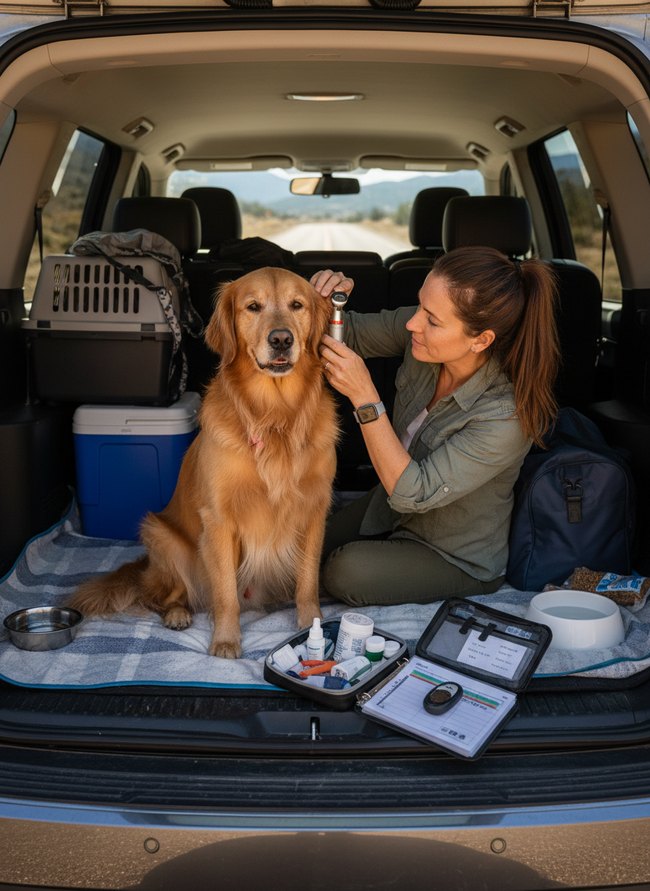
A woman gently checks a golden retriever’s ear with a silver otoscope, demonstrating attentive pet vet care while traveling. A neat medical kit with small white bottles and an open planner sits on a light blue patterned blanket in the car’s trunk. Before any long journey, arrange a health checkup for your furry friend.
4. Mobile Pet First Aid
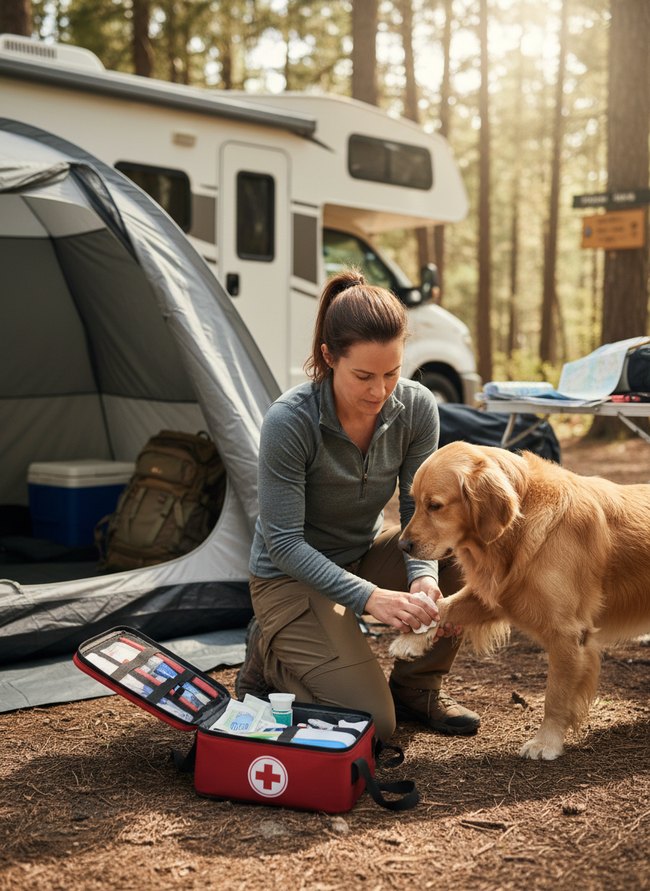
The red fabric first aid kit sits open on the brown forest floor, ready to help a golden dog with a paw injury. Your mobile pet first aid kit should contain bandages, antiseptic wipes, and pain medicine. Always pack a small pair of blunt-tip scissors for cutting gauze.
5. Travel Medical Kit Prep
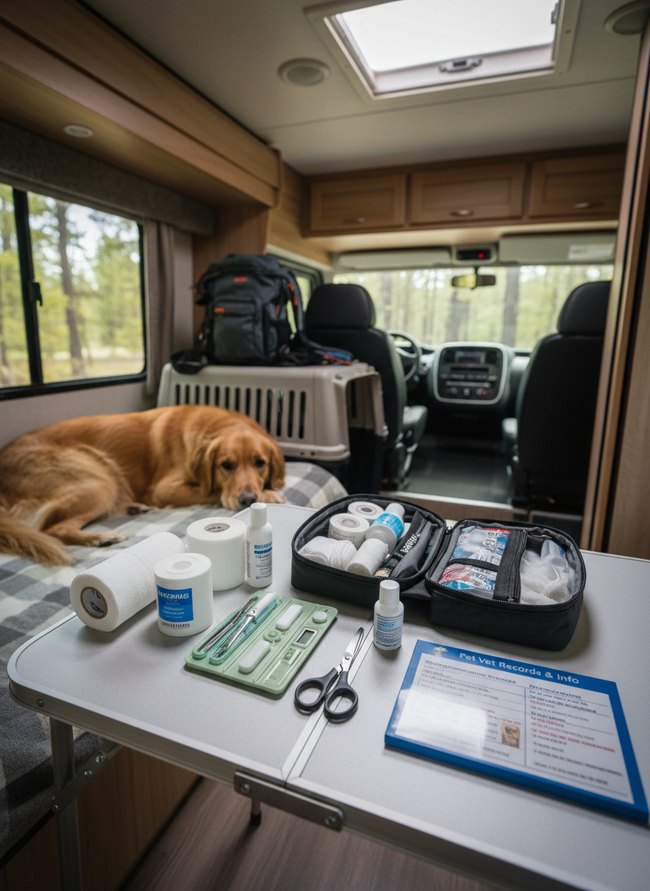
A light gray folding table holds various pet medical supplies, including white bandages and antiseptic liquids. The organized collection forms a basic pet vet care while traveling kit. Pet owners should always pack a small, portable medical kit with their pet’s health records when traveling.
6. Remote Vet Consultation Setup
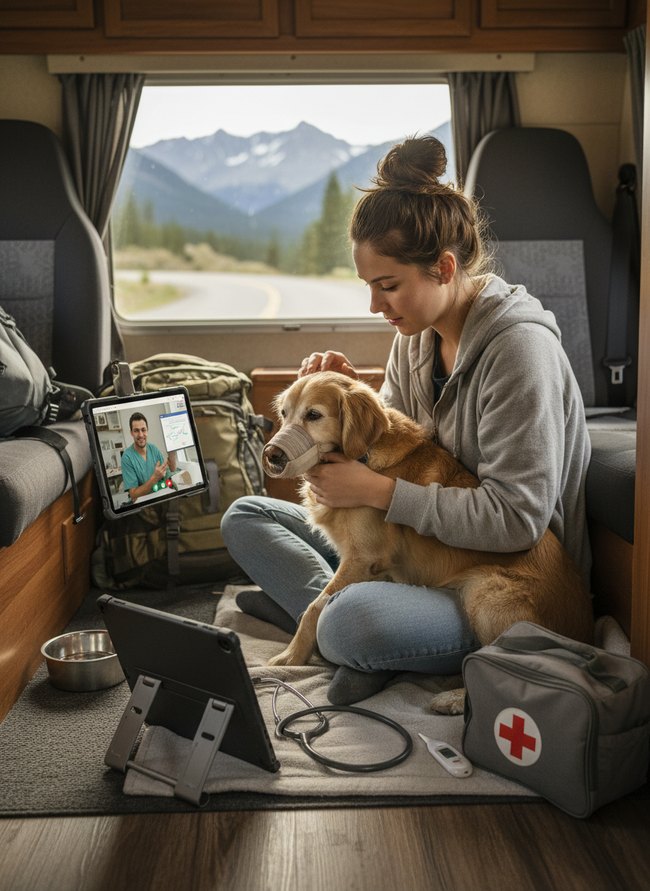
A golden retriever with a cream muzzle sits calmly with its owner during a video call to a veterinarian. A woman gently pets her dog as a digital tablet shows a vet on screen, offering important pet care while traveling advice. Pet owners should always test their internet connection before a remote vet consultation.
7. Destination Vet Research
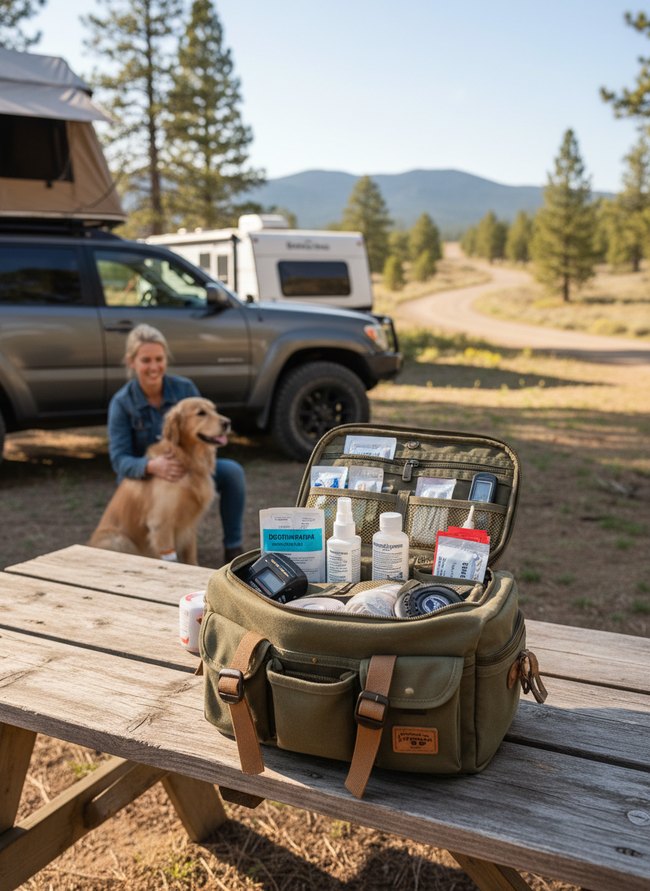
An open olive green canvas bag, filled with pet medical supplies, sits on a weathered wooden picnic table. The organized kit helps with pet vet care while traveling, keeping everything close at hand. Your own travel kit should be easy to carry and contain all necessary items.
8. Hydration Stop Health Check
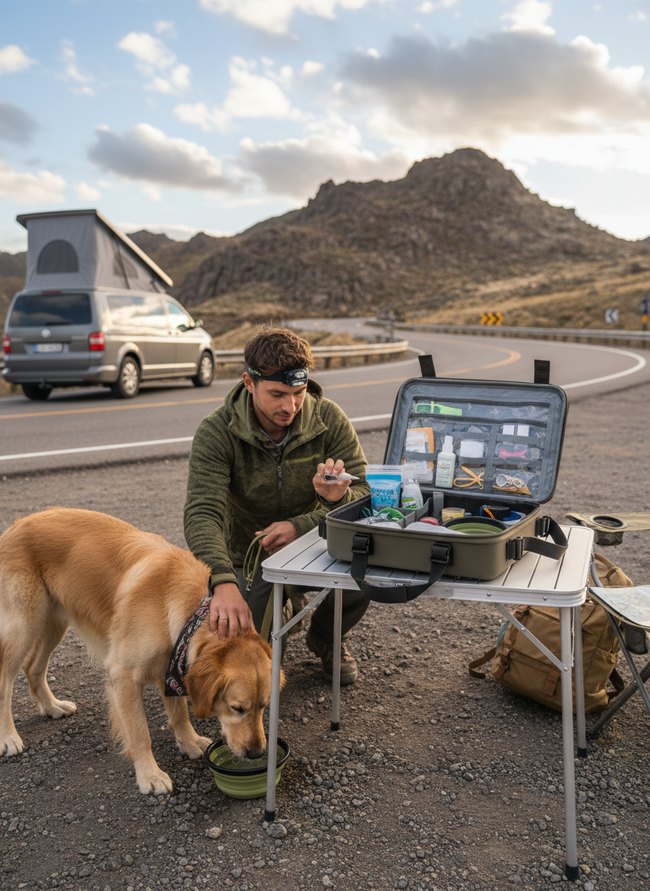
A golden retriever drinks from a collapsible green bowl, showing the importance of hydration. A man gently pets the dog’s soft fur while holding a small white thermometer, highlighting regular pet vet care while traveling. Always offer your pet fresh water during stops to keep them healthy.
9. International Health Certificate
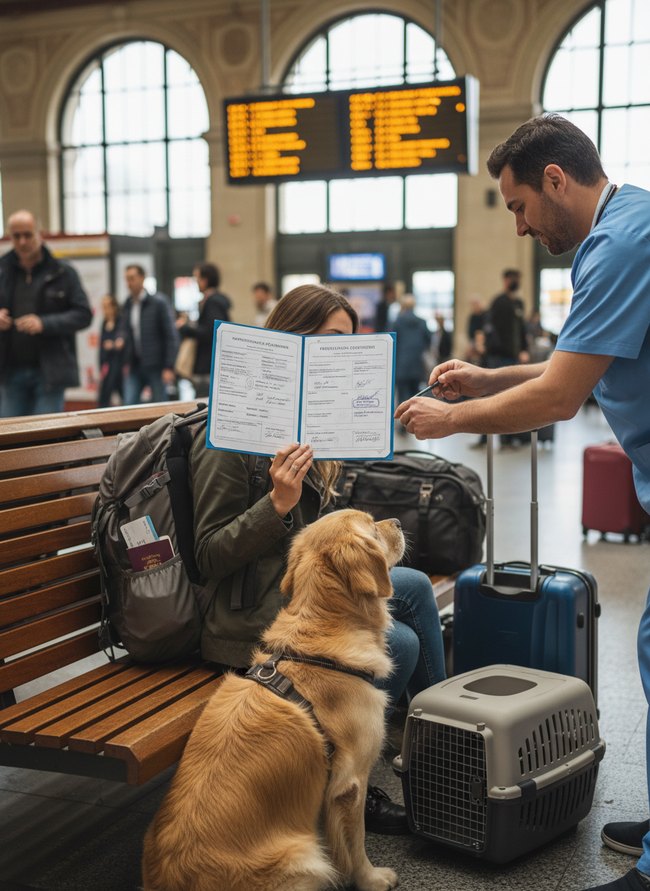
A woman holds a light blue certificate while a veterinarian in light blue scrubs points to a detail on the paper. The golden retriever sits patiently beside its owner, a dark gray pet carrier on the gray tiled floor next to the dog. Ensure all pet travel documents are accurate before your animal travels internationally.
10. Pet Travel Insurance
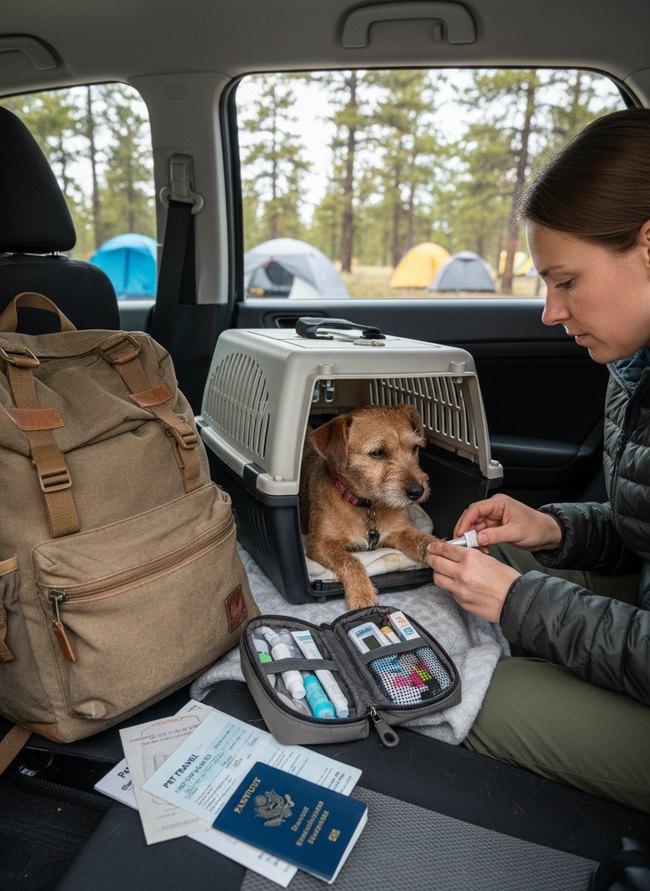
A small brown terrier rests calmly in its two-toned plastic travel carrier while a person gently tends to its paw. Pet travel insurance can help cover unexpected medical bills if the furry friend gets hurt on adventures. Protect your animal companion with a good insurance plan before you hit the road.
11. Routine Medication Schedule
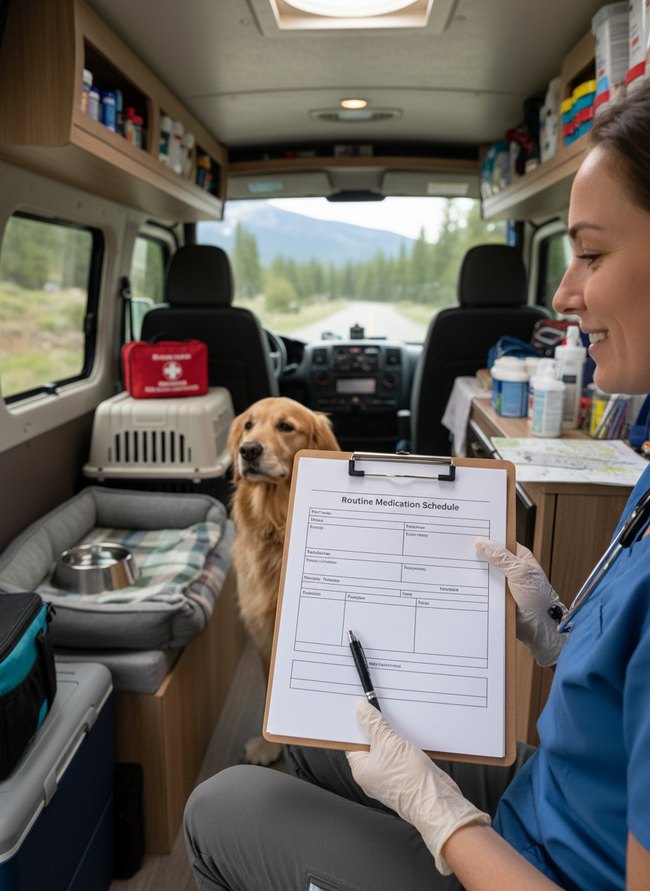
A woman in light beige gloves holds a white clipboard with a “Routine Medication Schedule” form. The medication schedule helps track a pet’s health needs while traveling. Create a clear, written plan for pet medicines, dosages, and times to follow pet vet care while traveling.
12. Post-Journey Wellness Exam
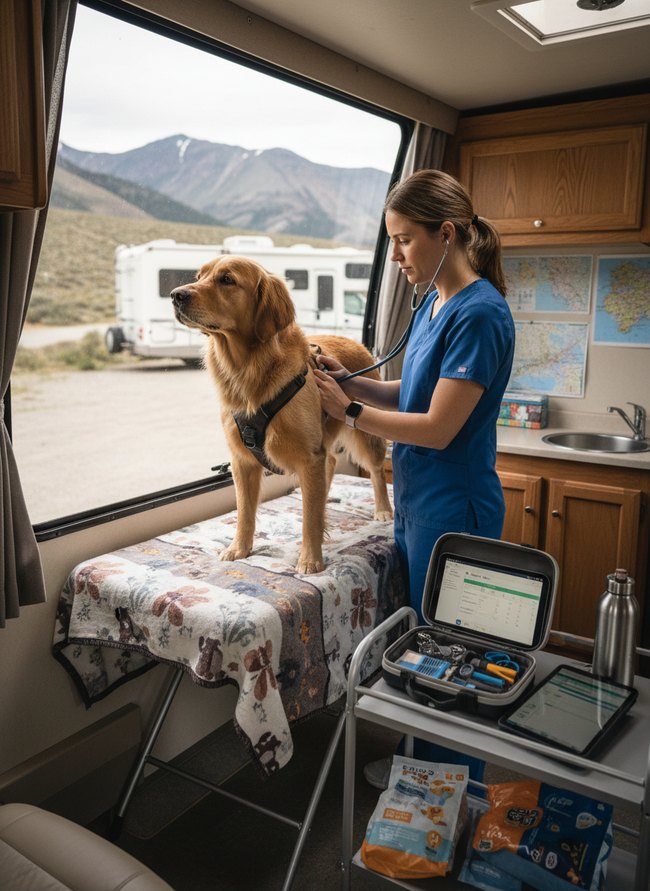
A golden retriever with rich amber fur stands on a padded, floral blanket as a vet listens to its heart with a silver stethoscope. Pet owners should always schedule a post-journey wellness exam for their animal after traveling to catch any new health issues. Arrange a check-up with a regular vet or a mobile vet soon after returning home.
Beyond the Basics: Emergency Vet Care for Rare Breeds and Exotic Pets (and How to Find It on the Road)
Many owners think their local vet knows all animals. That is incorrect. A black cat needs different care than a green iguana. Owners of rare breeds or exotic pets face unique travel challenges. Most people wait for an emergency. They search for a vet then.
Your small, striped gecko needs specialized attention. Instead, find a board-certified exotic animal veterinarian before you leave. These certified doctors understand unusual species. A quick web search reveals their locations. Contact your regular exotic vet for recommendations. They often have a trusted network. Carry printed copies of all medical documents. A hard plastic folder protects important papers. This preparation saves precious time during a crisis. A small, red emergency kit should always be with your pet.
The Digital Dilemma: What to Do When Wi-Fi Fails and You Can’t Access Your Online Vet Records
Many travelers think cloud storage protects their pet’s health history. Clouds disappear without Wi-Fi. You need paper copies of important documents. Most folks store digital scans on a phone. A lost phone means lost records. Keep a small, waterproof plastic pouch with hard copies.
Some people email forms to themselves. Email needs internet access. Print out vaccination records and a two-page medical summary. This paper stack fits in your glove box. A simple paper sheet works even in remote areas. Your dog’s current prescription labels are also helpful. These small labels confirm medication names. A vet clinic often asks for this physical proof. A clear plastic sleeve keeps these papers safe from spills. These tangible records give peace of mind.
Which Idea Will You Try First?
That’s 12 different takes on pet vet care while traveling. The best ideas above are usually the smallest moves — one material, one layout shift, one piece of furniture in the right place. Pick whichever room feels closest to your space and start there before tackling the rest.
Found an idea worth keeping? Save this post to your Pinterest board so it’s waiting for you when you’re ready to start your own project.