How to Pack RV Gear Without Overloading Your Rig
A fiberglass box on wheels has limits. Many new RV owners learn this lesson the hard way, often on a dusty shoulder, watching a tow truck hook up a broken axle. The camper’s tires have a maximum weight rating stamped right on the black sidewall. Weight distribution changes everything, making a safe journey or a white-knuckle ride. Your family’s safety depends on smart packing decisions; overloaded vehicles are dangerous. Smart RV weight management tips keep you on the road, not beside it. Nobody wants that roadside drama. You need a plan for all your camping gear. Let’s get real about what goes in and what stays home.
1. Digital Scale Weighing Technique
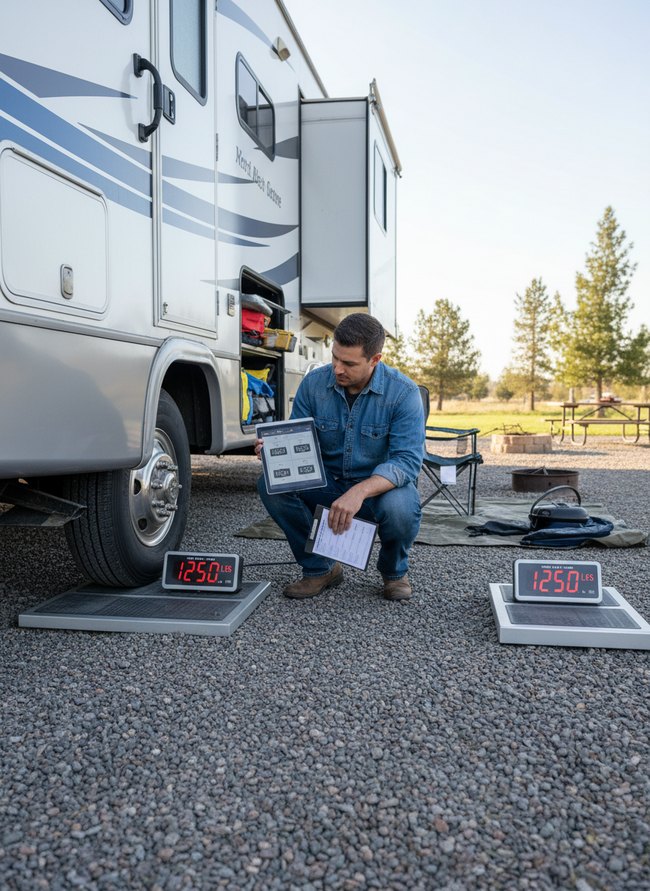
Two gray digital scales show a clear 1250-pound reading for each wheel of a white recreational vehicle. A man in a blue denim shirt checks a tablet displaying four weight readings, helping him monitor individual axle loads. RV owners should always use a digital scale to accurately measure weight distribution.
2. Smart Compartment Loading Strategy
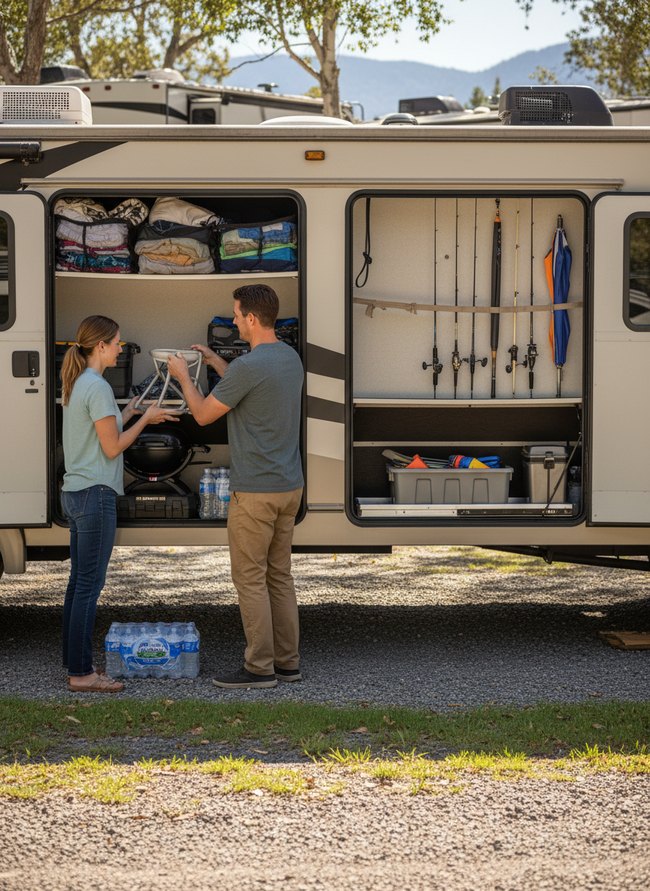
The beige RV features several open storage compartments, showcasing smart organization. Heavier items like the black portable grill and water bottles distribute across multiple compartments to balance the weight. Avoid placing all heavy gear in one single storage area.
3. Lightweight Material Optimization
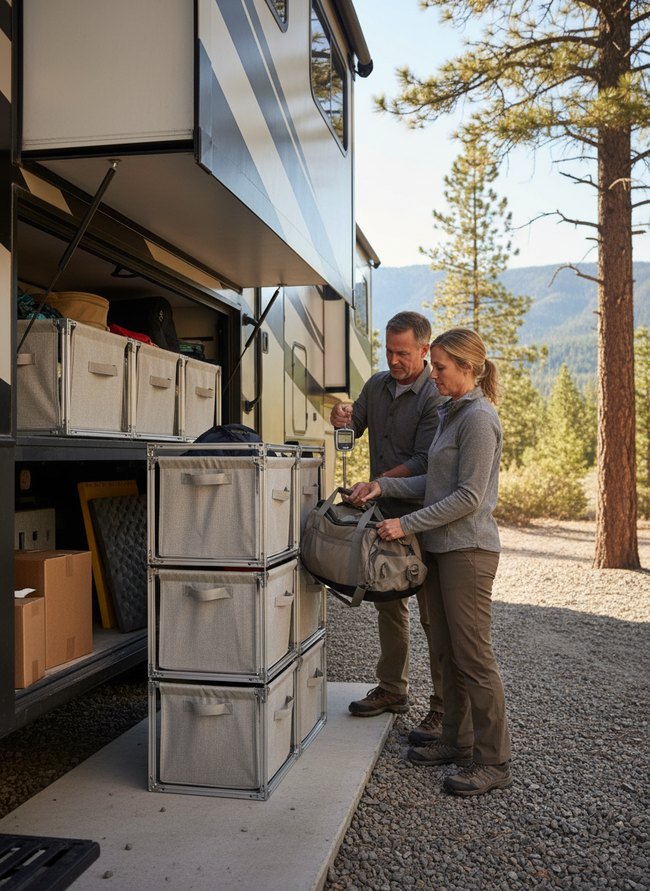
A man holds a digital scale, weighing a gray duffel bag before loading it into the RV’s storage bay. A small portable scale measures the actual weight of packed gear. Avoid packing heavy items to follow good RV weight management tips.
4. Axle Load Distribution
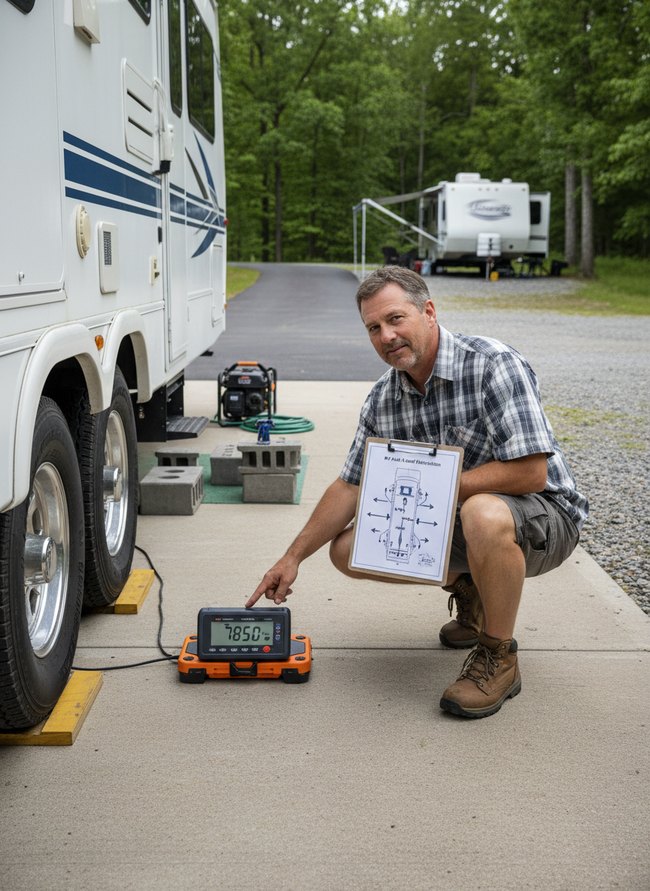
A large white motorhome rests on concrete paving, its rear tires positioned on two bright yellow wood planks. A digital weight scale displays a clear 7850 reading, showing the precise weight on one axle. RV owners should always weigh each axle separately to ensure balanced loading and safe travel.
5. Freshwater Tank Monitoring
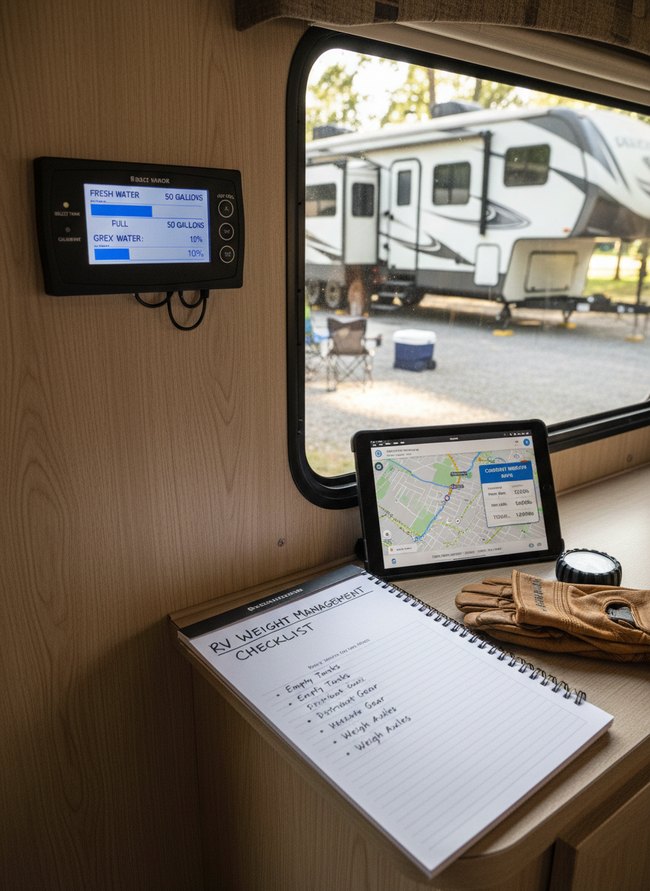
A black rectangular monitor shows “Fresh Water: 50 Gallons,” a clear indication of your RV’s water weight. Monitoring tank levels helps you manage overall RV weight effectively. Always empty the freshwater tank before travel unless you need the water for your journey.
6. Gray Water Management Plan
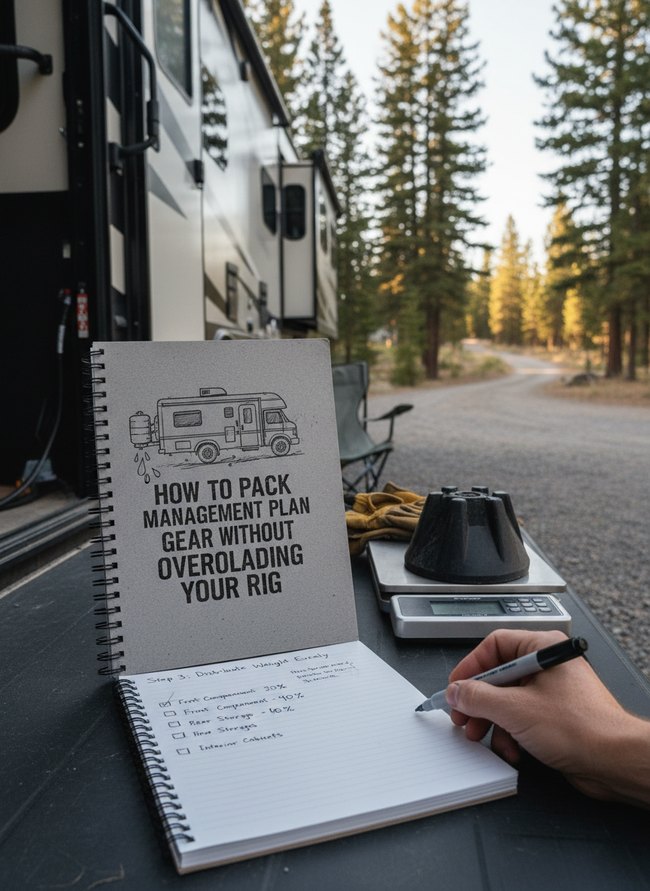
A gray spiral-bound notebook with bold black text offers a “How to Pack Management Plan” for your RV. A person’s hand writes a list on a white lined page, detailing weight distribution percentages for front compartments and rear storage. RV owners must consider the weight of their gear to avoid overloading the rig.
7. Propane Tank Leveling
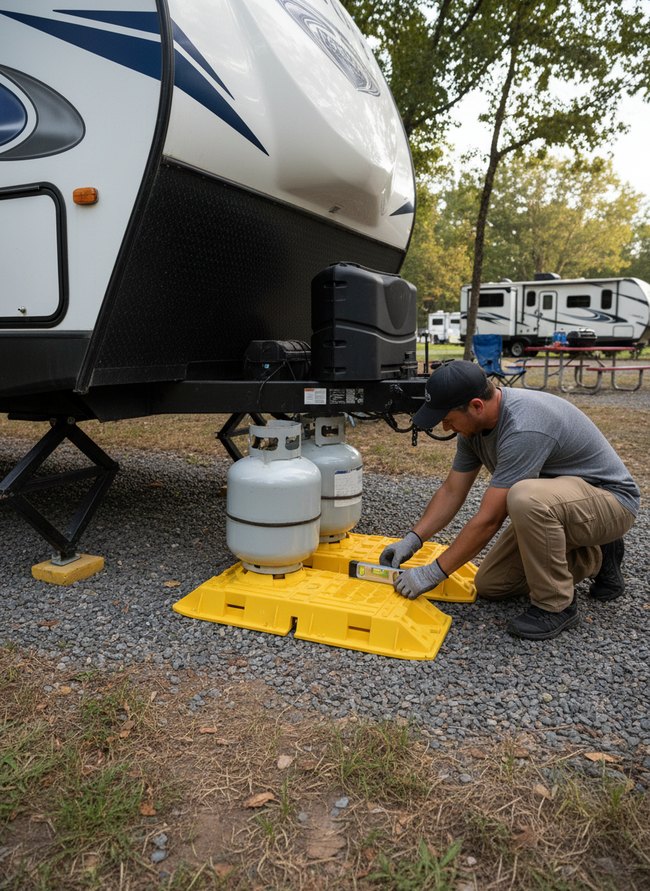
A gray-shirted man crouches to position a small green level on bright yellow plastic leveling blocks. The durable blocks help keep propane tanks stable and RV weight balanced. Always use a level to ensure RV propane tanks sit perfectly flat.
8. Tool Kit Consolidation
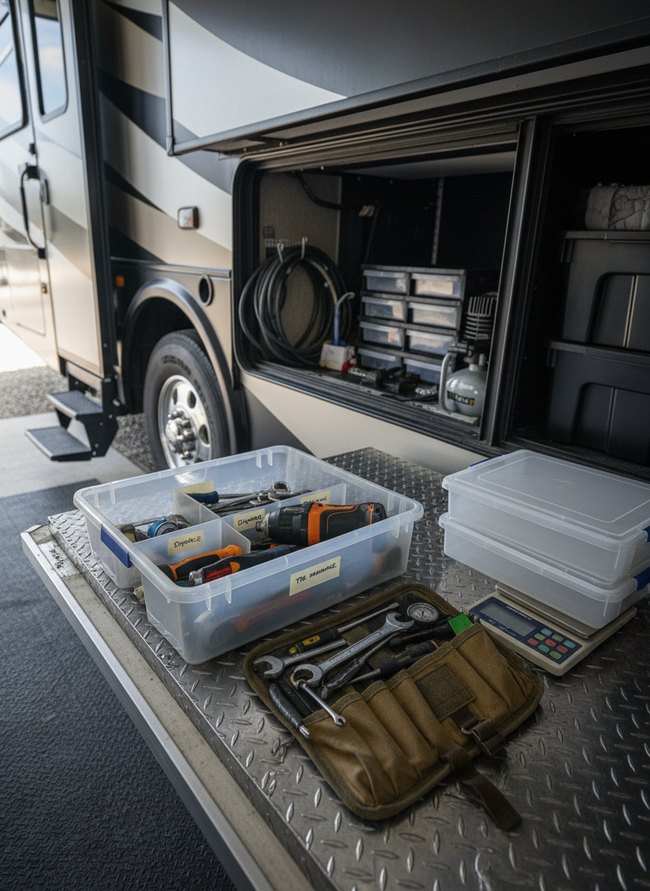
A clear plastic bin with yellow labels organizes various metal tools, keeping them contained and visible. Smart RV weight management tips include using lightweight containers to sort necessary items. A soft canvas tool roll works well for smaller hand tools to save weight.
9. Essential Gear Prioritization
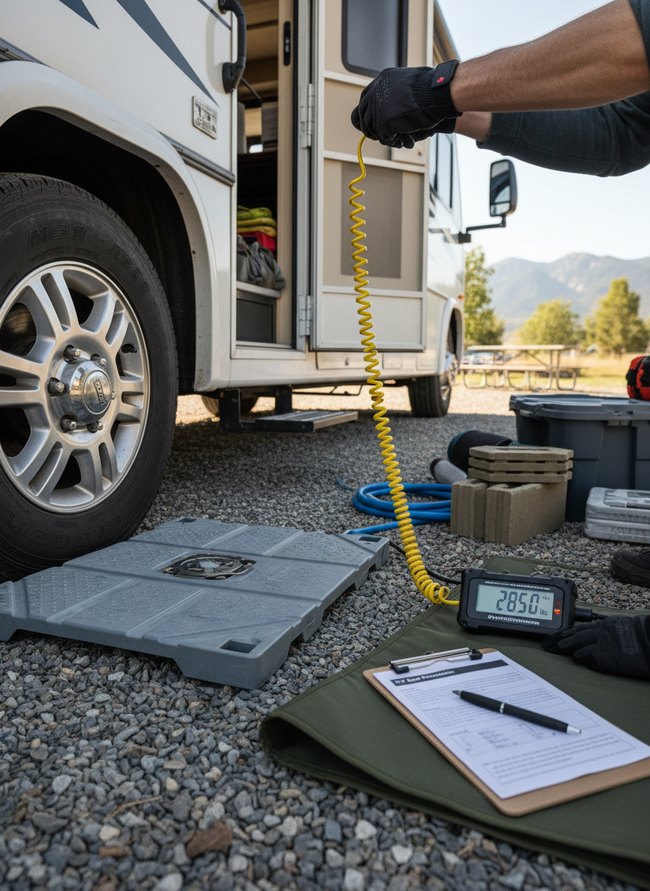
A gray plastic scale platform under the white RV’s front tire measures the exact weight on each wheel. A person in black gloves holds the yellow coiled cord connected to a digital display showing 2850 pounds. Accurately weighing the vehicle is a vital RV weight management tip, ensuring safe travel.
10. Awning Accessory Reduction
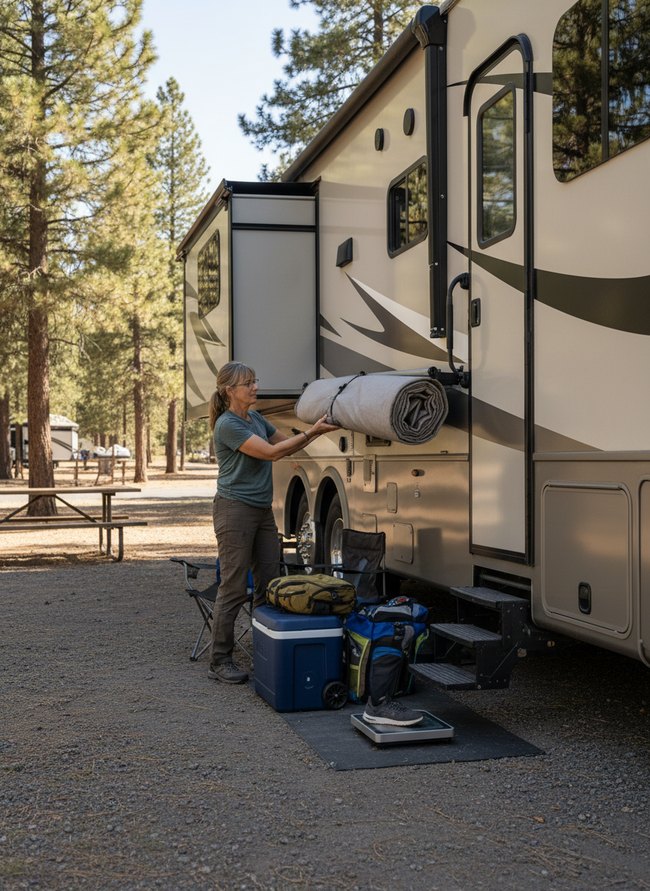
A woman in a green shirt and brown pants lifts a rolled gray outdoor mat toward a light tan RV. RV owners can lighten their vehicle’s total weight by leaving bulky outdoor accessories at home. Consider using lightweight folding chairs and a small cooler instead of heavy patio furniture and large ice chests.
11. Towing Capacity Adherence
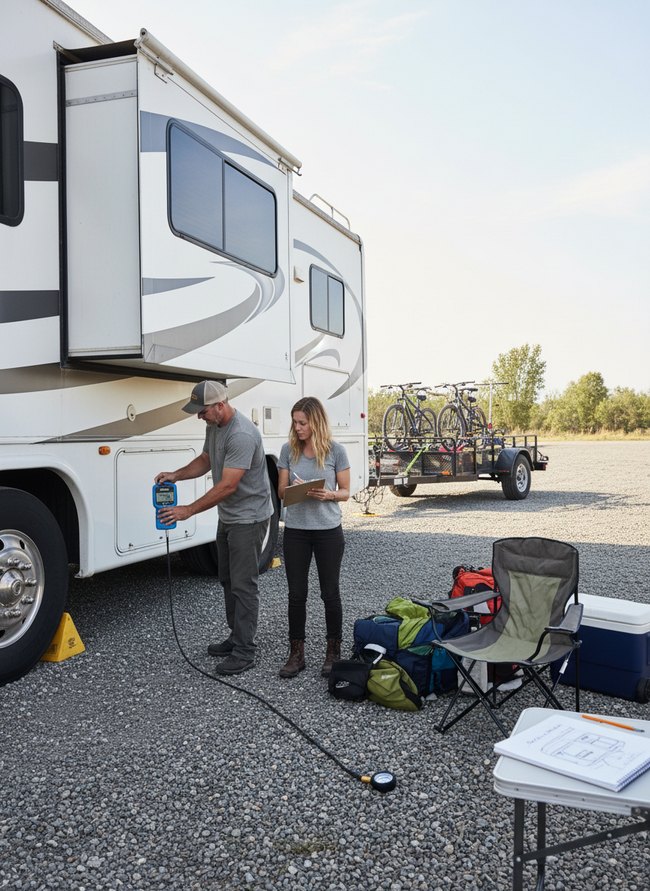
A man uses a bright blue digital scale to measure a recreational vehicle’s tongue weight. A woman stands nearby with a clipboard, ready to record important RV weight management tips. Owners should always know their RV’s total weight before hitting the road.
12. Cargo Bay Organization
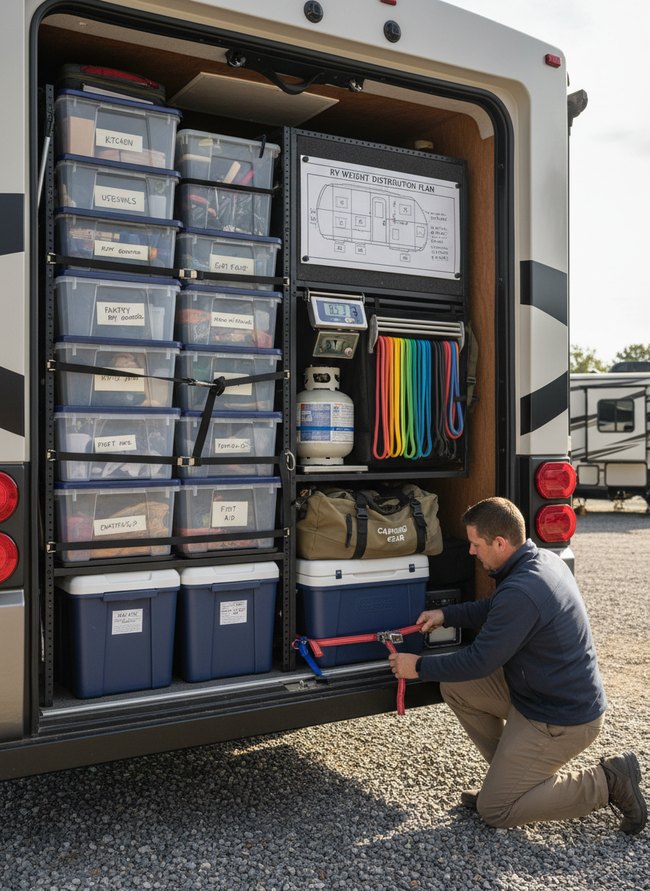
The large black shelf unit holds many clear plastic bins, keeping your gear visible and tidy. Sturdy plastic containers sort your supplies, labeling each one clearly. Robust tie-down straps secure all contents to prevent shifting during transit.
My Decor Pieces are Heavy! How Do I Style Without Exceeding Weight Limits?
Most people think they must sacrifice all home comforts for a light RV. Many owners toss out beloved stoneware and heavy wood frames. Actually, you can bring some treasured items. Focus on smart swaps for big weight savings.
Your ceramic planters add many pounds. Instead, choose lightweight plastic pots in matte black or terra cotta orange. These plastic containers hold green plants just as well. Thick glass vases weigh down your shelves. Swap them for clear acrylic versions or woven wicker baskets. Both options provide texture and visual interest.
Heavy oak bookshelves cause real problems. Mount slim metal wall shelves with small lips instead. These narrow shelves hold a few books without adding bulk. People often pack many hardback novels. Consider downloading digital books to a small tablet. This small device weighs less than one paperback book.
Ditch big, fluffy cotton bath towels. Microfiber towels dry fast and fold flat. These soft towels weigh almost nothing. Heavy fabric curtains block sunlight and add noticeable mass. Install lightweight bamboo blinds. They offer privacy and a warm, natural look. Each small choice helps manage your RV’s total weight.
I’ve Packed My RV, But Now Everything Feels Cramped. Did I Choose the Wrong Pieces?
Most people fill every flat surface. They put small trinkets on every open shelf. This common approach makes your RV feel small. A better plan involves fewer, larger decorative items. For example, one big ceramic vase on a narrow counter offers more impact than five tiny clay pots.
Many folks buy storage bins that match. They stack uniform plastic containers. This tactic often creates a sterile look. Instead, mix different textures and natural materials. Think woven rattan baskets next to a smooth, dark wooden box. These varying finishes add visual interest without extra clutter.
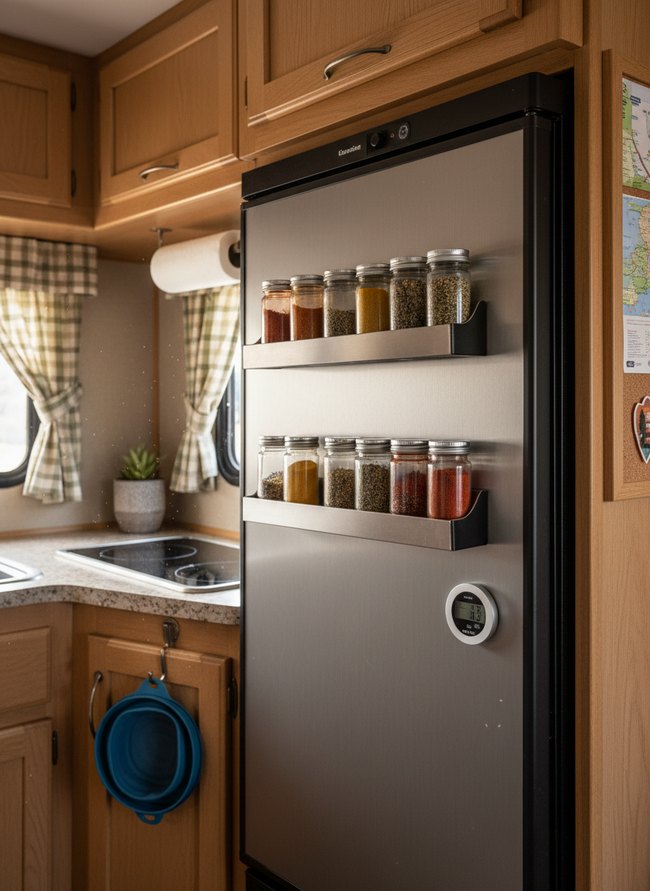
You might think every item needs a purpose. You believe dual-function pieces are always best. Often, one dedicated item works better than a compromised two-in-one. A wall-mounted metal spice rack, for instance, frees up deep drawer space completely. This specific solution avoids the bulk of a combined cutting board and storage unit.
Some RV owners add extra furniture. They squeeze in a small upholstered ottoman for more seating. This extra piece shrinks your available floor space. A better choice involves built-in benches with hidden compartments. These custom structures offer both seating and ample storage, keeping your travel trailer feeling open and light.
Which Idea Will You Try First?
That’s 12 different takes on rv weight management tips. The best ideas above are usually the smallest moves — one material, one layout shift, one piece of furniture in the right place. Pick whichever room feels closest to your space and start there before tackling the rest.
Found an idea worth keeping? Save this post to your Pinterest board so it’s waiting for you when you’re ready to start your own project.