How to Transition Your Kids to Full-Time RV Life
Tiny wheels turning under a metal box with your whole family inside is a dream for many, but children don’t always jump for joy at the idea of leaving their brick house. Young ones often resist big changes, even when adventure waits just down the two-lane highway. Convincing a teenager to give up a spacious bedroom and stable Wi-Fi feels like moving mountains with only a small plastic shovel. You want happy travelers inside your moving home, not grumpy passengers counting the miles with long faces. Getting children ready for a new life on the open road takes planning, open chats, and plenty of understanding from you. The guide helps you transition kids to RV life with fewer bumps and more smiles.
1. Cozy Bunk Nook Setup
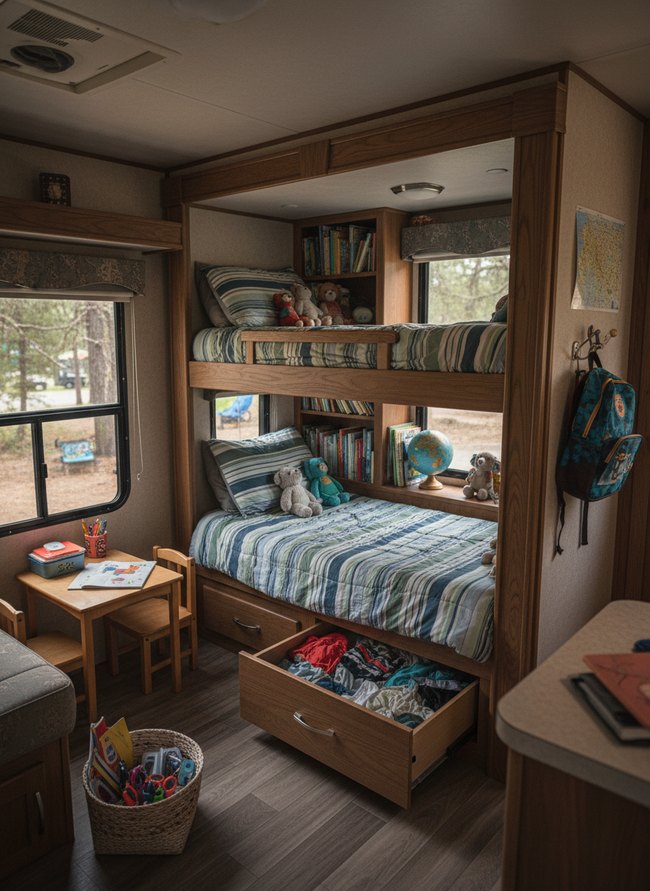
Wooden bunk beds feature striped blue and green bedding, creating a compact sleeping area. Built-in bookshelves flank the lower bunk, offering storage for books and small toys. Under-bed drawers provide extra clothing or toy storage when transitioning kids to RV life.
2. Outdoor Classroom Adventure
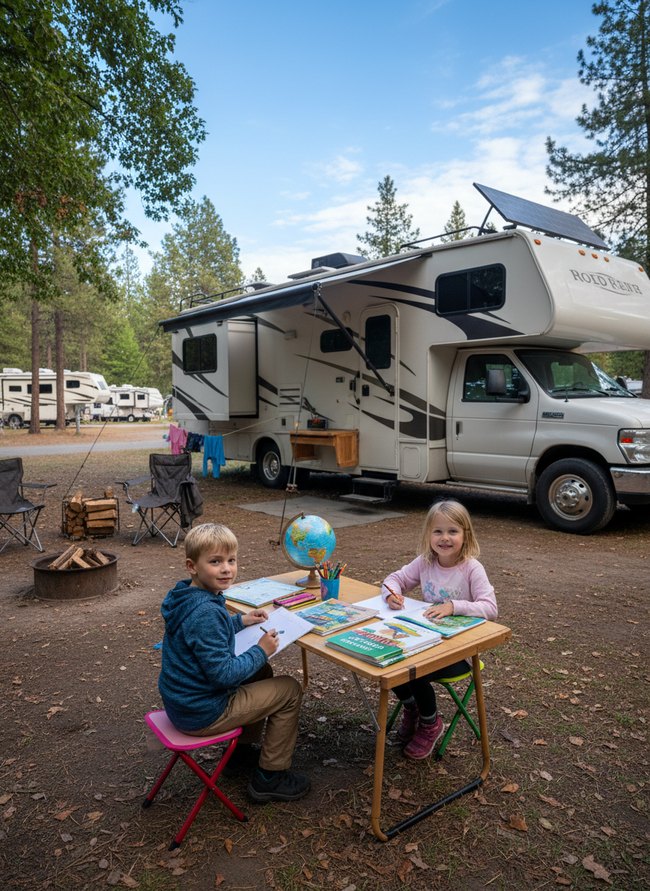
Two children sit at a small wooden table, coloring with pencils and learning from books outside an RV. A dedicated outdoor classroom space helps transition kids to RV life by providing a familiar learning zone. RV furniture should be lightweight and foldable for easy storage and transport.
3. Mobile Play Zone Creation
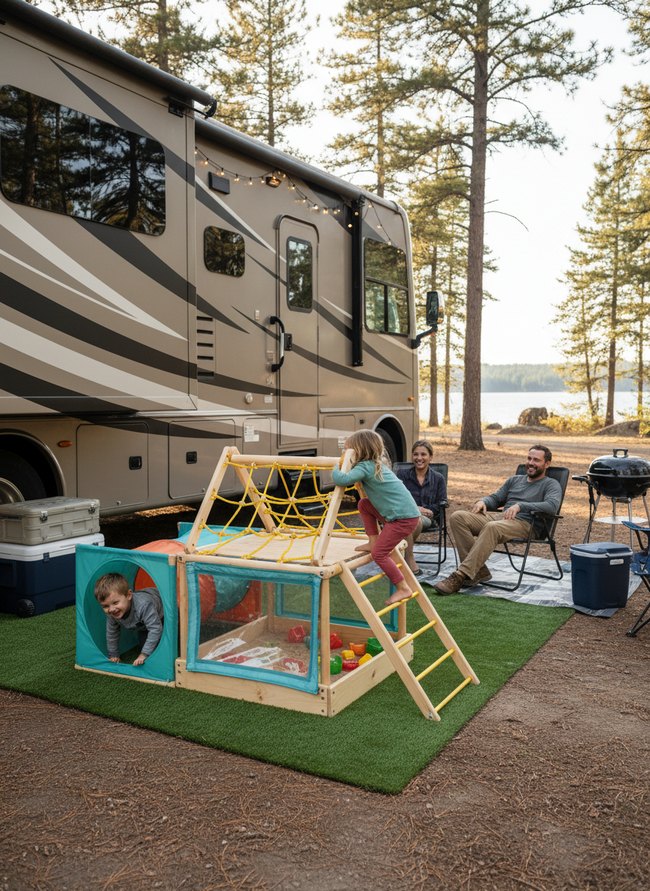
A small wooden play gym with a bright yellow rope net and ladder stands on a green artificial turf mat. A mobile play zone sets up easily right outside your RV, giving children a safe space to explore. Always choose play equipment that folds down or stores compactly to maximize your limited space.
4. Personalized Space Integration
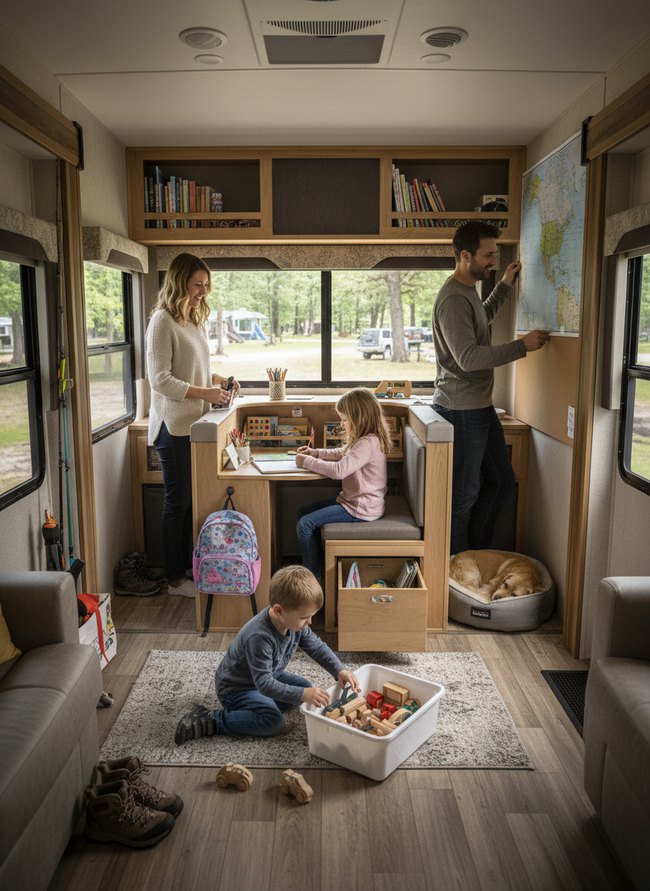
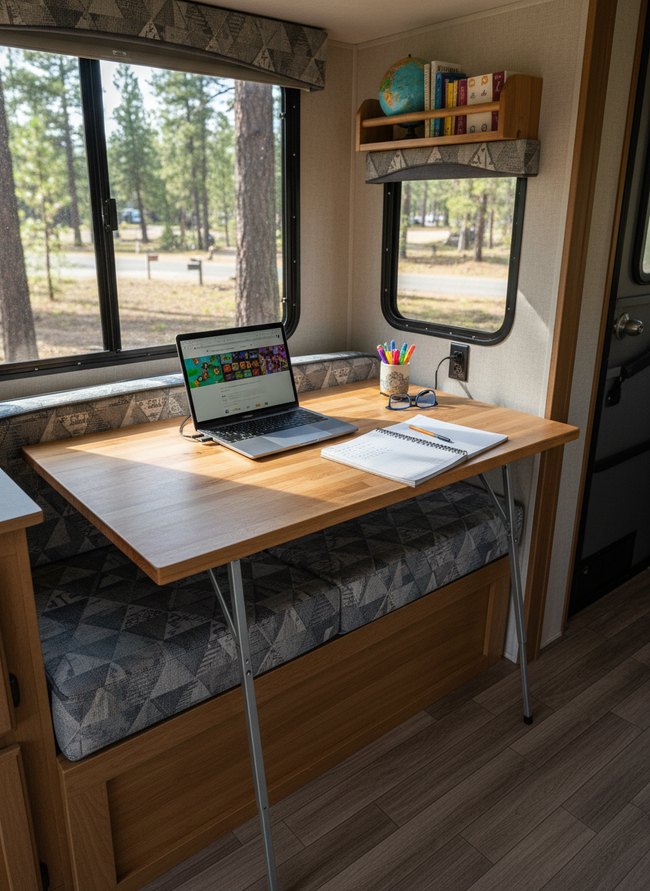
A light wooden dinette with built-in desk space provides a dedicated area for kids to learn and play inside the RV. The organized setup helps children transition to RV life by giving them a familiar spot for their activities. Create a special “school zone” or art corner for your young travelers.
5. Family Game Night RV
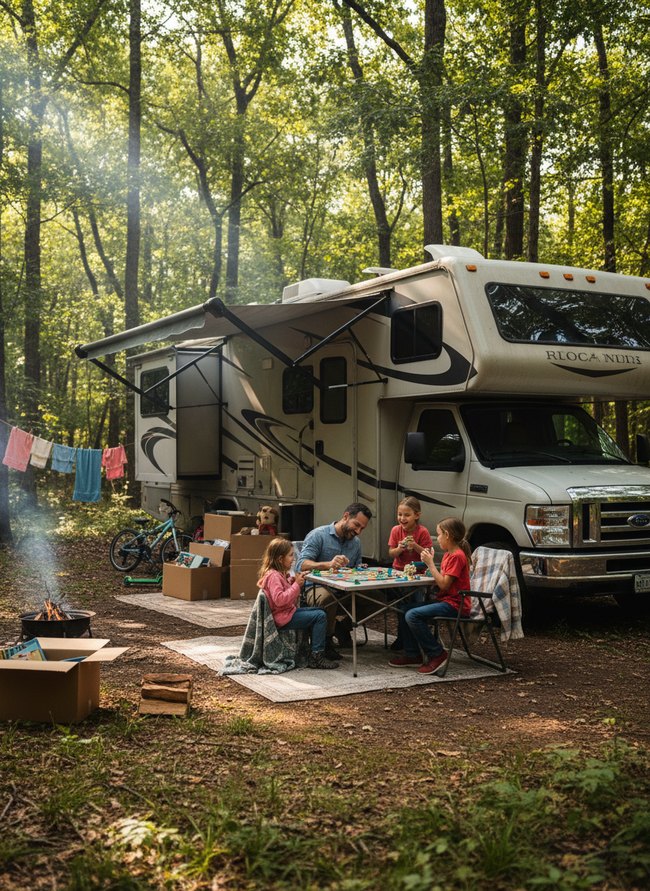
A family plays a board game at a folding gray metal table under a large white RV awning. The cozy outdoor setup shows how families can still enjoy game nights when transitioning children to RV life. Creating a dedicated play space outside the RV, perhaps with a soft woven rug, helps children feel settled.
6. Roadschooling Desk Solution
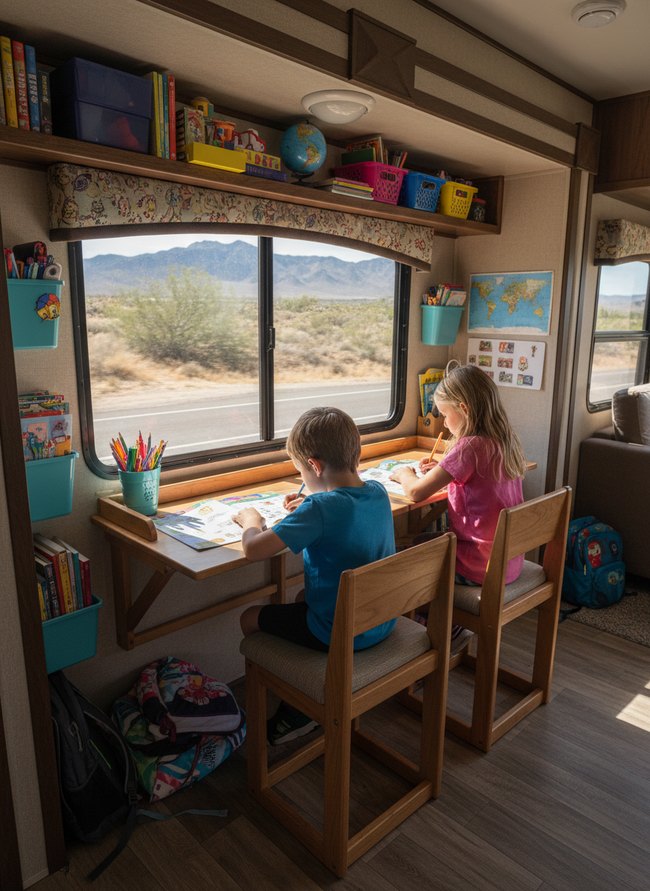
A honey-toned wooden desk provides a dedicated workspace for two children, key to successful transition kids to RV life. Wall-mounted turquoise bins and an overhead shelf keep art supplies and books organized. Consider building a fold-down desk to maximize your own small RV space.
7. Compact Toy Storage
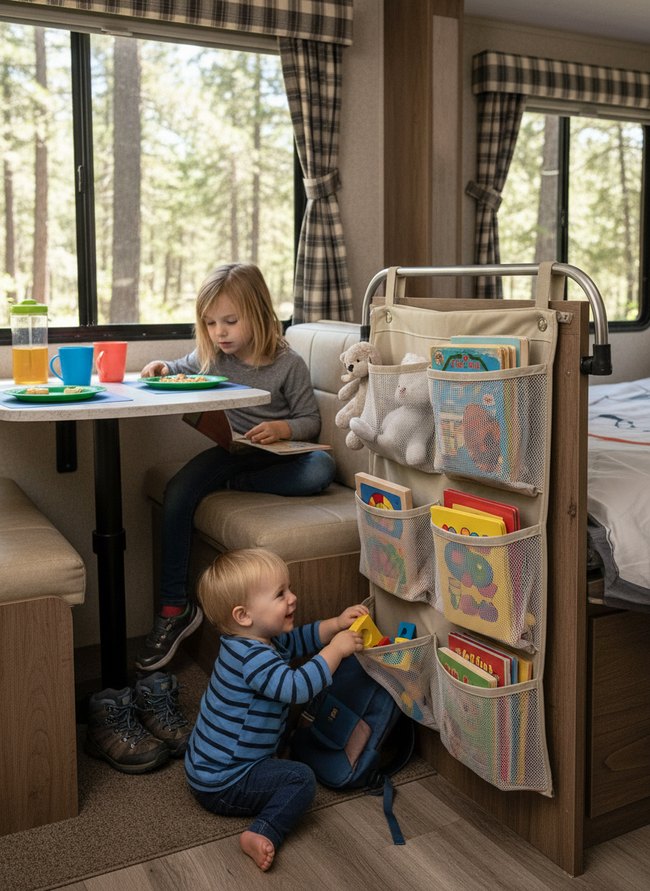
A beige fabric organizer with mesh pockets hangs from a metal bed rail, holding brightly colored children’s books and soft stuffed animals. The organizer keeps small toys off the floor, making RV life with kids much tidier. Vertical space stores items, keeping the small RV neat.
8. Flexible Mealtime Arrangement
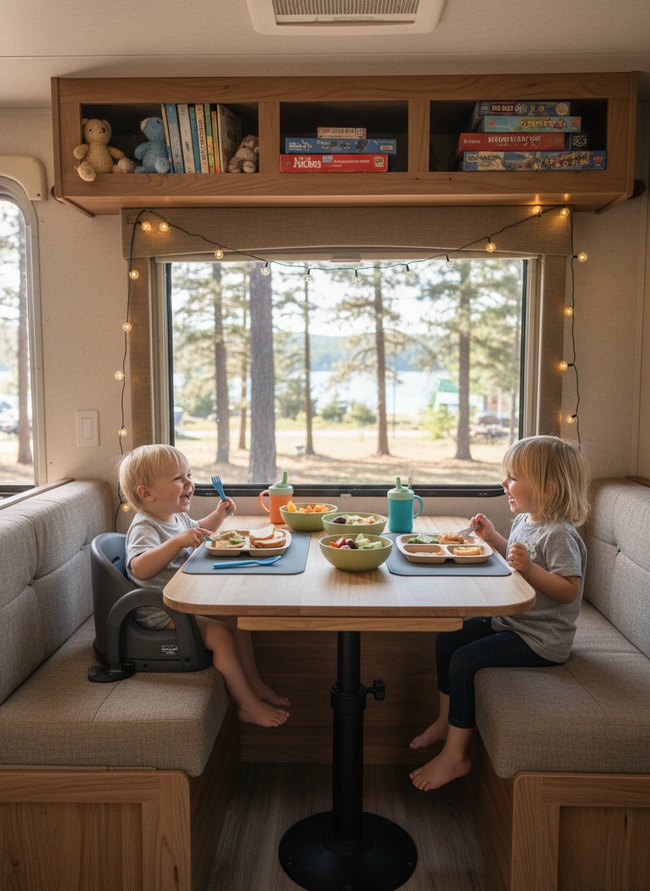
The adjustable wood dinette table creates a dedicated spot for children to eat inside the RV. A portable booster seat on the upholstered bench works for younger kids, ensuring everyone has a safe place for meals. Each child receives their own colorful bowl and plate for easy, kid-friendly dining.
9. Adventure Journaling Habit
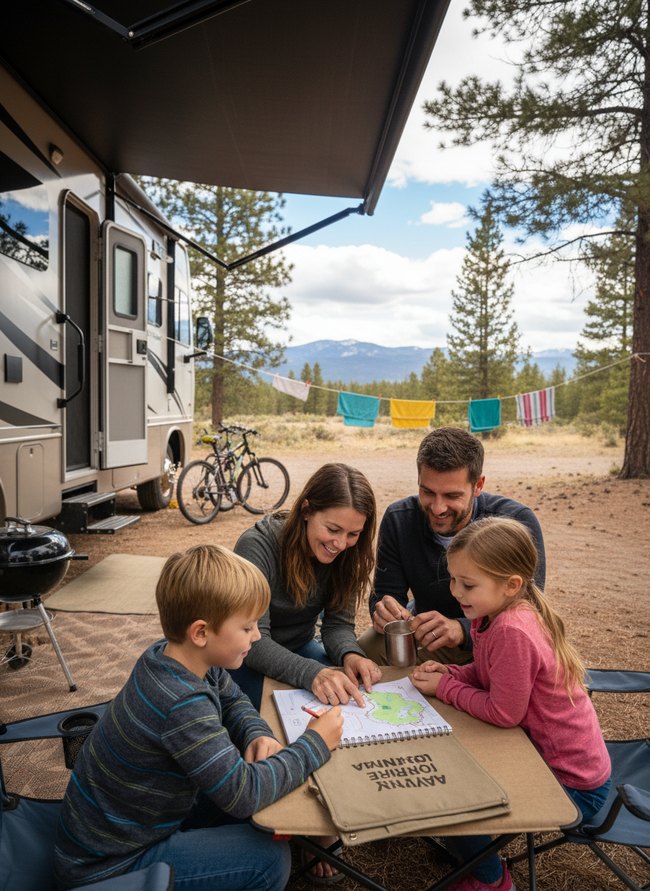
A small family sits around a beige folding table, coloring a map in a spiral notebook. The simple activity helps transition kids to RV life by giving them a fun way to track their travels. Parents can encourage children to draw pictures of places they visit or write short stories about their adventures. Provide a special notebook for each child.
10. Nature Exploration Routine
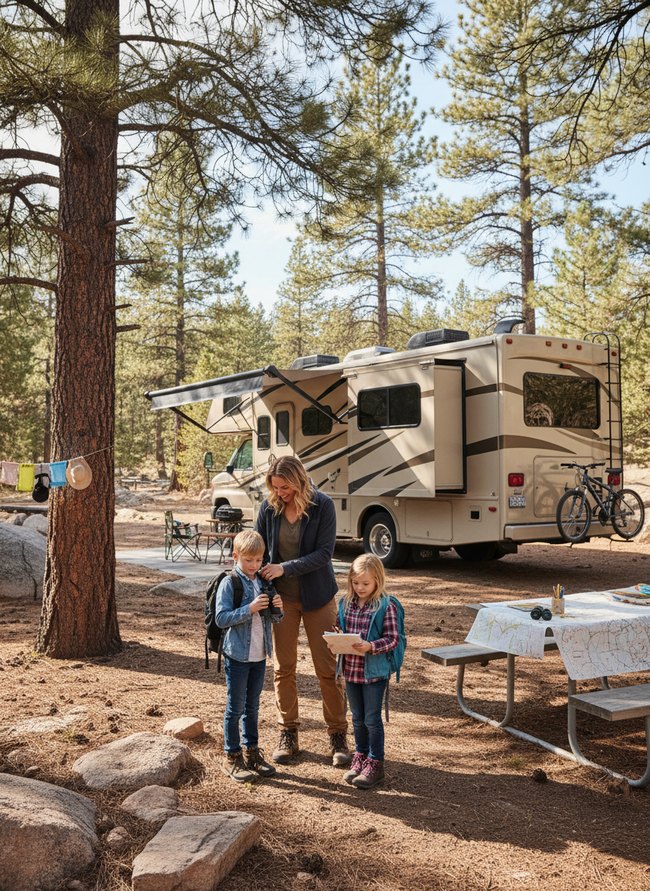
A family prepares for outdoor adventures, showing how a nature exploration routine can transition kids to RV life. The young boy holds black binoculars, ready to spot wildlife. A simple picnic table with a map and pencils nearby allows kids to plan their own explorations. Encourage children to discover new places with hands-on activities.
11. Digital Detox Activities
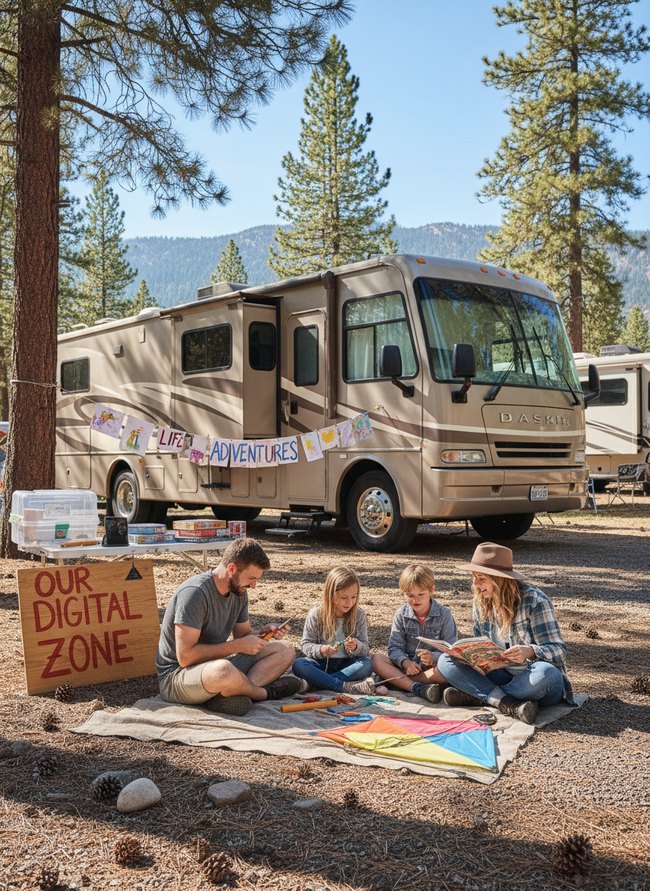
A hand-painted wooden sign reads “OUR DIGITAL ZONE,” marking a specific area for screen-free play outside a large tan RV. The family enjoys simple crafts and reading on a gray blanket, surrounded by tall green pine trees. Designate a clear “digital detox” spot to help your kids transition to RV life with less screen time.
12. Community Engagement Method
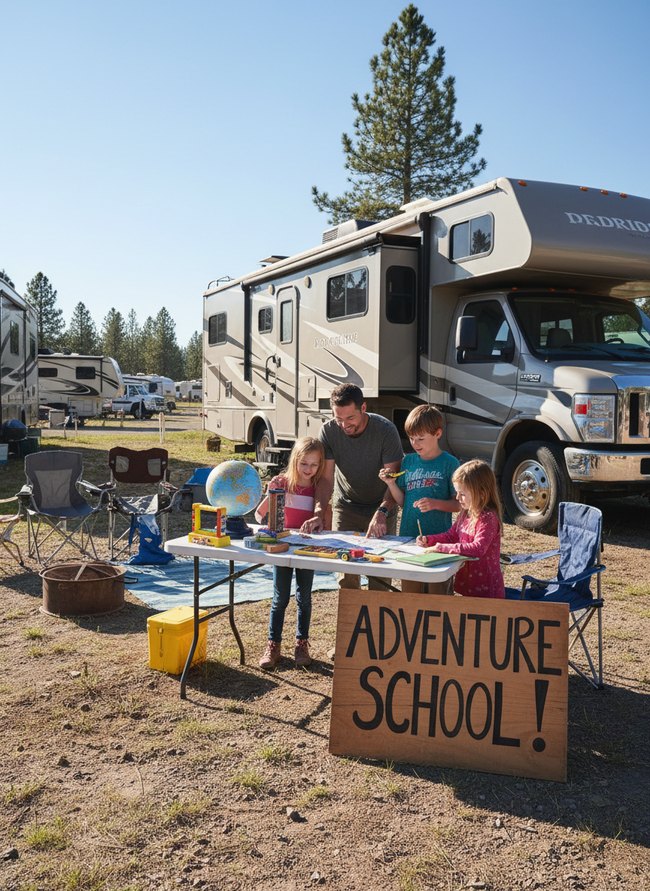
The wooden “Adventure School!” sign clearly shows a fun way to transition kids to RV life. A man and three children gather around a white folding table with a colorful globe and paper maps. Making learning an outdoor adventure helps children feel happy and included in their new RV home.
Beyond the Pinterest Perfect: Practical Styling for Tiny Spaces That Kids Won’t Destroy
Many people imagine a tiny living space filled with delicate white objects and shiny glass. Your Pinterest boards might show a minimalist travel trailer with breakable decor. Most families with small children do not find those visions practical. Actually, hard-wearing materials and smart storage truly work for tiny homes with active kids. You want sturdy furniture, not flimsy pieces. Think about the honey-toned wooden table that hides scuff marks well.
Others suggest open shelves for displaying trinkets. That arrangement often leads to shattered ceramic bowls and frustrated parents. Instead, install deep, closed cabinets with childproof latches. These dark-stained wooden doors keep toys out of sight. A plush, charcoal-colored rug can hide small spills. It also cushions little knees during playtime. You can also add magnetic strips on walls to hold metal toy cars. This simple trick keeps small items off the floor. Choose durable, washable fabrics for upholstered items. Denim slipcovers on the sofa hold up to daily wear. That way, your RV feels like a home, not a showroom.
From Built-In Beds to Bunk Curtains: Maximizing Aesthetics and Function in Kids’ Sleeping Quarters
Many people imagine a cramped RV bunk bed with a plain grey mattress. You probably picture a small space without much personal flair. Most folks simply throw a standard twin sheet onto the thin mattress. That easy choice misses big chances for fun.
Actually, a patterned cotton curtain transforms a simple sleeping nook. A colorful fabric panel, like a bold striped or whimsical polka dot design, gives instant charm. You should hang a lightweight curtain from a narrow metal rod across the bunk opening. Most people skip this decorative step completely. A soft, woven blanket in a dusty blue or sunny yellow adds warmth. Some parents choose a character-themed quilt. You can instead pick a solid hue that matches the curtain’s accent color. Small, wall-mounted canvas pouches hold nighttime stories and tiny toys. These fabric pockets keep items off the narrow floor. Many RV families leave clutter on the bottom bunk. A soft, round beanbag chair in a durable denim provides a cozy reading spot. This flexible seat stores easily under the bottom bunk during daytime travel. Other families use a hard plastic storage bin. That stiff container is less inviting. These small touches make RV life feel like a true home.
Which Idea Will You Try First?
That’s 12 different takes on transition kids to rv life. The best ideas above are usually the smallest moves — one material, one layout shift, one piece of furniture in the right place. Pick whichever room feels closest to your space and start there before tackling the rest.
Found an idea worth keeping? Save this post to your Pinterest board so it’s waiting for you when you’re ready to start your own project.