10 Small-Space Toy Storage Ideas for RV Families
RV living offers boundless open-road adventure. Compact interiors, however, present distinct challenges for family organization. Freedom and travel are gained, but limited floor space means every item needs a dedicated spot. A loose plastic race car underfoot reduces that freedom. RV toy storage options explore various solutions, each balancing easy access with tidy containment. Some designs prioritize quick cleanup, while others focus on maximizing hidden capacity. The following ideas provide different approaches to keeping playthings in their place.
1. Foldaway Bunk Netting Storage
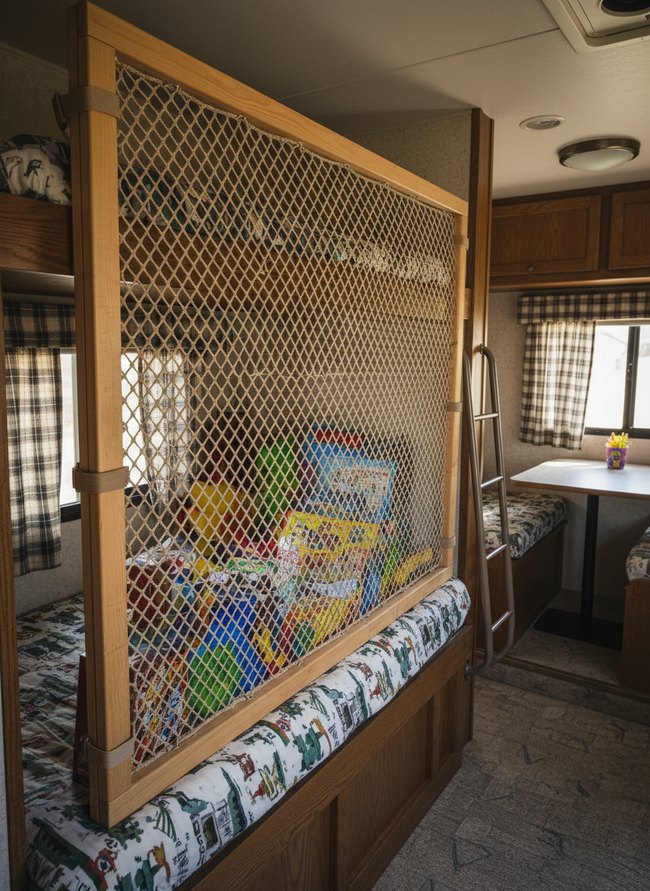
A light oak frame holds a beige mesh net, creating a soft barrier. The rv toy storage choice prioritizes visible organization over concealed clutter. Colorful plastic toys remain easily accessible, a trade-off for a less streamlined appearance.
2. Under-Bench Sliding Bins
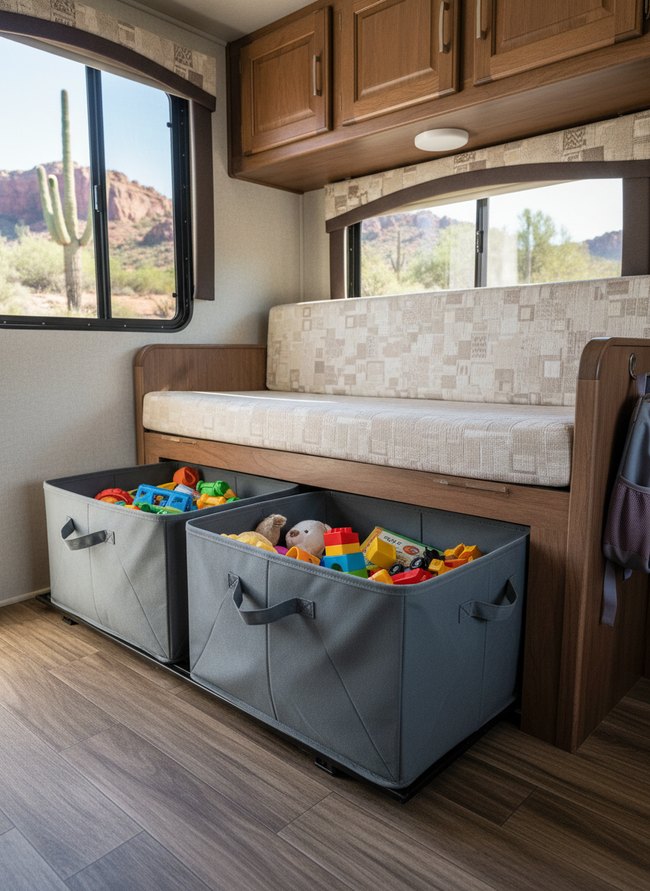
Two gray fabric bins slide out from under a wooden bench, their tops overflowing with colorful plastic toys. Soft-sided containers provide easy RV toy storage, gaining quick access while sacrificing a more rigid, enclosed system. A beige patterned cushion rests on the light brown bench, providing seating above the bins.
3. Wall-Mounted Mesh Pockets
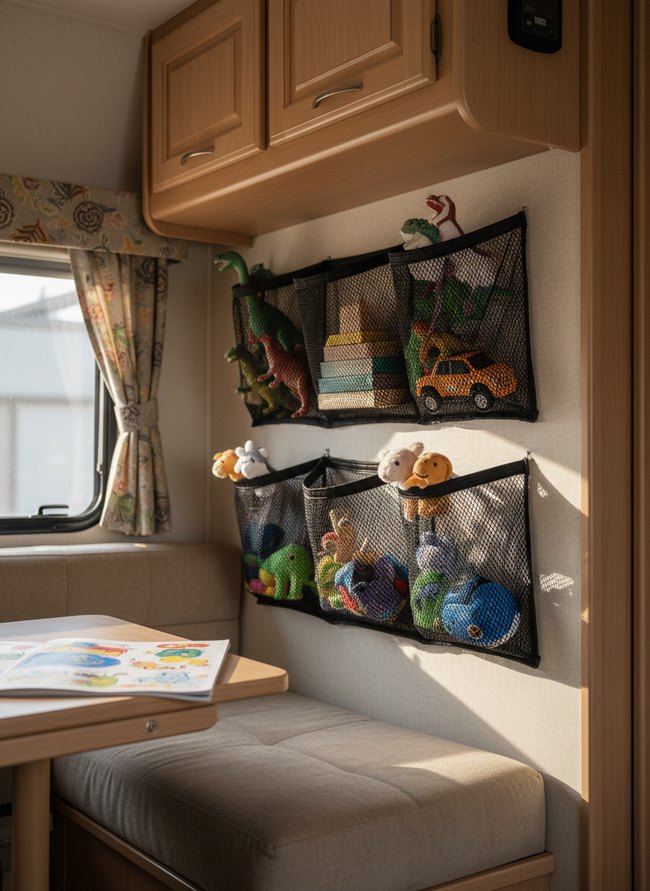
Black mesh pockets hang against a creamy wall, filled with colorful children’s toys. The pockets provide visible, easy-access storage for small items but give up a completely smooth wall surface. Natural sunlight streams across the light beige upholstery, highlighting the fabric’s texture.
4. Convertible Dinette Toy Chest
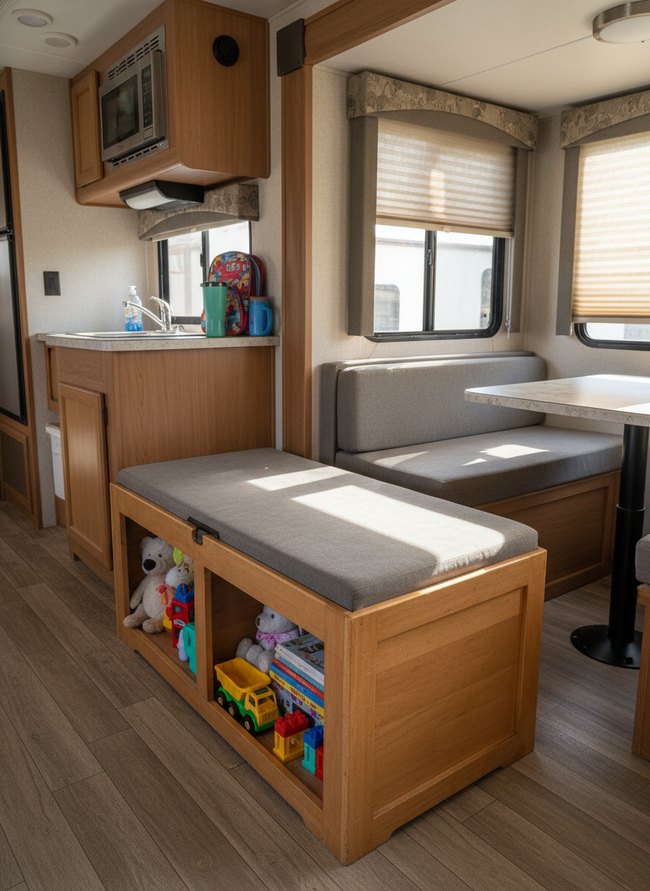
A blonde wooden bench with a dark gray cushion provides open RV toy storage. The open design offers quick access to toys but leaves them visible. The wooden dinette bench beside the storage unit mirrors the warm wood tones, creating a cohesive look.
5. Overhead Cabinet Play Cube
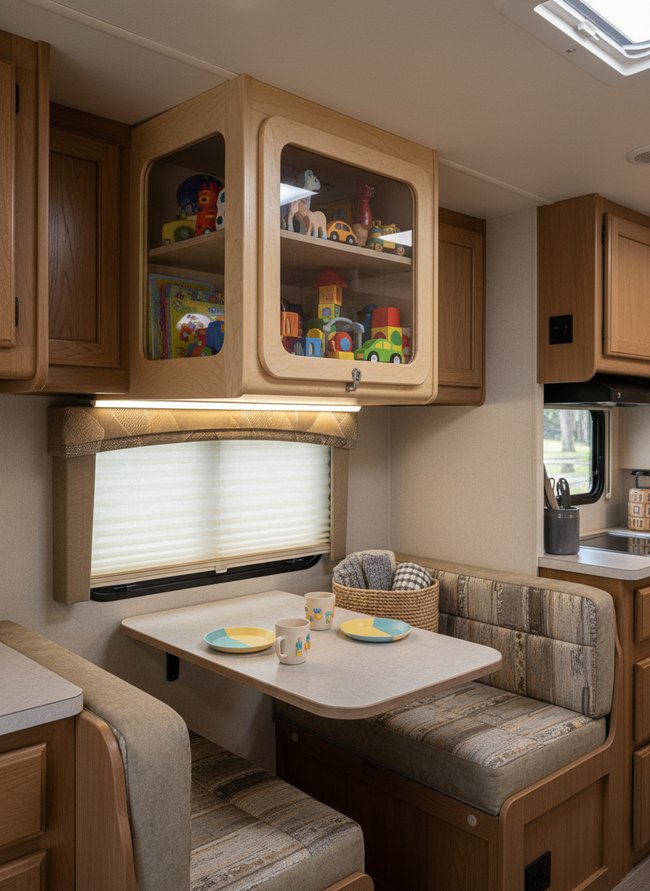
Light brown wooden cabinets with rounded edges offer a safe display for colorful children’s toys. The cabinets provide clear visibility of the stored items, but sacrifice some privacy for the contents. A narrow fluorescent light bar underneath the storage brightly illuminates the small dining table below.
6. Magnetic Board Activity Station
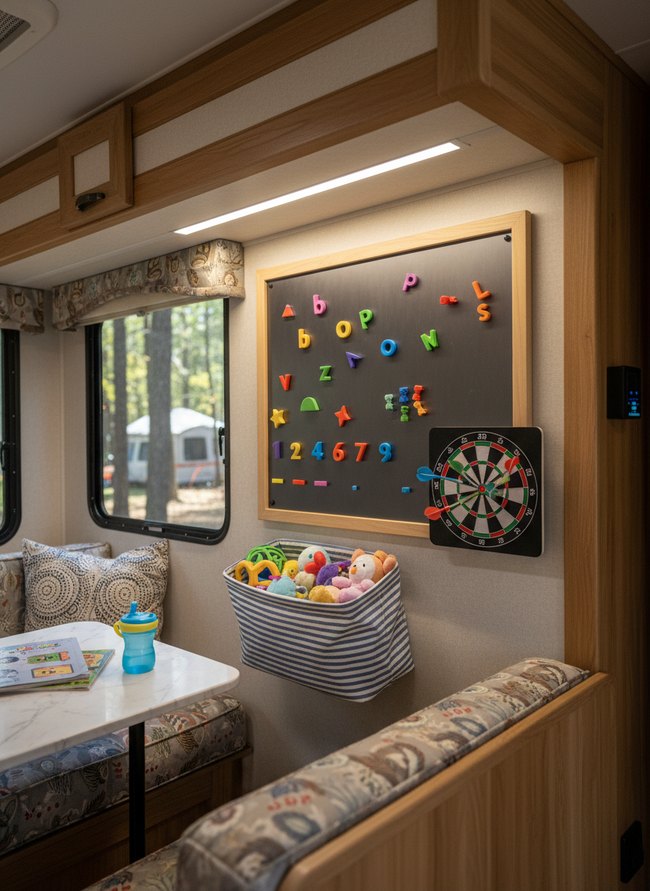
A dark magnetic board with a light wood frame provides an engaging surface for colorful letter magnets. Below the board, a striped blue and white fabric basket holds small toys, offering easy access for little hands. The toy storage option gives vertical play space, trading away some wall art area.
7. Collapsible Fabric Storage Cubes
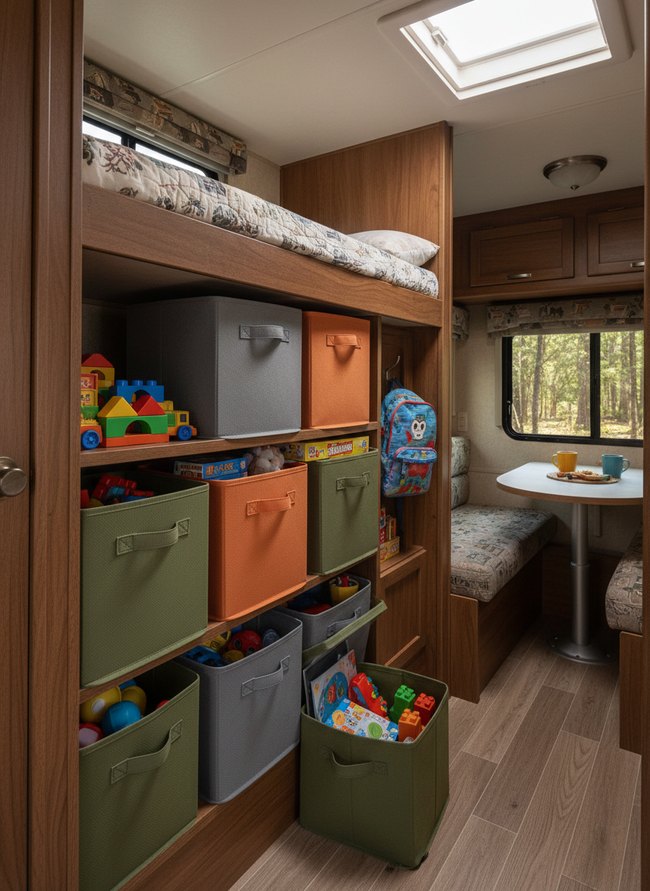
Smooth fabric storage cubes in olive green, gray, and orange fill the wooden shelves under a bunk bed. Sturdy bins neatly tuck away colorful toys, sacrificing easy visibility for a tidy appearance. Foldable containers offer flexible RV toy storage, allowing them to collapse flat when empty for more open space.
8. Behind-Seat Hanging Organizer
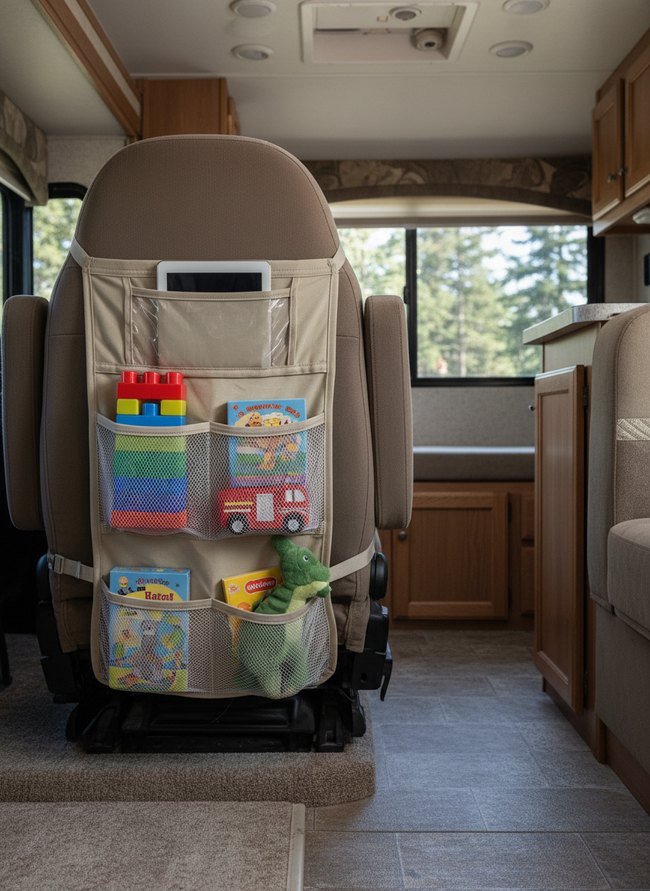
A beige fabric organizer hangs on a tan captain’s chair. The organizer offers multiple mesh pockets for small items, trading visibility for contained storage. Books and blocks are easily accessible without sacrificing floor space in the compact vehicle.
9. Floor Recess Toy Tray
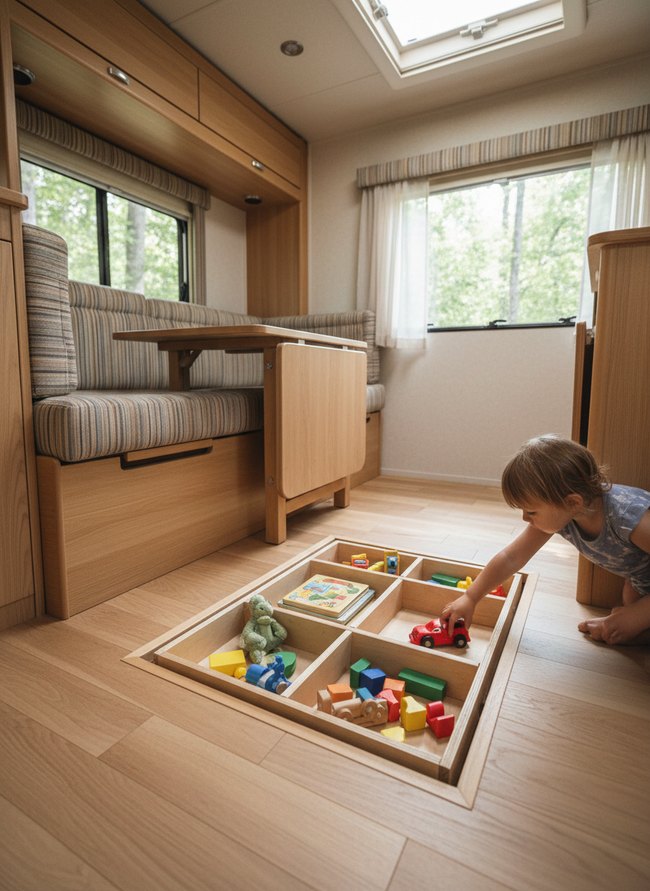
A light blonde wood floor recess holds a grid of toy compartments. RV toy storage provides a neat, flush look, trading easy access for a completely hidden design. A small child with light brown hair reaches for a red toy truck inside one of the wooden squares.
10. Bungee Cord Wall Storage
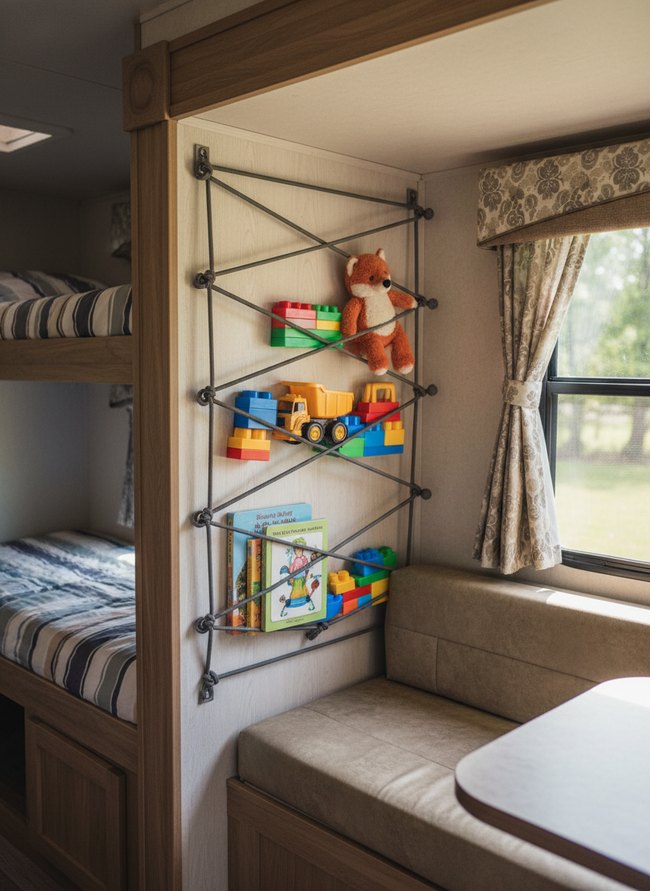
Gray bungee cords stretch across a light wood-paneled wall, forming horizontal shelves. The storage offers flexible open display over enclosed cabinet space. Colorful plastic blocks, small children’s books, and a soft orange fox plush sit secured against the wall.
Should I Prioritize Fixed Storage vs. Portable Solutions?
Deciding between built-in wooden shelving or freestanding plastic bins for your RV toys presents distinct paths. Fixed solutions, like a bolted-down three-tier metal rack, offer rock-solid stability during road travel. Such permanent fixtures can reduce rattling noises on bumpy roads, providing a quieter journey inside the compact RV. However, custom-built cabinetry or a mounted canvas hammock uses up precious wall space permanently, limiting your layout changes later.
Portable containers, such as soft-sided fabric cubes or stackable clear plastic boxes, bring unmatched flexibility. These lightweight items allow you to reconfigure your living area often. You can pull out a tall fabric basket filled with building blocks for playtime, then tuck the whole thing under a cushioned bench seat when finished. A large mesh bag full of outdoor toys easily moves from the RV’s small closet to the picnic table. Yet, portable containers demand consistent re-stowing; loose items will shift dramatically during transit. Fixed storage suits families needing steadfast organization and a consistent interior layout. Portable options fit families desiring adaptable spaces and frequent toy rotation.
Hard-Sided vs. Soft-Sided: Which is Best for My RV’s Environment?
Hard plastic bins offer rigid support for small playthings. Canvas bags, conversely, provide flexible storage for children’s toys. Solid-walled containers protect breakable items like plastic cars or glass marbles from travel bumps. These sturdy boxes also stack high, using vertical space inside your compact RV. You sacrifice floor space with their fixed, square footprints. A hard-sided cube might scratch polished wood floors if dragged.
Fabric toy storage, however, compresses flat when empty. Stuffed animals or soft building blocks fit well in cloth bins. A soft bin will not mar your vinyl flooring. Their bendy nature means you can squeeze them into odd-shaped corners or under a low bed frame. You gain adaptability but lose crush protection. A canvas basket will not shield delicate electronics from a heavy book. Choose hard plastic containers for fragile objects and maximum stackability. Select soft, foldable organizers for bulky, lightweight items and tight, irregular spaces.
Which Idea Will You Try First?
That’s 10 different takes on rv toy storage. The best ideas above are usually the smallest moves — one material, one layout shift, one piece of furniture in the right place. Pick whichever room feels closest to your space and start there before tackling the rest.
Found an idea worth keeping? Save this post to your Pinterest board so it’s waiting for you when you’re ready to start your own project.